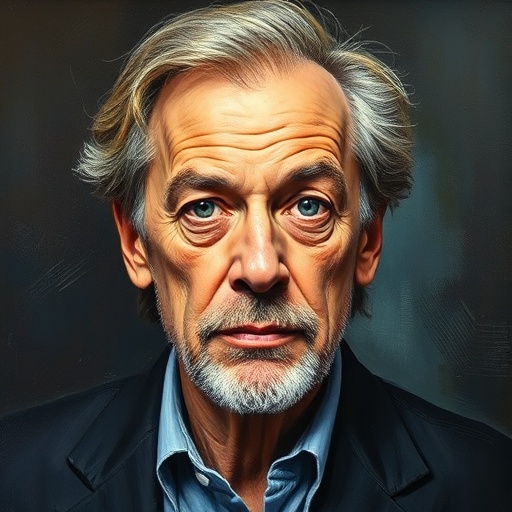
Richard Feynman — "Science is the belief in the ignorance of experts."
Science is the belief in the ignorance of experts.
Science is the belief in the ignorance of experts.
Click any product to generate a realistic preview. Up to 3 at a time.
* Initial load can take up to 90 seconds — revising the preview in another color is nearly instant.
"I don't believe in anything, but I have a lot of fun."
"God was invented to explain mystery. God is always invented to explain those things that you do not understand."
"I was very surprised when I got the Nobel Prize. I didn't think I deserved it."
"I was always interested in things that are on the edge of what we know."
"I don't believe in miracles, because I believe in science."
American theoretical physicist who shared the 1965 Nobel for QED, developed Feynman diagrams, and wrote the Feynman Lectures on Physics. Closely associated with Julian Schwinger (co-Nobelist for QED) and Murray Gell-Mann (Caltech rival and Eightfold-Way physicist). For an intellectual contrast, see Deepak Chopra, physician and quantum-mysticism author — Feynman's Caltech 'cargo cult science' commencement address is the precise template for what he saw as misuse of physics terminology — Chopra-style appropriation of quantum vocabulary for metaphysical claims is the canonical example of what Feynman called 'fooling yourself'.
Found in 1 providers: grok
1 source checked
True science demands questioning authority rather than deferring to credentialed opinion. Knowledge advances by doubting what experts claim to know, testing assumptions rigorously, and accepting that established consensus can be wrong. The scientific method is fundamentally built on skepticism — even toward those most celebrated in a field. Expertise earns respect but never immunity from scrutiny or revision.
Feynman famously distrusted pomposity and dogma throughout his career. He challenged the NASA establishment during the Challenger investigation, demonstrating O-ring failure with ice water while committees issued diplomatic reports. His Caltech commencement lectures celebrated doubt as the engine of discovery. A Nobel laureate in quantum electrodynamics, he nonetheless mocked credentialism and insisted understanding trumped credentials.
Feynman delivered this idea during the Cold War era when scientific authority carried enormous cultural weight — nuclear physicists were near-oracles shaping policy. Government-funded Big Science created institutional experts whose pronouncements went largely unchallenged publicly. Feynman's contrarian stance countered a postwar reverence for scientific officialdom that risked conflating institutional authority with actual truth.
AI-generated insights based on extensive research and information for context. Factual errors? Email [email protected].
Your cart is empty