What it means
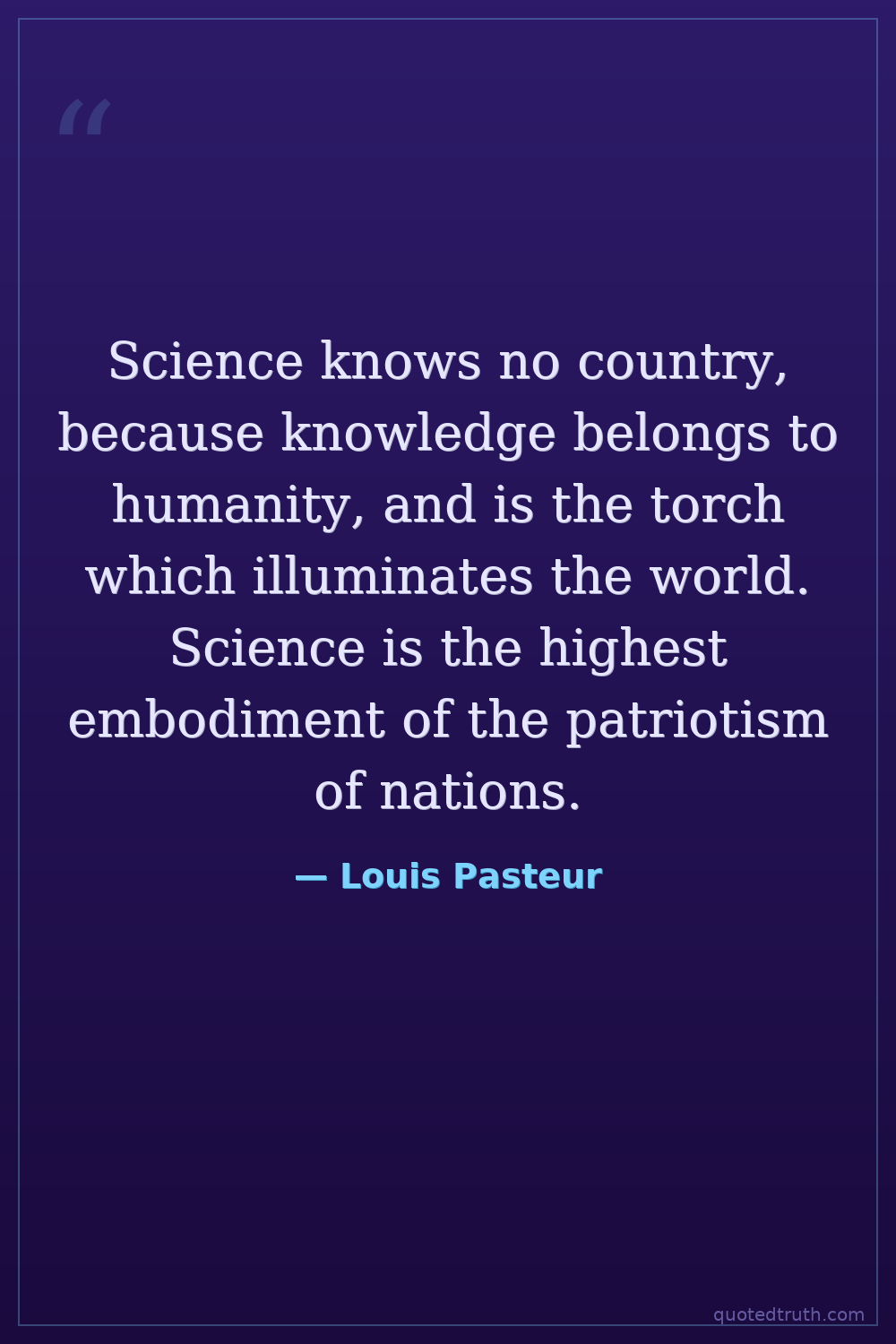
Pasteur argues that scientific knowledge transcends national borders because discoveries benefit all of humanity, not just one country. Science acts like a torch that lights the way for everyone. At the same time, he says that contributing to science is the noblest form of patriotism a nation can offer, because advancing human understanding elevates a country's true standing in the world more than political or military achievements ever could.
Relevance to Louis Pasteur
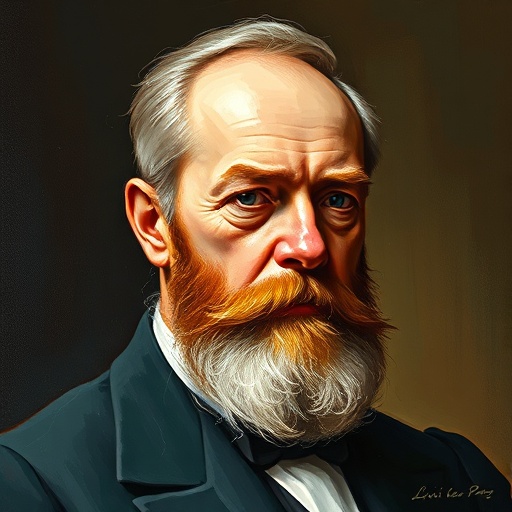
Pasteur lived this ideal directly. His germ theory, rabies vaccine, and pasteurization process saved lives across continents regardless of borders. Though fiercely proud of France, especially after the Franco-Prussian War, he freely shared his discoveries internationally. He founded the Pasteur Institute in 1887 as a global research hub that still operates in dozens of countries. His refusal to hoard knowledge, even treating foreign patients like the Russian peasants bitten by a rabid wolf, embodied this creed.
The era
Pasteur spoke during the late 19th century, an era of intense European nationalism, colonial rivalry, and the Franco-Prussian War's bitter aftermath. Nations competed fiercely in science as a marker of prestige. Yet this was also the dawn of international scientific congresses, patent debates, and cross-border journals. Germ theory itself was being validated through collaboration between French, German, and British researchers like Koch and Lister, proving knowledge flowed despite political hostilities between their governments.
AI-generated insights based on extensive research and information for context. Factual errors? Email [email protected].