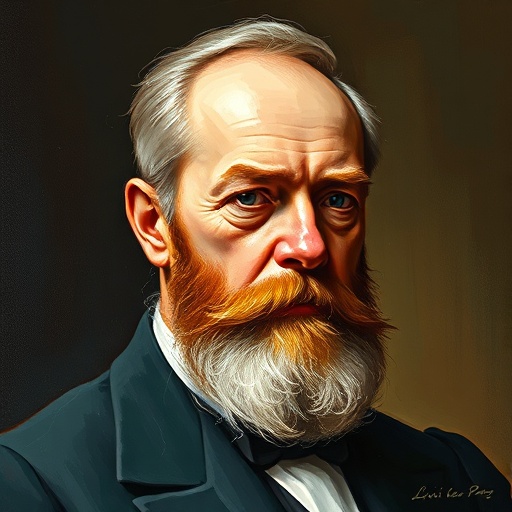
Louis Pasteur — "Science knows no country, because knowledge belongs to humanity, and is the torc…"
Science knows no country, because knowledge belongs to humanity, and is the torch which illuminates the world.
Science knows no country, because knowledge belongs to humanity, and is the torch which illuminates the world.
Click any product to generate a realistic preview. Up to 3 at a time.
* Initial load can take up to 90 seconds — revising the preview in another color is nearly instant.
"Science knows no country, because knowledge belongs to humanity, and is the torch which illuminates the world. Science is the highest embodiment of the patriotism of nations."
"The greatest victory is that over oneself."
"I am convinced that I have found the cause of fermentation."
"I have great hopes that the vaccine against rabies will be a success."
"I am unable to find any experimental evidence that supports the doctrine of spontaneous generation."
Found in 1 providers: deepseek
1 source checked
Scientific knowledge isn't owned by any nation. Discoveries transcend borders because truth and understanding benefit everyone. Science is a shared light that guides all of humanity forward, regardless of where a researcher was born or which flag flies over their laboratory. Hoarding knowledge or treating it as national property betrays its purpose, which is to lift the entire human species out of ignorance and suffering.
Pasteur lived this principle. Though a fiercely patriotic Frenchman who lost a son-in-law's country to German aggression, he shared his germ theory, rabies vaccine, and pasteurization techniques globally. He trained foreign scientists at the Pasteur Institute and refused to let wartime grudges block medical progress. His work on anthrax and fermentation saved lives across continents, proving that a microbe discovered in Paris kills identically in Berlin or Tokyo.
Pasteur spoke during the late 1800s, an era of intense nationalism, colonial rivalry, and the Franco-Prussian War's bitter aftermath. European powers raced for scientific prestige as a weapon of state power. Simultaneously, the germ theory revolution was toppling centuries of miasma beliefs worldwide. International scientific congresses were emerging, and Pasteur's insistence on shared knowledge pushed back against the growing trend of treating research as national property or military advantage.
AI-generated insights based on extensive research and information for context. Factual errors? Email [email protected].
Your cart is empty