What it means
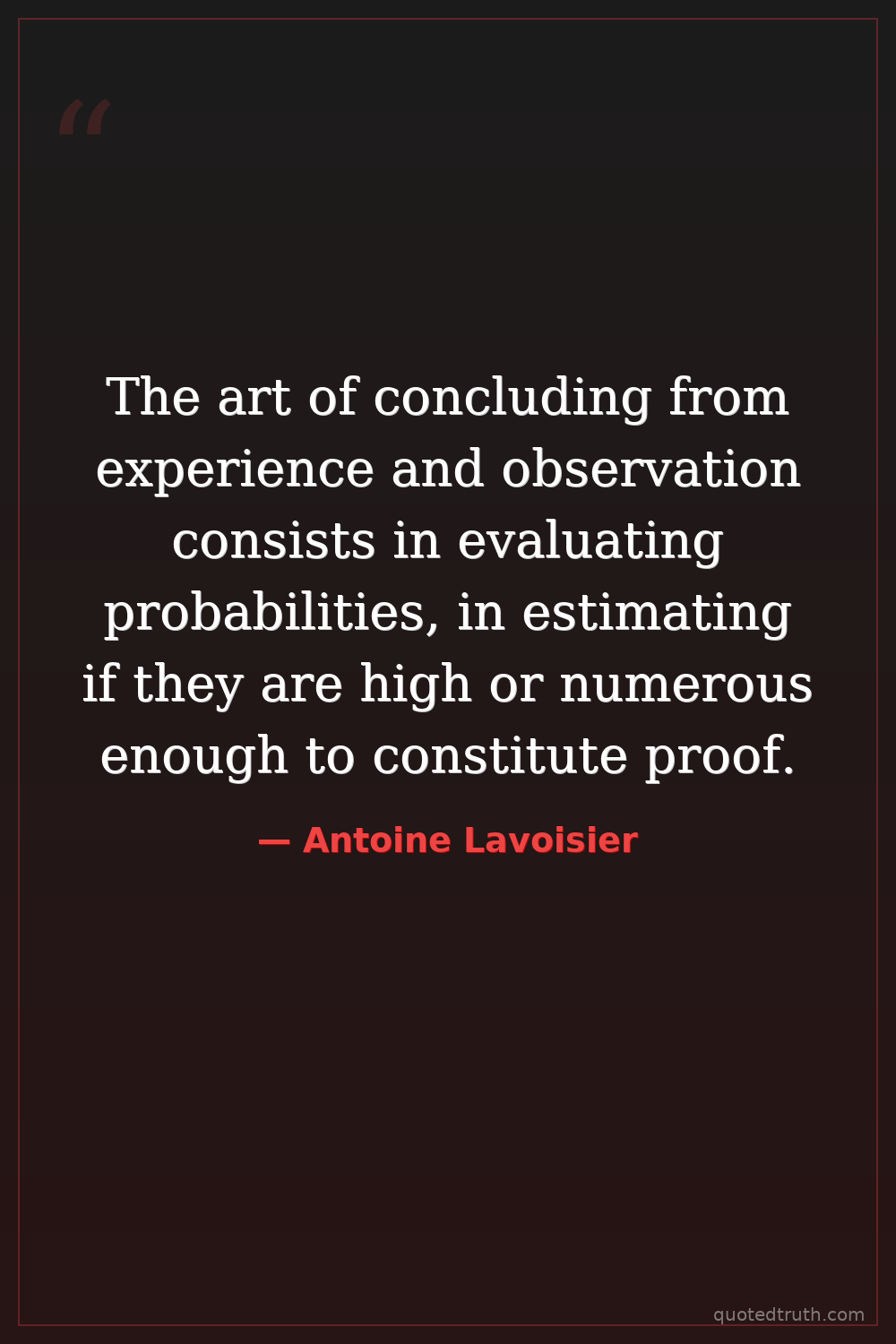
Drawing reliable conclusions from experiment and observation is not about finding a single certainty but about weighing likelihoods. You gather evidence, judge how strong and consistent it is, and decide whether the probabilities stack up high enough and often enough to count as proof. Knowledge, in practice, is built on accumulated probability rather than absolute certainty, and good reasoning means honestly assessing that weight.
Relevance to Antoine Lavoisier
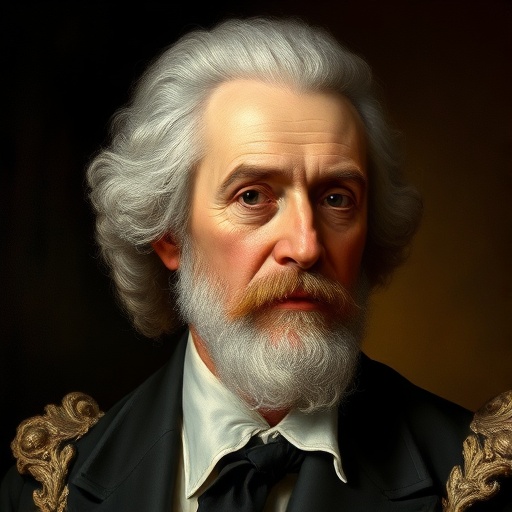
Lavoisier built modern chemistry by replacing speculation with careful quantitative measurement. He weighed reactants and products on precision balances, repeated experiments, and overturned phlogiston theory by showing combustion involved oxygen. This statement mirrors his method: trust no single result, evaluate accumulated evidence, and treat proof as a threshold of probability reached through rigorous, reproducible observation rather than authority or intuition.
The era
In late 18th-century Europe, the Enlightenment was replacing scholastic authority with empirical reasoning. Chemistry was shedding alchemy, while Laplace and Bayes were formalizing probability. Lavoisier worked amid this shift, and his insistence on evidence-based proof aligned with Encyclopedists and reformers challenging tradition. The statement captured a broader cultural move: truth was to be earned through observation and measurement, a mindset that would soon collide with the upheaval of the French Revolution.
AI-generated insights based on extensive research and information for context. Factual errors? Email [email protected].