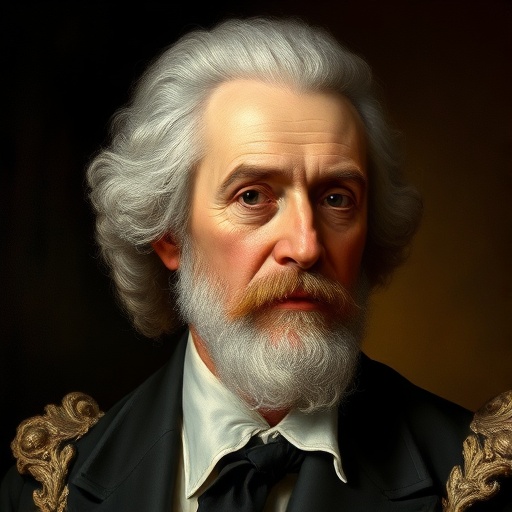
Antoine Lavoisier — "The scientist should be a judge, not an advocate."
The scientist should be a judge, not an advocate.
The scientist should be a judge, not an advocate.
Click any product to generate a realistic preview. Up to 3 at a time.
* Initial load can take up to 90 seconds — revising the preview in another color is nearly instant.
"The value of a discovery consists not in its novelty, but in its truth."
"The greatest pleasure of the human mind is to discover the truth."
"The most important thing for a man of science is to have a clear head and a good heart."
"I have endeavored to make chemistry a science of reasoning, and not of memory."
"Imagination, on the contrary, which is ever wandering beyond the bounds of truth, joined to self-love and that self-confidence we are so apt to indulge, prompt us to draw conclusions which are not imm…"
Found in 1 providers: grok
1 source checked
Scientists must remain impartial evaluators of evidence, not defenders of a predetermined conclusion. A judge weighs all available evidence before deciding; an advocate argues one side regardless of contrary facts. In practice this means following data wherever it leads, even when results contradict your hypothesis or overturn accepted belief. Confirmation bias and motivated reasoning corrupt science; disciplined neutrality is what separates genuine discovery from sophisticated rationalization.
Lavoisier dismantled phlogiston theory—the dominant combustion explanation—by weighing gases before and after reactions and letting measurement overrule centuries of doctrine. He didn't defend existing beliefs; he tested them. His systematic use of the balance and quantitative methods exemplified objectivity over tradition. Even amid political enemies who ultimately executed him, his scientific conclusions were driven purely by experimental evidence, making him a living embodiment of judging rather than advocating.
Eighteenth-century Europe was transitioning from speculative natural philosophy to empirical science, but alchemical traditions and entrenched theories still commanded authority. The Enlightenment demanded reason over superstition, yet scientists frequently served as advocates for patrons, academies, or inherited orthodoxies. Phlogiston theory had institutional defenders. Lavoisier's insistence on impartiality was therefore both professionally risky and culturally radical—a direct challenge to an era where social standing and intellectual loyalty often determined what counted as truth.
AI-generated insights based on extensive research and information for context. Factual errors? Email [email protected].
Your cart is empty