What it means
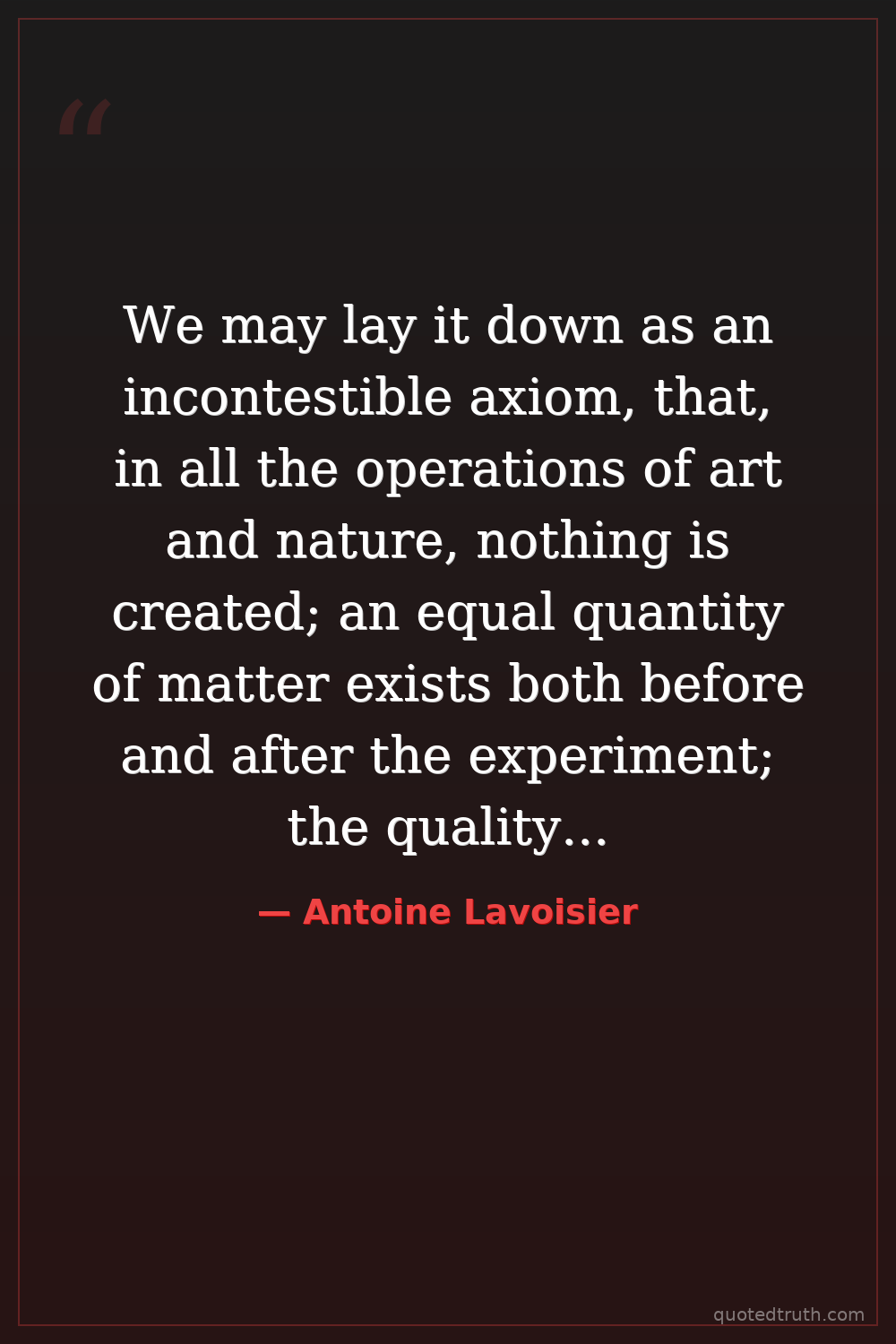
Matter cannot be created or destroyed. In any process, whether natural or human-made, the total amount of material stays constant before and after. Elements simply rearrange into new combinations, but their underlying quantity and identity persist. Change is just reshuffling, never genuine addition or loss. This principle says the universe's material ledger always balances, no matter what transformation appears to occur on the surface.
Relevance to Antoine Lavoisier
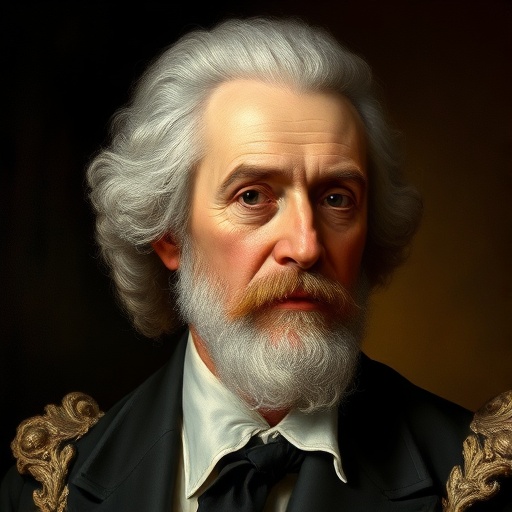
Lavoisier established this as chemistry's foundational law through meticulous quantitative experiments, weighing reactants and products on precision balances to prove mass conservation. A meticulous accountant by temperament, he also worked as a tax collector for the Ferme Générale, applying the same rigorous bookkeeping logic to nature. His insistence on measurement over speculation overthrew phlogiston theory and reframed chemistry as a quantitative science grounded in conserved elements rather than mystical essences.
The era
Written in 1789, the same year the French Revolution erupted, Lavoisier's Traité Élémentaire de Chimie appeared amid Enlightenment demands for reason, measurement, and systematic classification. Chemistry was shedding alchemical superstition as figures like Priestley and Cavendish isolated gases. Lavoisier's new nomenclature and balance-sheet approach mirrored revolutionary ideals of rational order. Tragically, the same revolution guillotined him in 1794, the judge reportedly declaring the Republic had no need of scientists.
AI-generated insights based on extensive research and information for context. Factual errors? Email [email protected].