William Harvey — "The best way to learn is to teach."
The best way to learn is to teach.
The best way to learn is to teach.
Click any product to generate a realistic preview. Up to 3 at a time.
* Initial load can take up to 90 seconds — revising the preview in another color is nearly instant.
"The study of anatomy is the study of God's handiwork."
"The blood carries nourishment to all parts of the body."
"The motion of the blood is constant and circular."
"The blood in the animal body is impelled in a circle, and is in a state of ceaseless motion."
"The quantity of blood transmitted from the veins to the arteries, and so into the whole body, is so great that it must return to the heart."
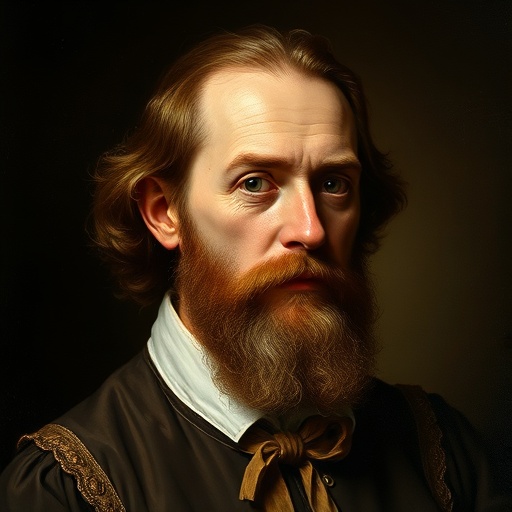
English physician whose On the Motion of the Heart and Blood in Animals (1628) demonstrated blood circulation, overturning 1,400 years of Galenic medicine. Closely associated with Francis Bacon (his contemporary in the new English empiricism). For an intellectual contrast, see Galenic medicine, the 2nd-century Greek medical tradition (humors, blood-as-consumed-fuel) — Harvey calculated that the heart pumps more blood per hour than the body could possibly produce as fuel — a single quantitative observation that demolished the entire Galenic-Aristotelian medical worldview. The cleanest example in medical history of arithmetic disproving 14 centuries of authority.
A pedagogical insight on the benefits of instructing others.
Date: Uncertain (attributed)
EducationalFound in 1 providers: gemini
1 source checked
Teaching forces you to confront what you don't fully understand. When you explain a concept to someone else, you must organize your thinking, anticipate questions, and fill in gaps you might otherwise gloss over. The act of articulating ideas clearly exposes weak reasoning and deepens your own grasp of the subject. Learning and teaching are not sequential steps — teaching is itself a method of learning, perhaps the most demanding one.
Harvey served as a Lumleian Lecturer at the Royal College of Physicians, giving public anatomy lectures for years. Teaching the mechanics of the heart and blood vessels forced him to confront Galen's 1,400-year-old model's inconsistencies. His discovery that blood moves in a closed loop driven by the heart emerged directly from this cycle of dissecting, observing, and explaining to skeptical audiences. Teaching anatomy was how Harvey built and stress-tested his revolutionary theory.
Harvey worked during the Scientific Revolution, when European medicine still deferred to Galen's ancient texts as unquestionable authority. Universities taught from books, not bodies. Harvey's era saw anatomy theaters emerge — public dissections where physicians demonstrated the body's structures to audiences. This shift from reading to showing made teaching inherently experimental. Challenging Galenic doctrine required not just personal conviction but persuasive demonstration, making the act of teaching inseparable from the act of discovery itself.
AI-generated insights based on extensive research and information for context. Factual errors? Email [email protected].
Your cart is empty