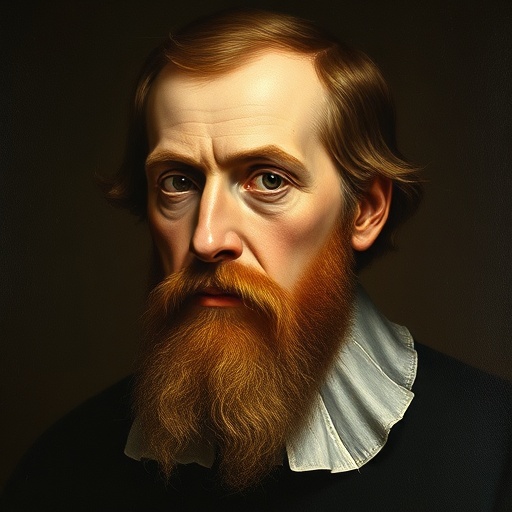
John Calvin — "The best way to overcome evil is to do good."
The best way to overcome evil is to do good.
The best way to overcome evil is to do good.
Click any product to generate a realistic preview. Up to 3 at a time.
* Initial load can take up to 90 seconds — revising the preview in another color is nearly instant.
"Whoever shall now contend that it is unjust to put heretics and blasphemers to death will knowingly and willingly incur their very guilt."
"We are never so much ourselves as when we are in Christ."
"...those whom God passes over [praeterit], he condemns [reprobat]; and this he does for no other reason than that he wills to exclude them from the inheritance which he predestines [praedestinat] for …"
"There is no worse screen to block out the Spirit than confidence in our own intelligence."
"We are not called to be popular, but to be faithful."
French theologian whose Institutes of the Christian Religion (1536) systematized Protestant Reformed doctrine, including predestination. Closely associated with Martin Luther (Reformation founder, Calvin's predecessor). For an intellectual contrast, see Jacobus Arminius, Dutch Reformed theologian (1560-1609) — Arminius's rejection of strict double-predestination founded Arminianism — the theological tradition modern Methodism, most evangelicalism, and Pentecostalism descend from. The Calvinist-Arminian debate has divided Protestantism for 400 years.
Found in 1 providers: grok
1 source checked
Evil is best defeated not by direct confrontation but by actively generating its opposite. Moral energy devoted to constructive goodness displaces wickedness more effectively than resistance alone. Rather than meeting wrongdoing with condemnation or force, fill the space it occupies with virtue. This is a practical ethics principle: doing good is not passive — it is the most powerful offensive strategy against corruption and harm in the world.
Calvin didn't just condemn Rome's corruption — he built alternatives. In Geneva he established the Consistory to enforce moral discipline, founded the Geneva Academy to train ministers, and organized systematic poor relief. His theology of sanctification insisted the elect must actively pursue holiness in civic life. Every reformed institution he constructed was an act of doing good as a direct weapon against the institutional evil he believed the Catholic Church embodied.
The 16th-century Reformation shattered Christian Europe's unity. Religious wars, martyrdoms, and Inquisition tribunals defined the era. Protestant reformers faced Catholic institutional power backed by monarchs and armies. Simply arguing against evil wasn't sufficient — reformers needed to prove their communities and governance produced better outcomes. Calvin's Geneva became a laboratory for demonstrating that righteous civic order could replace what he saw as Rome's corrupt and corrupting dominion over Christendom.
AI-generated insights based on extensive research and information for context. Factual errors? Email [email protected].
Your cart is empty