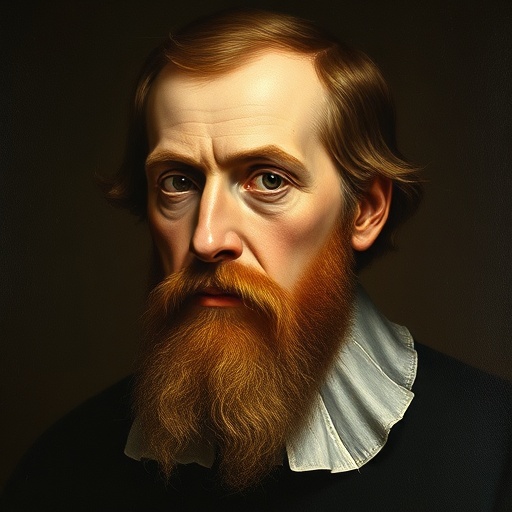
John Calvin — "We are never so much ourselves as when we are in Christ."
We are never so much ourselves as when we are in Christ.
We are never so much ourselves as when we are in Christ.
Click any product to generate a realistic preview. Up to 3 at a time.
* Initial load can take up to 90 seconds — revising the preview in another color is nearly instant.
"The reprobate are like hardened clay, which, the more it is baked, the harder it becomes."
"Without knowledge of God, there is no true knowledge of self."
"The perdition of the wicked is a manifestation of God's justice."
"There is not one blade of grass, there is no color in this world that is not intended to make us rejoice."
"God's glory is manifested in the salvation of the elect and the damnation of the reprobate."
French theologian whose Institutes of the Christian Religion (1536) systematized Protestant Reformed doctrine, including predestination. Closely associated with Martin Luther (Reformation founder, Calvin's predecessor). For an intellectual contrast, see Jacobus Arminius, Dutch Reformed theologian (1560-1609) — Arminius's rejection of strict double-predestination founded Arminianism — the theological tradition modern Methodism, most evangelicalism, and Pentecostalism descend from. The Calvinist-Arminian debate has divided Protestantism for 400 years.
Found in 1 providers: grok
1 source checked
True human identity and authentic selfhood are not found through individual achievement, social status, or personal striving. Instead, they are realized only through union with Christ. Rather than self-realization being an inward journey, it is found outwardly — by being incorporated into Christ. Our deepest nature is fulfilled, not suppressed, by faith. Genuine personhood is not diminished but completed through divine relationship, making self-discovery inseparable from spiritual belonging.
Calvin's entire theological system placed union with Christ — unio mystica — at its center, the hinge on which justification and sanctification both turned. His Institutes of the Christian Religion devotes extensive treatment to this doctrine. As Geneva's leading reformer, he argued human depravity made self-reliance a dead end. His own austere, disciplined life reflected the conviction that self-denial in service to God, not self-expression, was the path to genuine human flourishing.
Calvin wrote during the 16th-century Reformation as the medieval Catholic framework — identity defined by sacraments, hierarchy, and priestly mediation — was fracturing. Renaissance humanism celebrated individual potential and self-cultivation. Calvin countered: authentic selfhood comes through Christ, not autonomous reason or achievement. With the Wars of Religion looming and entire nations choosing confessional identities, claiming that true personhood is Christocentric was not merely theological — it was politically charged and existentially urgent.
AI-generated insights based on extensive research and information for context. Factual errors? Email [email protected].
Your cart is empty