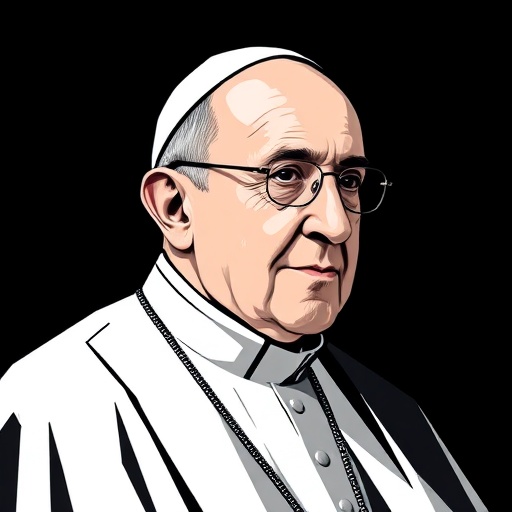
Pope Francis — "The Church is a field hospital after battle."
The Church is a field hospital after battle.
The Church is a field hospital after battle.
Click any product to generate a realistic preview. Up to 3 at a time.
* Initial load can take up to 90 seconds — revising the preview in another color is nearly instant.
"The devil exists, and he is a real person, not a myth."
"I am a disaster, but I am a disaster that asks for help."
"Ideologies divide, faith unites."
"It is not a good thing when priests become rigid. Rigidity is a sign of something bad. It is a sign of a lack of freedom, and that is a sign of spiritual worldliness."
"The biggest problem is that we don’t feel the problems of others."
First Latin American and Jesuit pope (2013-), who has steered the Catholic Church toward pastoral inclusion on LGBTQ pastoral care, divorced Catholics, and climate. Closely associated with Pope John XXIII (the Vatican II reformer pope) and Cardinal Walter Kasper (his theological ally on pastoral reform). For an intellectual contrast, see Cardinal Raymond Burke, American traditionalist cardinal, former head of the Vatican Apostolic Signatura — Burke is the public face of Catholic traditionalism that views Francis's pastoral approach as doctrinally dangerous — he has formally challenged Amoris Laetitia and other Francis reforms.
Found in 1 providers: deepseek
1 source checked
A field hospital after battle treats the wounded first — no paperwork, no questions about who deserves care, just urgent triage. Francis means the Church should operate the same way: reaching the broken, the addicted, the divorced, the struggling before applying doctrine. Healing comes before judgment. The institution exists to tend wounds, not maintain order. Proximity to suffering matters more than institutional tidiness or theological purity.
Bergoglio grew up in Buenos Aires, served communities in Argentina's slums, and witnessed political violence during the Dirty War. As a Jesuit, he inherited a tradition of going to the margins, not the center. He took public transit, visited prisoners, and publicly embraced men with severe disfigurements. The field hospital image matches his papacy's defining word — mercy — and his 2016 document Amoris Laetitia, which prioritized pastoral accompaniment over doctrinal rigidity for divorced Catholics.
Francis coined this phrase in a landmark 2013 America Magazine interview just months into his papacy. The Church was reeling from the clergy abuse crisis and declining Western attendance, having become culturally identified with rigid moral policing on contraception and same-sex marriage. He was signaling a deliberate pivot: stop fighting culture wars, start binding wounds. The metaphor reframed the institution from moral gatekeeper to emergency caregiver during a period of deep credibility collapse.
AI-generated insights based on extensive research and information for context. Factual errors? Email [email protected].
Your cart is empty