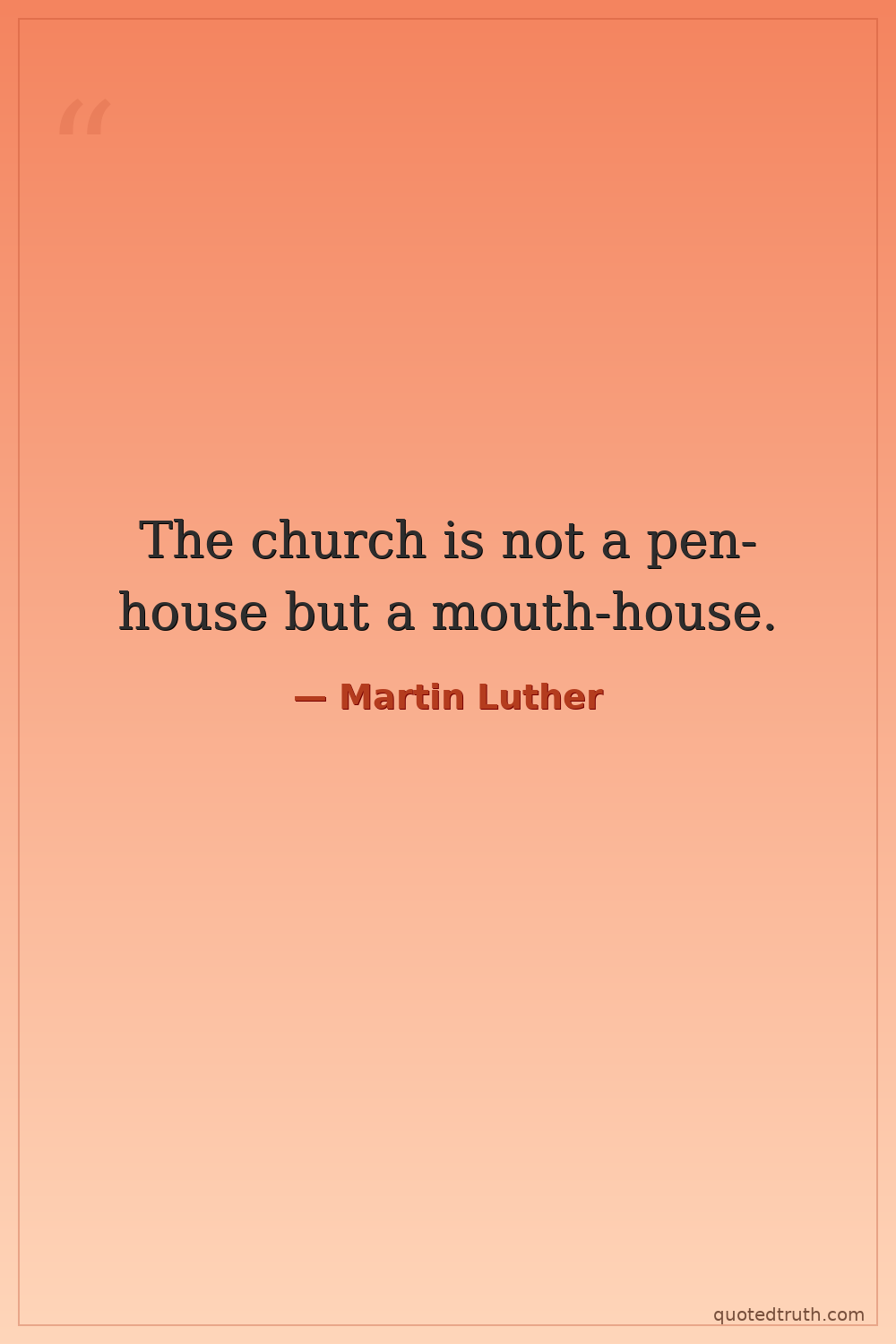
Martin Luther — "The church is not a pen-house but a mouth-house."
The church is not a pen-house but a mouth-house.
The church is not a pen-house but a mouth-house.
Click any product to generate a realistic preview. Up to 3 at a time.
* Initial load can take up to 90 seconds — revising the preview in another color is nearly instant.
"I have had many struggles with the devil, and I know him well."
"A theologian is born by living, nay dying and being damned, not by thinking, reading, or speculating."
"I frankly confess that even if it were possible I should not wish to have free choice given to me, or to have anything left in my own hands by which I might strive for salvation."
"It does not matter what people DO; it only matters what they BELIEVE."
"You are not only responsible for what you say, but also for what you do not say."
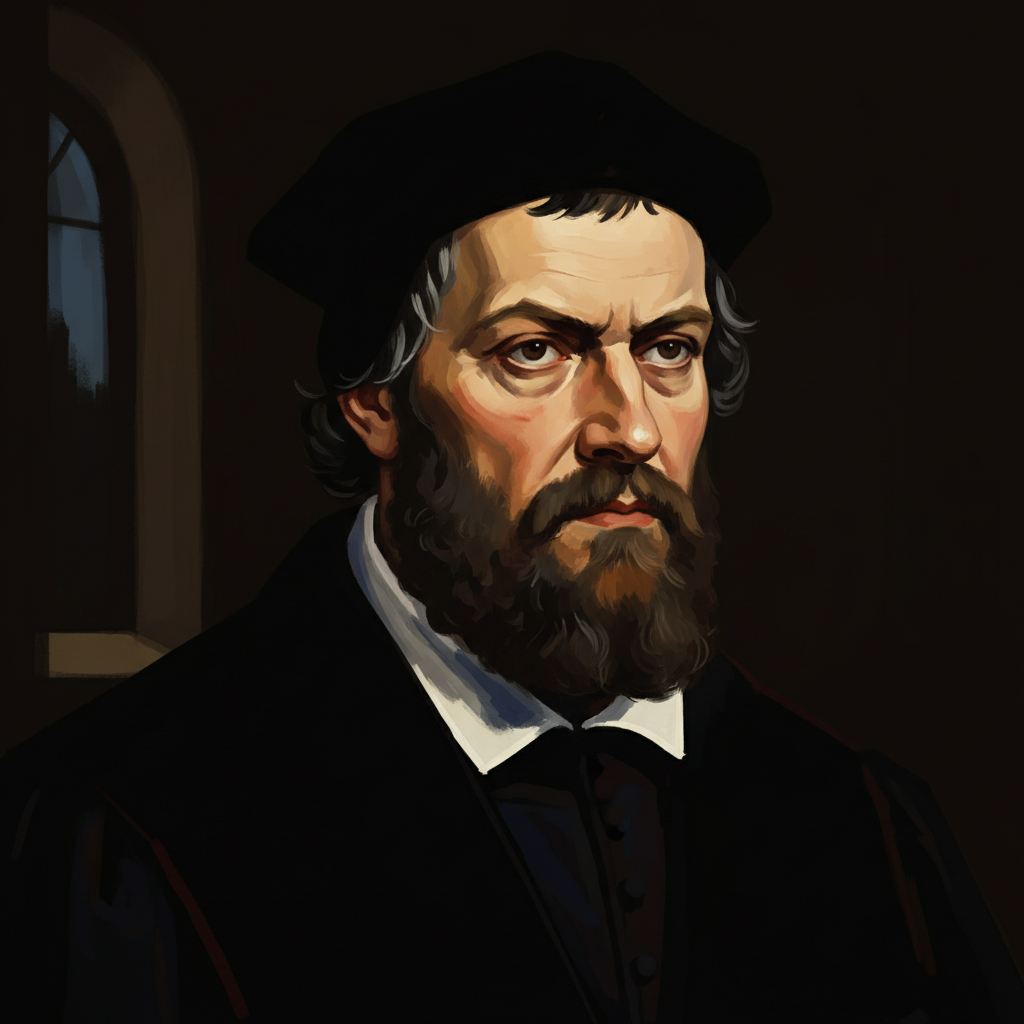
German theologian whose 95 Theses (1517) launched the Protestant Reformation and broke the Catholic Church's monopoly on Western Christianity. Closely associated with Philipp Melanchthon (Lutheran systematizer) and John Calvin (later Reformer who built on Luther's break). For an intellectual contrast, see Pope Leo X, Renaissance pope (1513-1521) — Leo X's indulgence sales triggered Luther's break and Leo excommunicated him in 1521 — Luther's entire Reformation is structured as a direct answer to the indulgence-funded Vatican Leo represented.
Found in 1 providers: gemini
1 source checked
Christianity is meant to be spoken aloud and heard, not confined to written documents or silent reading. The faith lives in preaching, conversation, and oral proclamation rather than in ink on paper. A community of believers is defined by voices declaring the message to one another, not by shelves of books or official written decrees issued from clerical offices.
Luther, a preaching friar and professor of biblical theology at Wittenberg, built his reform around the sermon and vernacular proclamation. Though he translated the Bible into German and produced floods of pamphlets, he insisted the Word works through the living voice. His own thunderous preaching, hymn-writing, and catechisms embodied this conviction that Gospel must be spoken into the ears of ordinary people.
In early sixteenth-century Europe, the Latin Mass kept Scripture inaudible to laity, while Gutenberg's press was flooding Germany with printed tracts. Luther exploited print aggressively, yet reacted against a medieval church culture fixated on written canon law, indulgence letters, and silent clerical ritual. Reformation worship restored congregational singing, vernacular preaching, and read-aloud Scripture, reshaping churches into acoustic spaces where townspeople gathered to hear rather than merely observe.
AI-generated insights based on extensive research and information for context. Factual errors? Email [email protected].
Your cart is empty