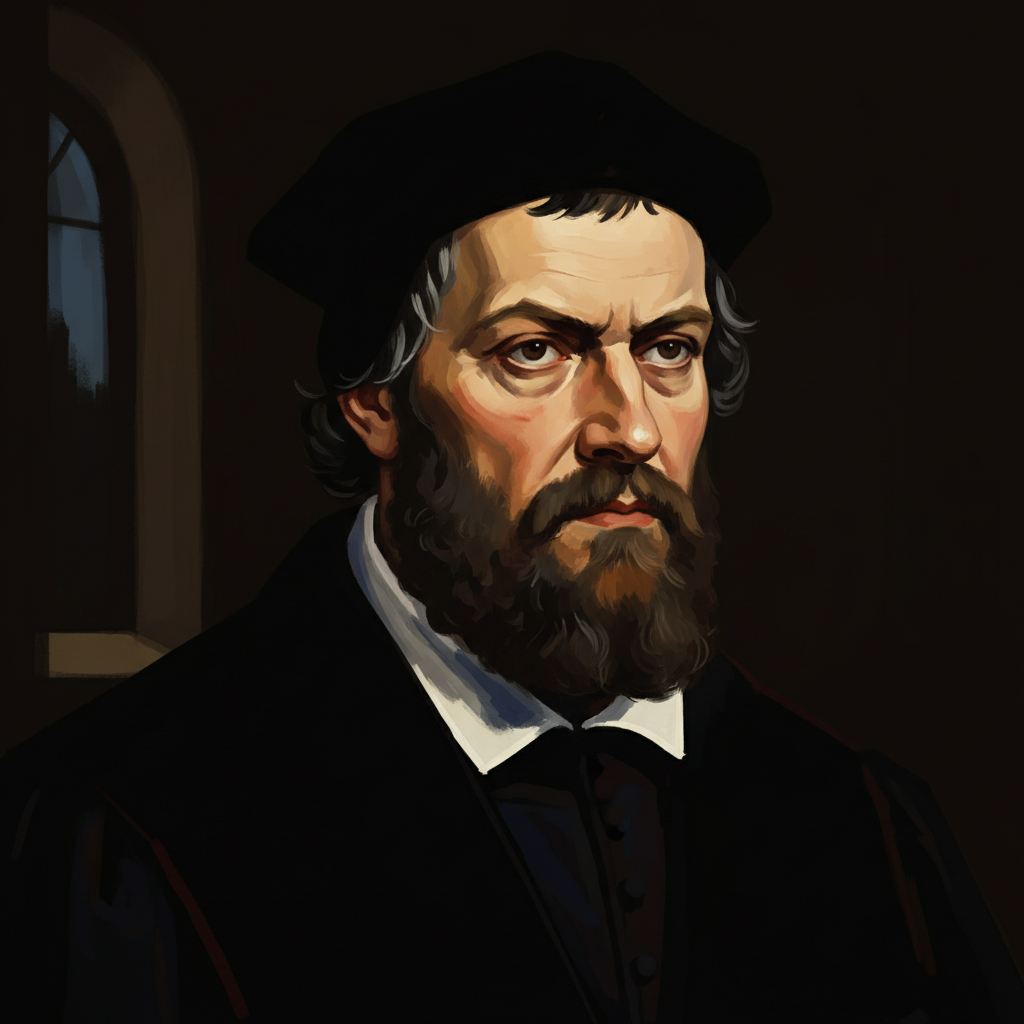
Martin Luther — "A theologian is born by living, nay dying and being damned, not by thinking, rea…"
A theologian is born by living, nay dying and being damned, not by thinking, reading, or speculating.
A theologian is born by living, nay dying and being damned, not by thinking, reading, or speculating.
Click any product to generate a realistic preview. Up to 3 at a time.
* Initial load can take up to 90 seconds — revising the preview in another color is nearly instant.
"I am like a ripe nut; I am ready to fall."
"You are not yet a master of the Scriptures. You will find that out when you try to preach."
"The world is a great privy and I am a stool."
"If any man doth ascribe of salvation, even the very least, to the free will of man, he knoweth nothing of grace, and he hath not learnt Jesus Christ aright."
"Medicine causes illness, Mathematics melancholy, and Theology sinful people."
German theologian whose 95 Theses (1517) launched the Protestant Reformation and broke the Catholic Church's monopoly on Western Christianity. Closely associated with Philipp Melanchthon (Lutheran systematizer) and John Calvin (later Reformer who built on Luther's break). For an intellectual contrast, see Pope Leo X, Renaissance pope (1513-1521) — Leo X's indulgence sales triggered Luther's break and Leo excommunicated him in 1521 — Luther's entire Reformation is structured as a direct answer to the indulgence-funded Vatican Leo represented.
Found in 1 providers: deepseek
1 source checked
Real theological understanding comes through lived experience, especially suffering and facing one's own spiritual ruin, not through academic study or abstract thought. You cannot reason your way to knowing God. Only being broken, despairing of yourself, and encountering divine judgment firsthand forges genuine insight. Books and debates produce scholars; anguish and surrender produce theologians. Knowledge of the sacred is earned in the crucible of personal crisis, not the library.
Luther lived this claim. As an Augustinian monk, he endured crushing scrupulosity and terror of damnation, later called Anfechtungen, spiritual assaults he said taught him more than all his study. His breakthrough on justification by faith came not from scholastic method but from wrestling with Romans while feeling condemned. He distrusted speculative theology, mocking Aristotle's grip on the universities, and insisted true doctrine was forged through prayer, meditation, and trial.
In early sixteenth-century Europe, theology was dominated by scholasticism, which treated divine truth as a logical system mastered through Aristotle, Aquinas, and syllogism in university faculties. Luther's 1517 break ignited the Reformation and challenged that entire framework. Printing spread his writings rapidly, the Catholic Church fractured, and peasants, princes, and scholars debated salvation openly. Claiming theology was born of suffering rather than academic credentialing undercut clerical authority and reframed religious knowledge as accessible to any afflicted conscience.
AI-generated insights based on extensive research and information for context. Factual errors? Email [email protected].
Your cart is empty