Carl Linnaeus — "The classification of animals is easier than that of plants."
The classification of animals is easier than that of plants.
The classification of animals is easier than that of plants.
Click any product to generate a realistic preview. Up to 3 at a time.
* Initial load can take up to 90 seconds — revising the preview in another color is nearly instant.
"The natural system is the highest goal of botany."
"I am not ashamed to confess that I am a man who loves flowers."
"The plant kingdom covers the entire earth, offering our senses great pleasure and the delights of summer."
"I have established a new era in natural history."
"The stony rocks are not primeval, but daughters of Time."
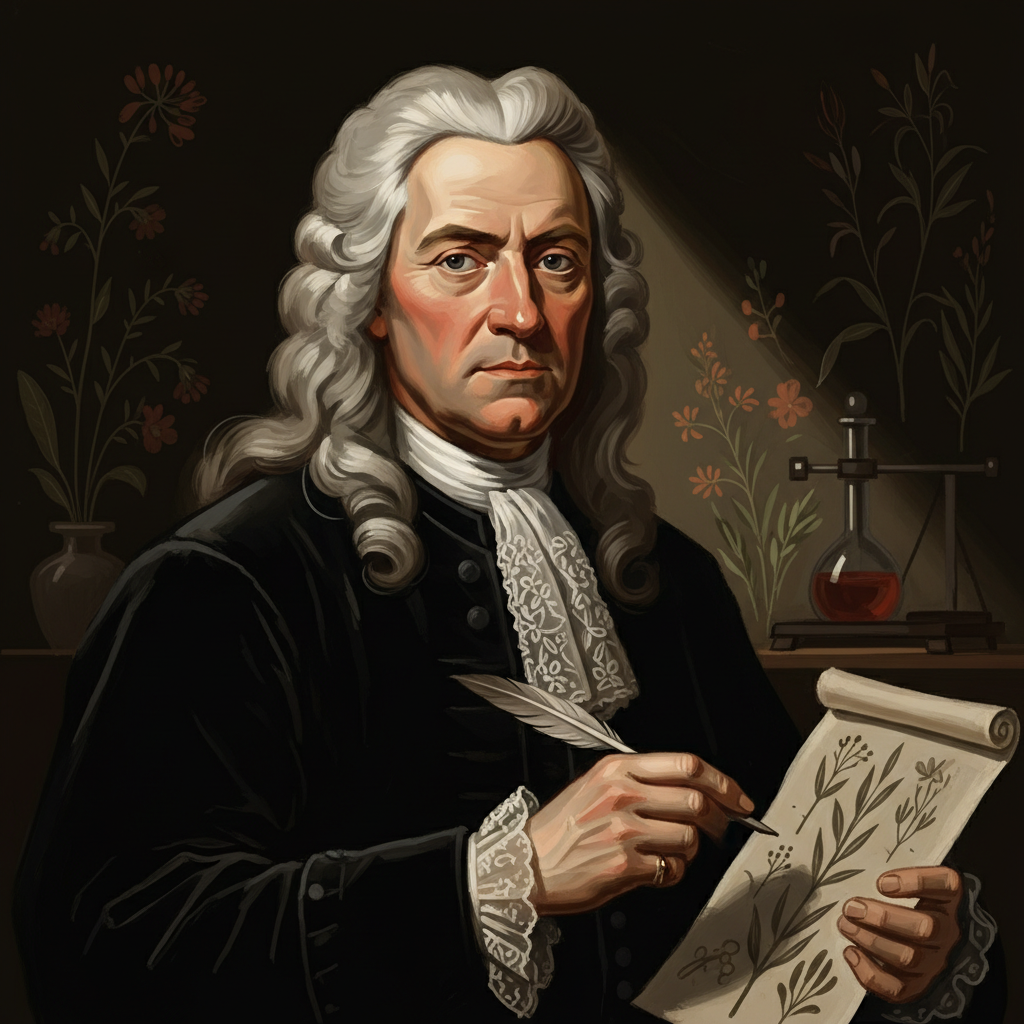
Swedish botanist and the father of modern taxonomy whose Systema Naturae (1735) introduced binomial nomenclature for naming all species. Closely associated with Joseph Banks (British naturalist who carried Linnaean classification on Cook's voyages). For an intellectual contrast, see Comte de Buffon, French naturalist and Histoire Naturelle author (1749-1788) — Buffon explicitly attacked Linnaean fixed-categories taxonomy as artificial and rejected the binomial system; his gradualist, environment-shaped natural history was the explicit alternative. Anticipates the fixed-species-vs-evolution debate Darwin would later resolve.
A comparative statement on the relative ease of classifying different life forms.
Date: c. 1730s-1770s
Nature & WorldFound in 1 providers: gemini
1 source checked
Categorizing animals into distinct groups is a more straightforward task than doing the same for plants. Animals tend to have clearer physical differences, behaviors, and boundaries between species, making them easier to sort and name systematically than the highly variable, often gradual distinctions found across the plant kingdom.
Linnaeus spent his career developing binomial nomenclature and the foundational system for classifying all living things. He personally grappled with both kingdoms extensively, producing Species Plantarum and Systema Naturae. His botanical work was famously painstaking—plants hybridize freely, vary by environment, and share convergent features—lending this observation the weight of hard-won professional experience.
In the 18th century, naturalists were encountering thousands of newly documented species from global exploration. Botanical specimens flooded European herbaria from the Americas, Asia, and Africa, overwhelming existing classification schemes. Without genetics or microscopy, distinguishing plant species relied on flower morphology and subtle structural cues, making plant taxonomy a central, contested challenge of Enlightenment natural history.
AI-generated insights based on extensive research and information for context. Factual errors? Email [email protected].
Your cart is empty