What it means
Humans have dreamed of flying for countless generations. Our distant ancestors, exhausted from crossing vast distances on foot, looked to the skies and wished for a faster, easier way to travel. This longing wasn't invented by modern inventors; it's an inherited hunger passed down through history. The pursuit of flight is therefore not a new ambition but the fulfillment of an ancient human wish rooted in the universal struggle against distance and fatigue.
Relevance to Wright Brothers (Orville & Wilbur)
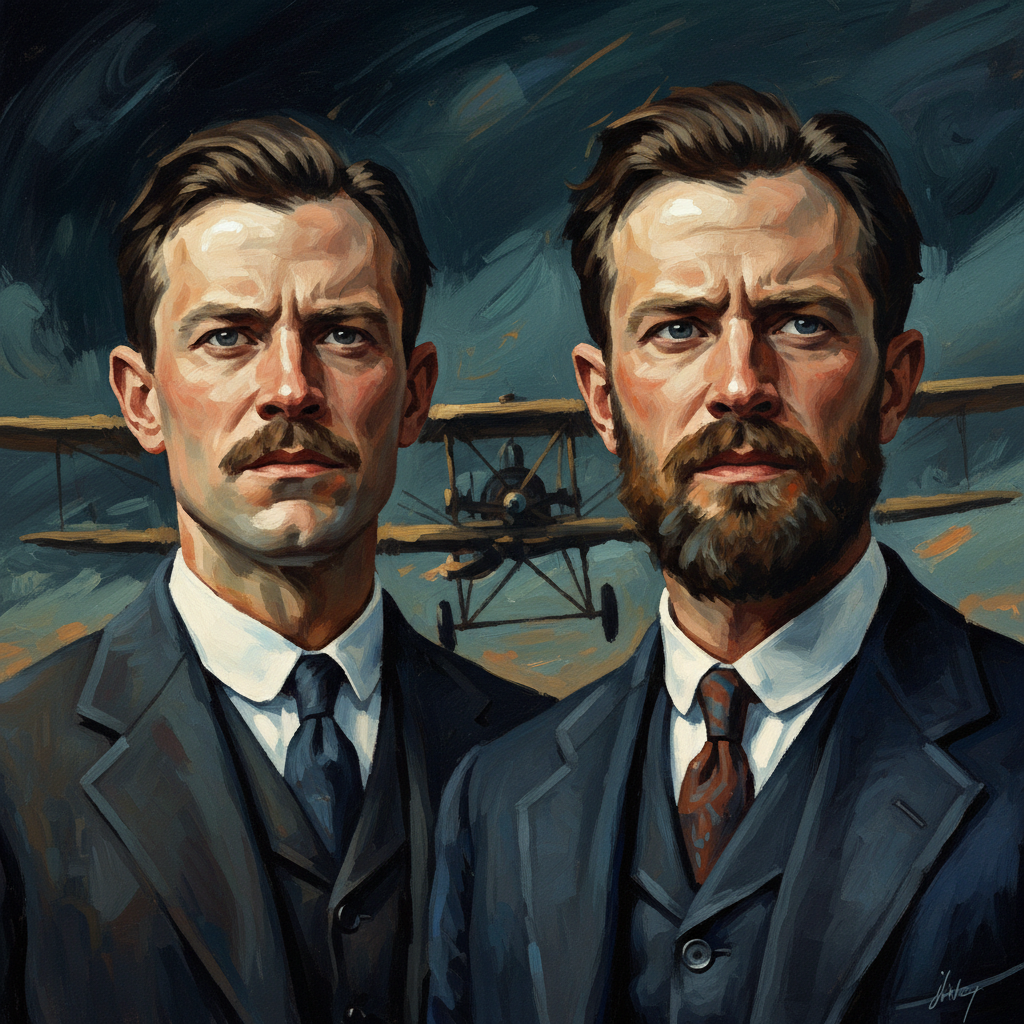
Wilbur wrote this reflection tying their mechanical achievement to a deeper human story. The Wrights were bicycle mechanics from Dayton, Ohio who saw themselves less as lone geniuses than as heirs to a long tradition of dreamers. Studying Lilienthal, Chanute, and birds, they framed their 1903 Kitty Hawk success as continuing ancestral yearning rather than breaking from it, which matched their modest, methodical Midwestern character.
The era
At the turn of the 20th century, travel still meant trains, horses, and steamships across a rapidly industrializing world. Americans were pushing westward, immigrants crossed oceans for weeks, and the idea of conquering distance dominated the age. Ballooning existed but heavier-than-air flight was widely mocked as impossible. When the Wrights flew in December 1903, they transformed a mythic human longing, echoed from Icarus through pioneer wagon trains, into practical reality.
AI-generated insights based on extensive research and information for context. Factual errors? Email [email protected].