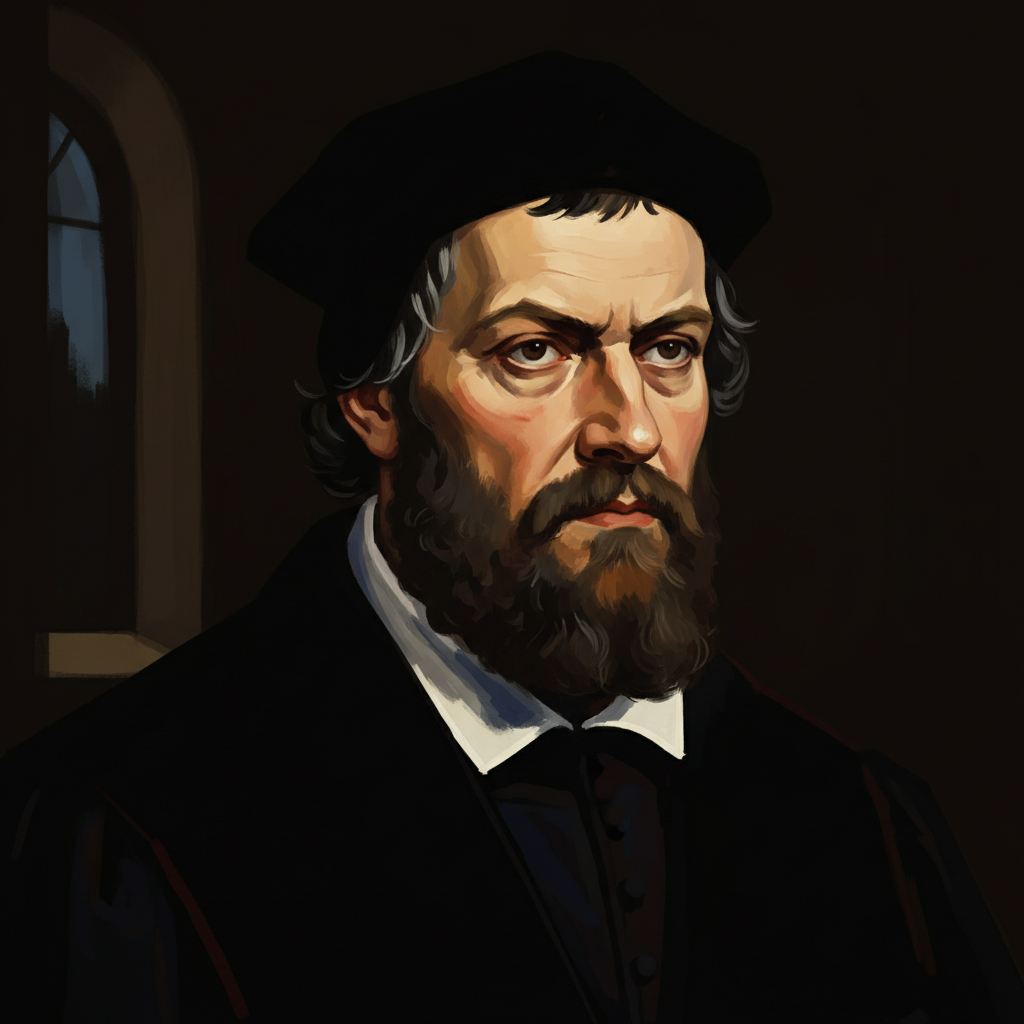
Martin Luther — "The dog is the most faithful of animals and would be much esteemed were it not s…"
The dog is the most faithful of animals and would be much esteemed were it not so common. Our Lord God has made His greatest gifts the commonest.
The dog is the most faithful of animals and would be much esteemed were it not so common. Our Lord God has made His greatest gifts the commonest.
Click any product to generate a realistic preview. Up to 3 at a time.
* Initial load can take up to 90 seconds — revising the preview in another color is nearly instant.
"Your home, once the holiest of all, has become the most licentious den of thieves, the most shameless of all brothels, the kingdom of sin, death, and hell. It is so bad that even Antichrist himself, i…"
"I never learned anything by being told, but only by doing."
"If they can bear to live among us Christians and Jews, then they should be forced to work like women in childbirth."
"My conscience is captive to the Word of God. I cannot and I will not recant anything, for to go against conscience is neither right nor safe. Here I stand, I can do no other. God help me. Amen."
"For I know One who suffered and made satisfaction on my behalf. His name is Jesus Christ, Son of God, and where He is there I shall be also!"
German theologian whose 95 Theses (1517) launched the Protestant Reformation and broke the Catholic Church's monopoly on Western Christianity. Closely associated with Philipp Melanchthon (Lutheran systematizer) and John Calvin (later Reformer who built on Luther's break). For an intellectual contrast, see Pope Leo X, Renaissance pope (1513-1521) — Leo X's indulgence sales triggered Luther's break and Leo excommunicated him in 1521 — Luther's entire Reformation is structured as a direct answer to the indulgence-funded Vatican Leo represented.
Found in 1 providers: gemini
1 source checked
Dogs are deeply loyal, yet we take them for granted simply because they are everywhere. The same applies to life's greatest blessings: air, water, sunlight, family, health. Rarity inflates perceived value, while abundance dulls our gratitude. The quote urges readers to notice that what is ordinary and freely available is often what matters most, and that familiarity should not be mistaken for lack of worth.
Luther, a former Augustinian monk turned reformer, constantly emphasized that salvation and grace were free gifts from God, not earned commodities. His theology of sola gratia mirrors this observation: the most precious things are given generously, not sold or rationed. Luther also loved domestic life, kept dogs at the Black Cloister in Wittenberg, and frequently drew spiritual lessons from household animals and everyday objects during his famous Table Talk gatherings.
In early modern Europe, the medieval Church sold indulgences and treated grace as a scarce, priced commodity requiring priestly mediation. Luther's 1517 Ninety-Five Theses shattered that economy by insisting God's gifts flow freely to ordinary believers. Peasants, townsfolk, and dogs alike shared humble daily life amid plague, war, and poverty, making reflections on common blessings especially resonant in an age when survival itself felt precarious and undervalued.
AI-generated insights based on extensive research and information for context. Factual errors? Email [email protected].
Your cart is empty