What it means
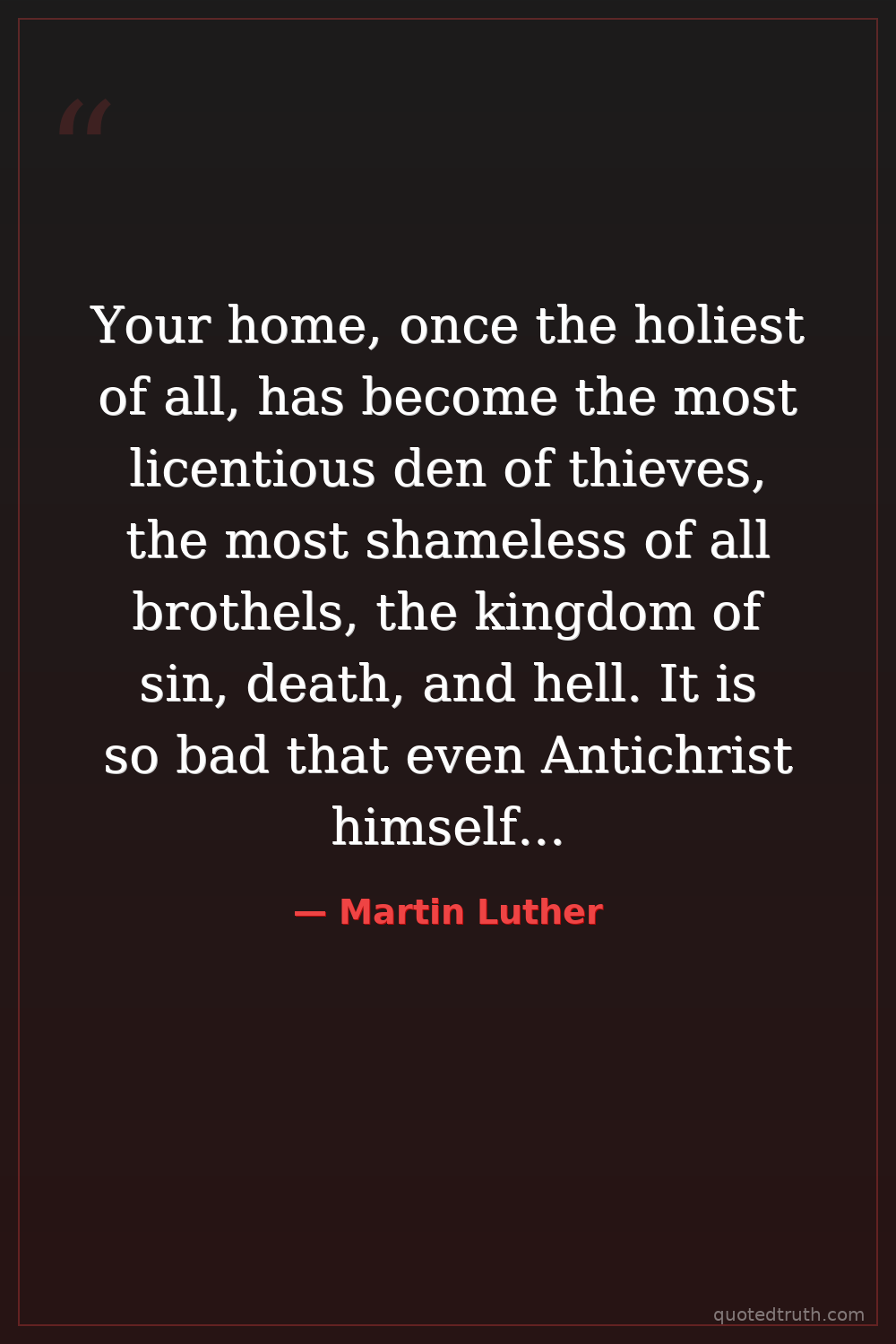
This is a scorching condemnation of the Roman Catholic Church, accusing it of collapsing from a sacred institution into a corrupt, greedy, and morally bankrupt operation. The speaker claims the Church has become so depraved that even the ultimate figure of evil could not make it worse. In modern terms: the place meant to be holiest has turned into the most shameless racket imaginable, beyond further corruption.
Relevance to Martin Luther
Luther built his career attacking papal corruption, starting with the 95 Theses in 1517 against indulgence sales. As an Augustinian monk turned reformer, he grew convinced the papacy was the Antichrist, especially after his 1520 excommunication. This rhetoric matches his late polemics like 'Against the Roman Papacy, an Institution of the Devil' (1545), where his language toward Rome became extreme, apocalyptic, and deliberately shocking.
The era
In early modern Europe, the Church sold indulgences to fund St. Peter's Basilica, Renaissance popes lived lavishly, and clerical corruption was widespread. The printing press spread reformist pamphlets rapidly, while Germany resented Rome's financial extraction. Luther's words landed in a Europe already primed for religious revolt, fracturing Christendom into Catholic and Protestant camps and triggering over a century of religious wars, including the Thirty Years' War.
AI-generated insights based on extensive research and information for context. Factual errors? Email [email protected].