What it means
Luther declares that his conscience is bound by Scripture and he refuses to take back his writings, because acting against his conscience would be morally wrong and spiritually dangerous. He accepts the consequences, plants himself firmly in his position, and asks God for strength. In modern terms: I've read the evidence, I believe what I believe, I won't pretend otherwise just because powerful people demand it, and I'll face whatever comes.
Relevance to Martin Luther
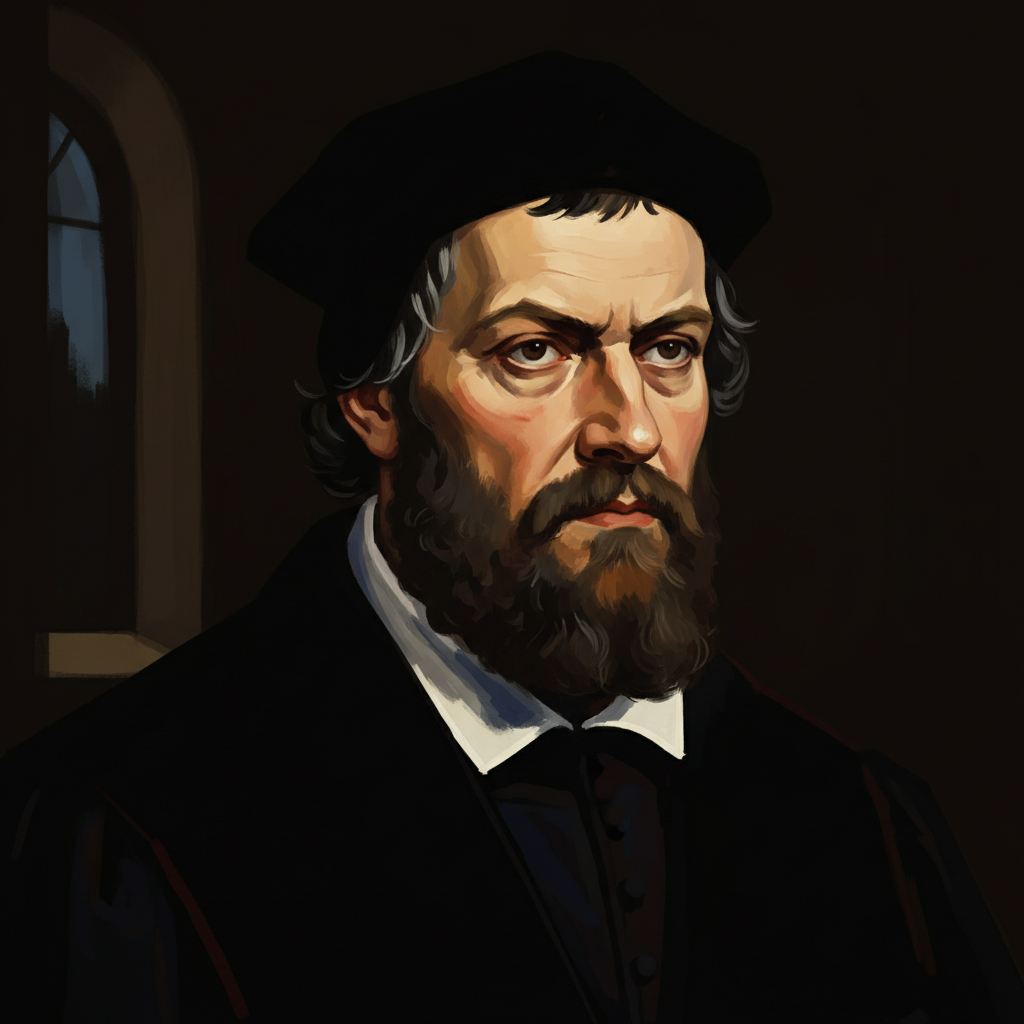
Luther spoke these words at the Diet of Worms in 1521, standing before Emperor Charles V and Church officials who demanded he retract his writings. A former Augustinian monk and theology professor at Wittenberg, he had staked everything on the authority of Scripture over papal decree. Refusing to recant meant excommunication and outlaw status, yet his insistence on personal conscience bound by the Bible defined his life's work and launched the Reformation.
The era
The early 1500s saw the Catholic Church's monopoly on Western Christianity cracking under pressure from printing presses, rising literacy, indulgence abuses, and humanist scholarship returning to original texts. Charles V's Holy Roman Empire enforced religious uniformity with the stake. Luther's refusal at Worms shattered the assumption that ordinary believers must defer to clerical authority, triggering decades of religious wars, the rise of Protestant states, and the Western idea that individual conscience can outrank institutional power.
AI-generated insights based on extensive research and information for context. Factual errors? Email [email protected].