What it means
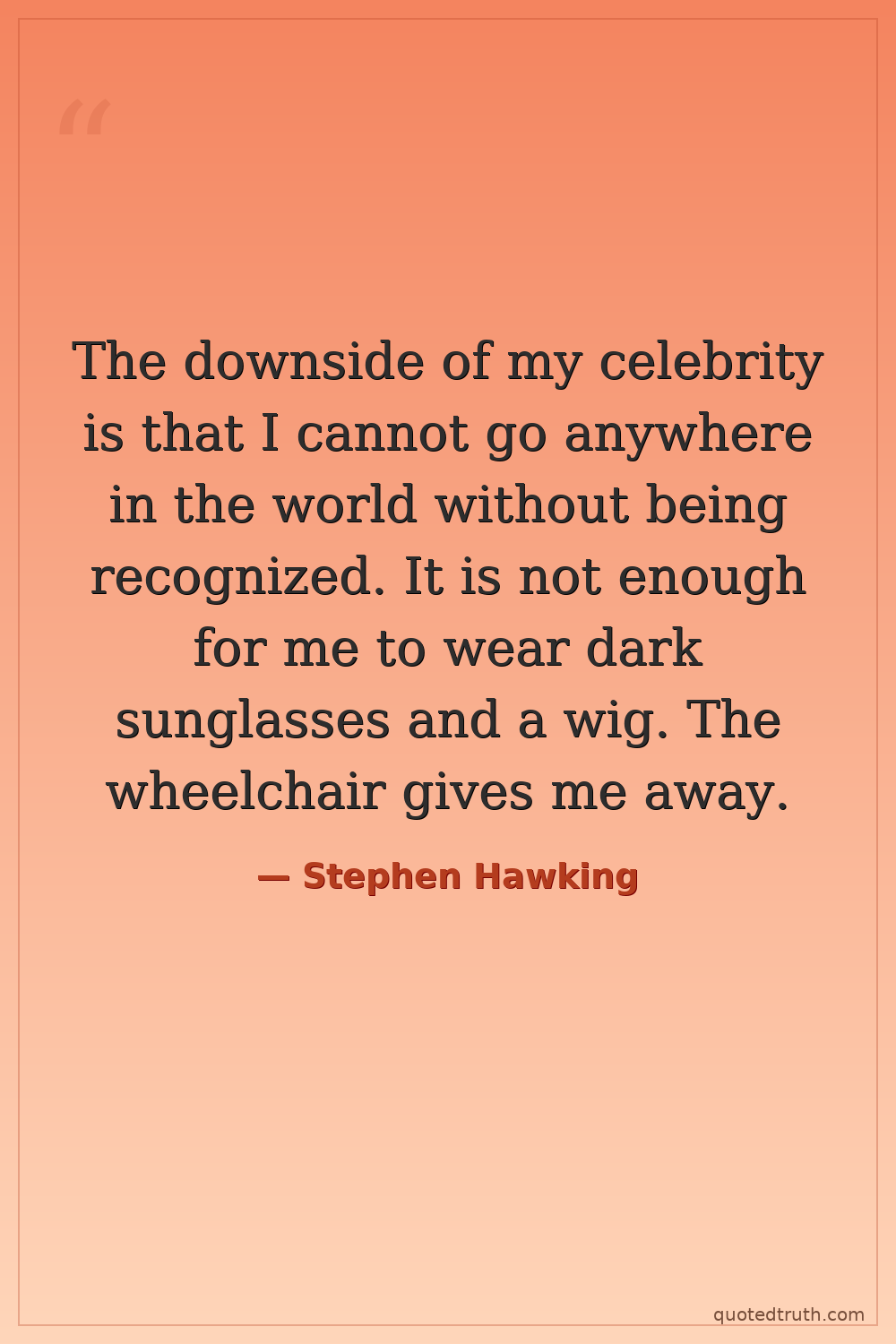
Fame creates an inescapable public identity that follows you everywhere, stripping away ordinary privacy. No disguise or anonymity is possible when you are globally recognized. The speaker acknowledges the paradox of celebrity — while it grants influence and platform, it permanently eliminates the freedom to move through the world unnoticed, a quiet loss most people never experience.
Relevance to Stephen Hawking
Hawking became one of science's most recognizable figures despite severe physical disability from ALS, diagnosed at 21. His motorized wheelchair and synthesized voice became iconic symbols worldwide. The self-deprecating humor here is quintessentially Hawking — using his disability as the punchline while simultaneously acknowledging his extraordinary global stature as a physicist, author of A Brief History of Time, and cultural phenomenon.
The era
Hawking rose to mass celebrity during the 1980s-2000s media age when scientists rarely achieved rock-star recognition. A Brief History of Time sold 10 million copies. His appearances on The Simpsons, Star Trek, and Big Bang Theory made him a genuine pop-culture figure. This era's 24-hour news cycle and growing science communication culture created unprecedented public fascination with brilliant personalities.
AI-generated insights based on extensive research and information for context. Factual errors? Email [email protected].