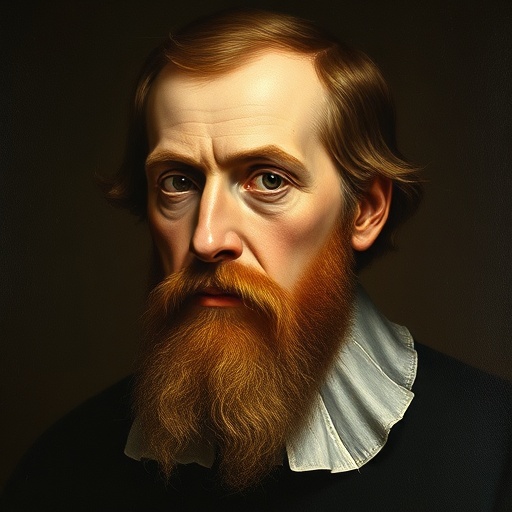
John Calvin — "The elect are chosen before the foundation of the world."
The elect are chosen before the foundation of the world.
The elect are chosen before the foundation of the world.
Click any product to generate a realistic preview. Up to 3 at a time.
* Initial load can take up to 90 seconds — revising the preview in another color is nearly instant.
"The proper knowledge of God is when we know him to be our Father."
"Faith is a firm and certain knowledge of God's benevolence toward us, founded upon the truth of the freely given promise in Christ, both revealed to our minds and sealed upon our hearts through the Ho…"
"When God chooses a man, he does not consider what he is, but what he will make him."
"Ignorance is the mother of superstition."
"For I stay not to consider the extravagance of those who say that grace is offered equally and promiscuously to all."
French theologian whose Institutes of the Christian Religion (1536) systematized Protestant Reformed doctrine, including predestination. Closely associated with Martin Luther (Reformation founder, Calvin's predecessor). For an intellectual contrast, see Jacobus Arminius, Dutch Reformed theologian (1560-1609) — Arminius's rejection of strict double-predestination founded Arminianism — the theological tradition modern Methodism, most evangelicalism, and Pentecostalism descend from. The Calvinist-Arminian debate has divided Protestantism for 400 years.
Found in 1 providers: grok
1 source checked
The doctrine of predestination: God determined before creating the universe exactly which individuals would receive salvation. It is not earned through deeds, prayers, or faith decisions — it is a sovereign divine choice made outside of time entirely. Human merit plays no role; God's will alone determines eternal destiny. This strips away any notion that individuals can secure their own salvation, repositioning grace as wholly God's gift rather than a transaction.
Calvin made predestination the cornerstone of Reformed theology, elaborating it systematically in his Institutes of the Christian Religion (1536). Running Geneva as a theocratic city-state, he governed on the premise that God's sovereign will directed all things. He saw his own reform mission as divinely ordained. This doctrine sharply distinguished Calvinism from Lutheranism and Catholicism, becoming the defining tenet of Reformed churches across Europe and eventually America.
The 16th-century Reformation shattered Catholic authority and forced urgent questions about salvation, grace, and human agency. Catholic teaching held that sacraments and meritorious works contributed to salvation — Calvin's absolute predestination was a direct theological assault on that framework. Amid religious wars, inquisitions, and competing Protestant factions, asserting God's total sovereignty over human destiny offered believers unshakeable certainty in an era of profound institutional collapse and spiritual crisis.
AI-generated insights based on extensive research and information for context. Factual errors? Email [email protected].
Your cart is empty