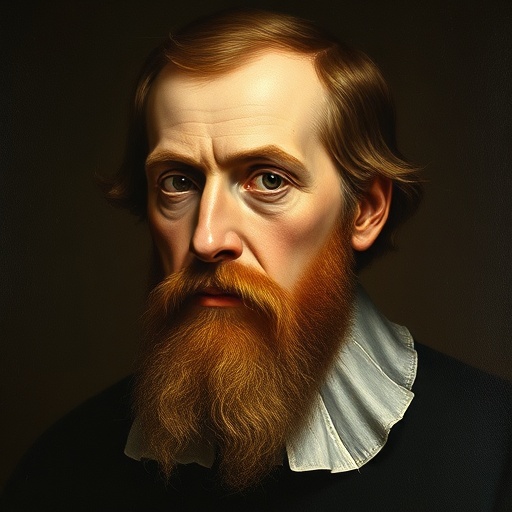
John Calvin — "For I stay not to consider the extravagance of those who say that grace is offer…"
For I stay not to consider the extravagance of those who say that grace is offered equally and promiscuously to all.
For I stay not to consider the extravagance of those who say that grace is offered equally and promiscuously to all.
Click any product to generate a realistic preview. Up to 3 at a time.
* Initial load can take up to 90 seconds — revising the preview in another color is nearly instant.
"The reprobate are without excuse, because the knowledge of God is sufficiently manifested to them, though they reject it."
"God's glory is the end of all things."
"God works in the hearts of men to incline their wills as he pleases."
"It would be indeed better to grant license to thieves and sorcerers and adulterers, than to suffer the blasphemies which the ungodly utter against God, to prevail without any punishment and without an…"
"We call predestination God's eternal decree, by which he compacted with himself what he willed to become of each man. For all are not created in equal condition; rather, eternal life is foreordained f…"
French theologian whose Institutes of the Christian Religion (1536) systematized Protestant Reformed doctrine, including predestination. Closely associated with Martin Luther (Reformation founder, Calvin's predecessor). For an intellectual contrast, see Jacobus Arminius, Dutch Reformed theologian (1560-1609) — Arminius's rejection of strict double-predestination founded Arminianism — the theological tradition modern Methodism, most evangelicalism, and Pentecostalism descend from. The Calvinist-Arminian debate has divided Protestantism for 400 years.
Institutes of the Christian Religion, Book II, Chapter 2, Section 6
Date: 1559
Social & RacialFound in 1 providers: gemini
1 source checked
Calvin is dismissing the idea that God's saving grace is available equally to everyone. He calls this view extravagant — meaning excessive and unreasonable. His point is that grace is not distributed indiscriminately across all humanity but is specifically granted by God to those He has chosen, the elect. This reflects his core conviction that salvation is determined entirely by God's sovereign choice, not by human will or universal availability.
Calvin was the architect of Reformed theology, centering his entire system on predestination: God sovereignly elects some for salvation and passes over others. His Institutes of the Christian Religion, expanded through 1559, systematically rejected universal grace. He governed Geneva as a theocracy grounded in absolute divine sovereignty. This dismissal of indiscriminate grace was not peripheral — it was the theological cornerstone his Reformed church and the entire Calvinist tradition were built upon.
The Protestant Reformation fractured Western Christianity's theological consensus, and debates over grace erupted fiercely. Luther's clash with Erasmus over free will in 1524 set the stage. Calvin wrote amid the Council of Trent, where Catholicism formalized its doctrine of universal salvific will. Proto-Arminian views were also spreading among Protestants. Calvin's sharp rejection of universally offered grace defined Reformed theology against both Rome and rival Protestant movements, cementing a distinct Calvinist identity across Europe.
AI-generated insights based on extensive research and information for context. Factual errors? Email [email protected].
Your cart is empty