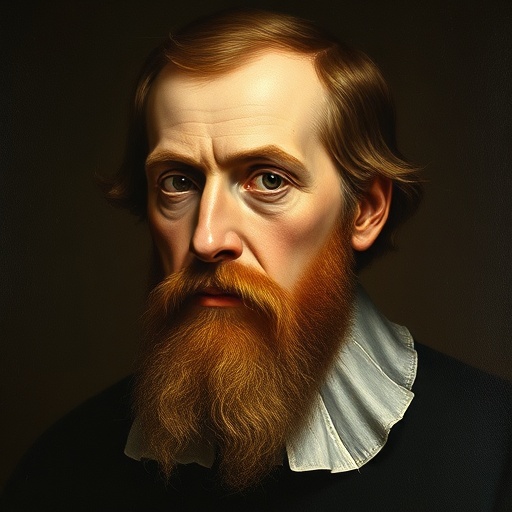
John Calvin — "The eternal counsel of God is the cause of election and reprobation."
The eternal counsel of God is the cause of election and reprobation.
The eternal counsel of God is the cause of election and reprobation.
Click any product to generate a realistic preview. Up to 3 at a time.
* Initial load can take up to 90 seconds — revising the preview in another color is nearly instant.
"We are saved by grace alone, through faith alone, in Christ alone."
"A dog barks when his master is attacked. I would be a coward if I saw that God's truth is attacked and yet would remain silent."
"We must live as if we were always in the presence of God."
"God's providence is not only general, but extends to all the particular facts of life."
"God's foreknowledge and predestination are not the same; for foreknowledge is simple knowledge, but predestination is a decree."
French theologian whose Institutes of the Christian Religion (1536) systematized Protestant Reformed doctrine, including predestination. Closely associated with Martin Luther (Reformation founder, Calvin's predecessor). For an intellectual contrast, see Jacobus Arminius, Dutch Reformed theologian (1560-1609) — Arminius's rejection of strict double-predestination founded Arminianism — the theological tradition modern Methodism, most evangelicalism, and Pentecostalism descend from. The Calvinist-Arminian debate has divided Protestantism for 400 years.
Found in 1 providers: grok
1 source checked
God decided before time began who would be saved and who would be damned — not based on anything people do or deserve, but purely from his own eternal will. This is double predestination: God actively chose some for salvation (election) and passed over or condemned others (reprobation). Human choice plays no role; the outcome is fixed in God's eternal plan, making salvation entirely a matter of divine sovereignty, not human effort or merit.
Calvin made double predestination the cornerstone of Reformed theology in his Institutes of the Christian Religion (1536–1559). Ruling Geneva as a theocratic city-state, he built institutions around God's absolute sovereignty. A former lawyer trained in rigorous logic, Calvin treated predestination as the unavoidable conclusion of humanity's total depravity and God's omnipotence. His pastoral letters show he offered it as comfort — the saved could trust their salvation depended on God's unchanging decree, not their wavering faith.
The 16th-century Reformation was a direct assault on Catholic teaching that sacraments, penance, and good works contributed to salvation. Protestant reformers needed a theology grounded purely in divine grace. Calvin's predestination doctrine dismantled Rome's entire economy of merit — indulgences became absurd if God had already decided salvation. The Council of Trent (1545–1563) formally condemned predestination without human free will, cementing it as the sharpest doctrinal fault line dividing Protestant and Catholic Europe for centuries.
AI-generated insights based on extensive research and information for context. Factual errors? Email [email protected].
Your cart is empty