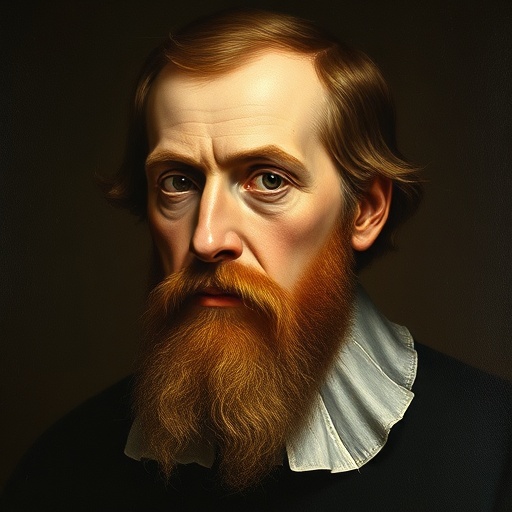
John Calvin — "God's foreknowledge and predestination are not the same; for foreknowledge is si…"
God's foreknowledge and predestination are not the same; for foreknowledge is simple knowledge, but predestination is a decree.
God's foreknowledge and predestination are not the same; for foreknowledge is simple knowledge, but predestination is a decree.
Click any product to generate a realistic preview. Up to 3 at a time.
* Initial load can take up to 90 seconds — revising the preview in another color is nearly instant.
"Whence it is sufficiently plain that they are not chosen for their own merit, but because God has gratuitously chosen them."
"God's decree is the cause of all things, so that nothing happens but by his will and appointment."
"The greatest good is to know God."
"The reason why some are saved and others perish is not to be sought in their own will, but in the secret counsel of God."
"God has a secret counsel, by which he chooses whom he will, and rejects whom he will."
French theologian whose Institutes of the Christian Religion (1536) systematized Protestant Reformed doctrine, including predestination. Closely associated with Martin Luther (Reformation founder, Calvin's predecessor). For an intellectual contrast, see Jacobus Arminius, Dutch Reformed theologian (1560-1609) — Arminius's rejection of strict double-predestination founded Arminianism — the theological tradition modern Methodism, most evangelicalism, and Pentecostalism descend from. The Calvinist-Arminian debate has divided Protestantism for 400 years.
Found in 1 providers: grok
1 source checked
God knowing the future and God deciding the future are fundamentally different things. Foreknowledge is awareness—God sees what will happen without necessarily causing it. Predestination is a decree, an active sovereign choice that determines outcomes. Calvin insists salvation is not based on God seeing who would eventually choose faith; instead, God actively selects who receives grace. This makes salvation entirely God's decision, not a response to human choice or merit.
Calvin's theology centers on God's absolute sovereignty—his system, called Calvinism, is defined by double predestination: God elects some to salvation and others to damnation. His masterwork, Institutes of the Christian Religion, dedicates entire sections to refuting the idea that God merely foresaw human choices. A trained lawyer before becoming a theologian, Calvin's legal precision in distinguishing decree from foreknowledge reflects his intellectual background and his conviction that human pride must yield entirely to divine sovereignty.
Calvin wrote during the Protestant Reformation's most turbulent decades. Luther's break from Rome in 1517 sparked continent-wide theological warfare. The central question was salvation: did humans earn it, choose it, or receive it purely by God's grace? The Catholic Council of Trent (1545–1563) was simultaneously defending free will and merit. Calvin's sharp decree-versus-foreknowledge distinction staked out radical Protestant ground—salvation is entirely God's unilateral act, not a divine response to human faith foreseen.
AI-generated insights based on extensive research and information for context. Factual errors? Email [email protected].
Your cart is empty