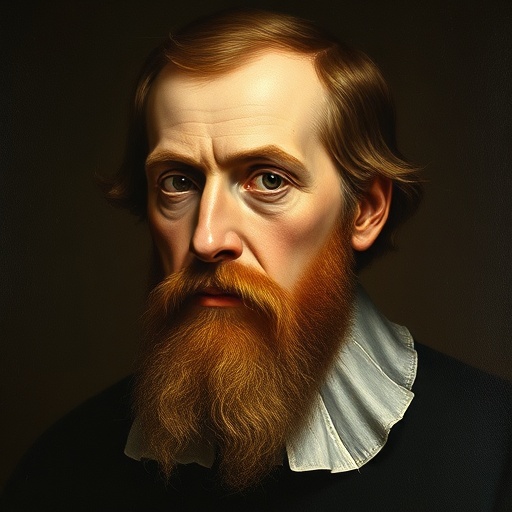
John Calvin — "We are saved by grace alone, through faith alone, in Christ alone."
We are saved by grace alone, through faith alone, in Christ alone.
We are saved by grace alone, through faith alone, in Christ alone.
Click any product to generate a realistic preview. Up to 3 at a time.
* Initial load can take up to 90 seconds — revising the preview in another color is nearly instant.
"The seed of the Word of God takes root and grows fruitful only in those whom the Lord, by his eternal election, has predestined to be his children and heirs of the heavenly kingdom. To all others who,…"
"It is not in vain that he banishes all those human affections which soften our hearts; that he commands paternal love and all the benevolent feelings between brothers, relations, and friends to cease;…"
"We are not our own; we are God's."
"The heart of man is a perpetual idol factory."
"All events are governed by the secret counsel of God."
French theologian whose Institutes of the Christian Religion (1536) systematized Protestant Reformed doctrine, including predestination. Closely associated with Martin Luther (Reformation founder, Calvin's predecessor). For an intellectual contrast, see Jacobus Arminius, Dutch Reformed theologian (1560-1609) — Arminius's rejection of strict double-predestination founded Arminianism — the theological tradition modern Methodism, most evangelicalism, and Pentecostalism descend from. The Calvinist-Arminian debate has divided Protestantism for 400 years.
Found in 1 providers: grok
1 source checked
Salvation is not earned through good deeds, rituals, church payments, or personal merit. It comes entirely as a free gift from God — grace — received through belief alone — faith — with Jesus Christ as the only mediator. No priest, saint, sacrament, or purchased indulgence can bridge the gap between humanity and God. This strips religion to its core: a direct relationship between the individual believer and God, unmediated by institutions.
Calvin spent his life systematizing Protestant theology. His Institutes of the Christian Religion (first published 1536) made these three principles — grace, faith, Christ — the cornerstone of Reformed theology. His doctrine of predestination deepened the grace-alone claim: since God sovereignly elects who is saved, human effort is irrelevant. Running Geneva as a Protestant model city, Calvin embedded these convictions into law, worship, and civic life across two decades.
The 16th-century Catholic Church taught salvation required faith plus good works plus sacraments — and sold indulgences, cash payments reducing time in purgatory. Luther's 1517 revolt challenged this; Calvin refined and spread the counter-doctrine across France, Switzerland, and beyond. The Council of Trent (1545–1563) convened specifically to rebut these solas. Europe fractured into religious wars over exactly what this sentence denies: that humans can contribute anything to their own salvation.
AI-generated insights based on extensive research and information for context. Factual errors? Email [email protected].
Your cart is empty