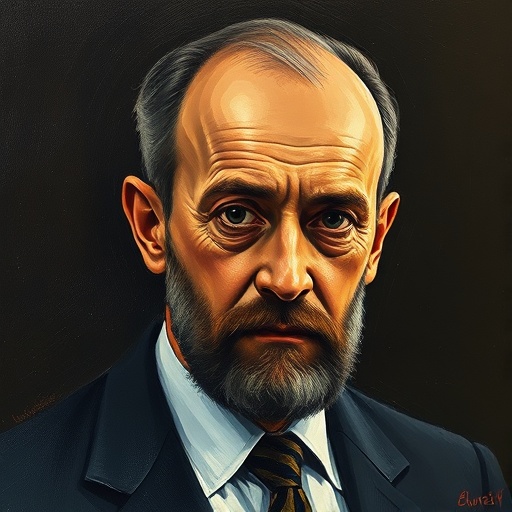
Enrico Fermi — "The first principle of science is that you must not fool yourself—and you are th…"
The first principle of science is that you must not fool yourself—and you are the easiest person to fool.
The first principle of science is that you must not fool yourself—and you are the easiest person to fool.
Click any product to generate a realistic preview. Up to 3 at a time.
* Initial load can take up to 90 seconds — revising the preview in another color is nearly instant.
"I consider myself a lucky man who did not have to choose between going to war and doing something else. I just did what I was doing."
"Don't ever do anything that you don't want to explain to a student."
"We are like children playing on the seashore, and we have found a few smooth pebbles and pretty shells, while the great ocean of truth lies undiscovered before us."
"Before I came here I was confused about this subject. Having listened to your lecture I am still confused. But on a higher level."
"I would rather be ignorant and learn, than be learned and not know."
Attributed, often in scientific discourse, though sometimes attributed to Richard Feynman with similar sentiment.
Date: Undated
ShockingFound in 1 providers: grok
1 source checked
Science demands that we actively resist our own wishful thinking. Human minds naturally seek confirmation of existing beliefs, filter out disconfirming evidence, and rationalize errors as successes. This principle warns that intellectual honesty begins not with scrutinizing others' work but with ruthlessly questioning your own conclusions, assumptions, and experimental interpretations. Self-deception is the deepest threat to scientific integrity because it operates invisibly, disguised as certainty.
Fermi's career embodied rigorous self-skepticism. He invented Fermi estimation—deriving answers from first principles to cross-check intuitions against physical reality. At the 1945 Trinity nuclear test, he independently measured the blast yield by dropping paper scraps, refusing to rely solely on instruments. Building Chicago Pile-1, the world's first nuclear reactor, demanded zero tolerance for self-delusion; a miscalculation meant catastrophe. His legendary precision came from treating his own assumptions as the primary suspect.
The 1940s–50s placed physicists at the center of history-altering decisions. The Manhattan Project, Cold War arms race, and nuclear energy development created enormous pressure to deliver results—conditions ripe for motivated reasoning and groupthink. Scientists operated under government secrecy, national urgency, and career stakes that could distort judgment. The era's intoxicating optimism about science solving every problem made intellectual humility not merely virtuous but existentially necessary when errors could trigger nuclear catastrophe.
AI-generated insights based on extensive research and information for context. Factual errors? Email [email protected].
Your cart is empty