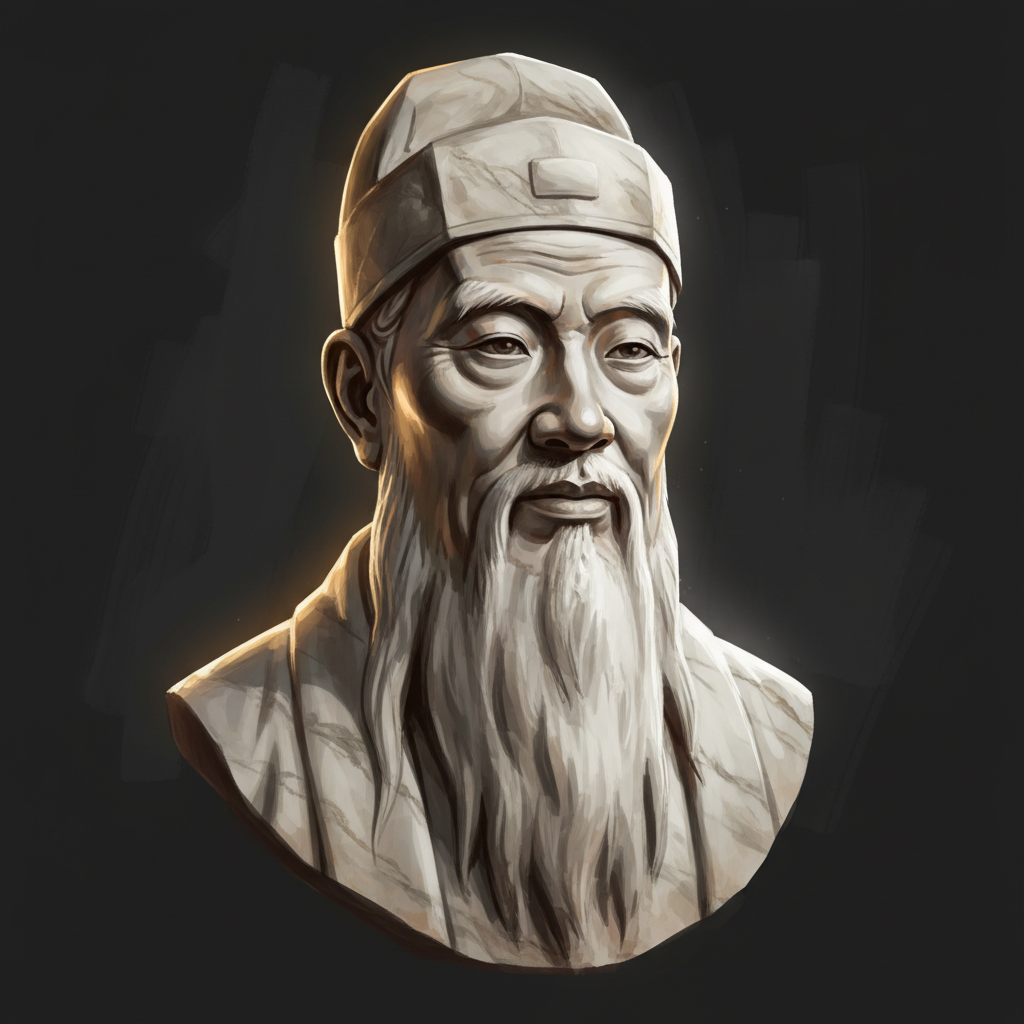
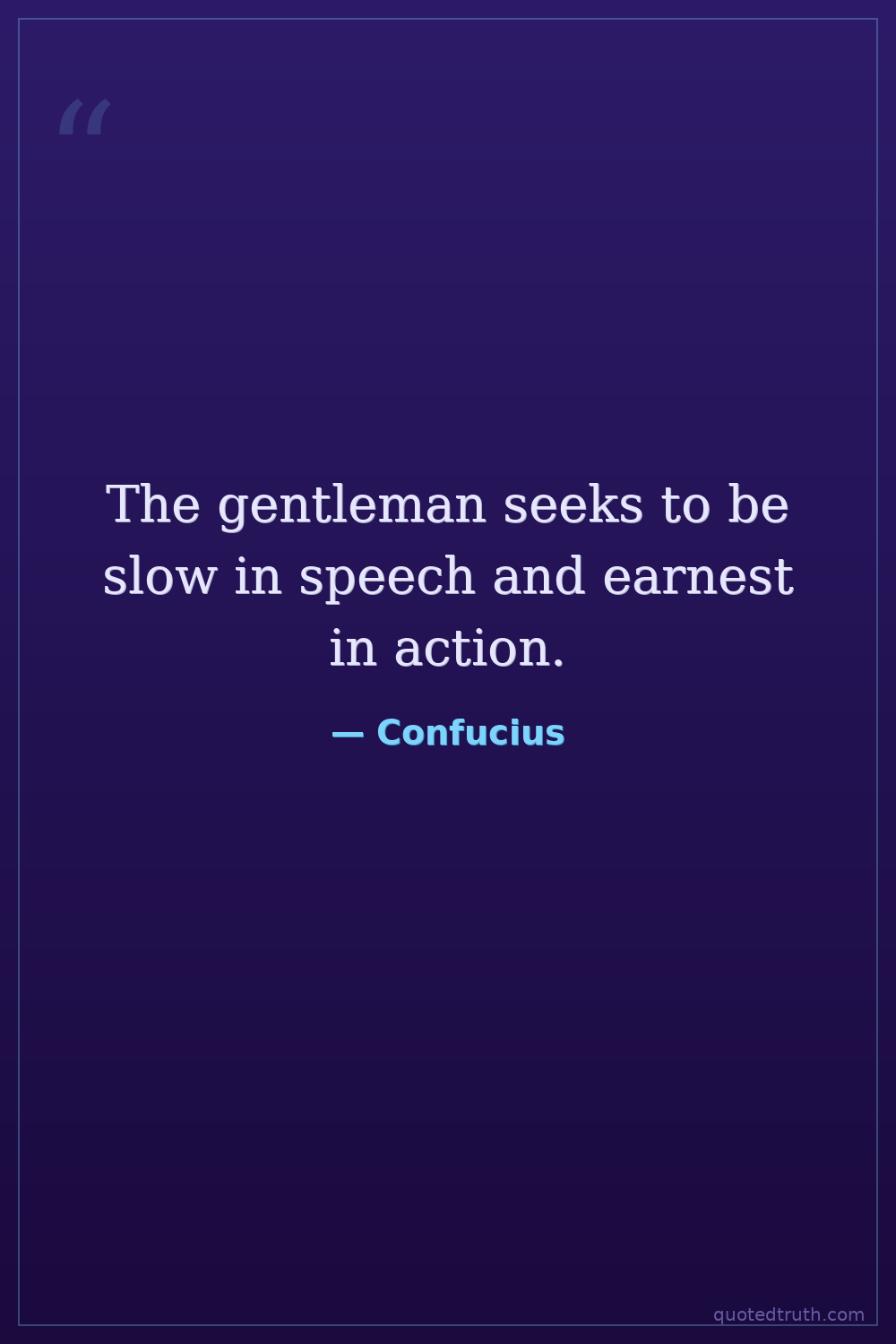
Confucius — "The gentleman seeks to be slow in speech and earnest in action."
The gentleman seeks to be slow in speech and earnest in action.
The gentleman seeks to be slow in speech and earnest in action.
Click any product to generate a realistic preview. Up to 3 at a time.
* Initial load can take up to 90 seconds — revising the preview in another color is nearly instant.
"He who learns but does not think, is lost! He who thinks but does not learn is in great danger."
"The Master said, 'If a man is able to govern his country with the rules of propriety, what difficulty will he have? If he cannot govern his country with the rules of propriety, what has he to do with …"
"The Master said, 'He who offends against Heaven has none to whom he can pray.'"
"The superior man is distressed by his want of ability; he is not distressed by men’s not knowing him."
"What the gentleman wants is in himself, what the small man wants is in others."
Chinese philosopher and teacher whose teachings (compiled by his students in the Analects) became the foundational ethical framework of East Asian civilization for 2,500 years. Closely associated with Mencius (his most-influential follower a century later). For an intellectual contrast, see Laozi, near-contemporary Chinese sage and Tao Te Ching author — Confucius systematized social order through ritual and family hierarchy; Laozi's Taoist effortless-action philosophy argued such systems were the disease, not the cure. The two founding poles of Chinese moral philosophy — every East Asian moral tradition since has positioned itself between them.
The standard scholarly entry points to Confucius's work: Philip J. Ivanhoe (Georgetown, Chinese philosophy) — Confucian Moral Self Cultivation (2000); Edward Slingerland (UBC, Asian Studies) — Effortless Action: Wu-wei as Conceptual Metaphor (2003); Tu Weiming (Harvard, Confucian scholar) — Confucian Thought: Selfhood as Creative Transformation (1985). These are the works graduate seminars cite when teaching Confucius.
Found in 1 providers: grok
1 source checked
A person of real character speaks carefully and acts with genuine commitment. Rather than rushing to voice every opinion or making promises they cannot keep, they weigh their words and let their deeds carry the weight. Talk is cheap; follow-through is what reveals true worth. The ideal is restraint in speech paired with diligence and sincerity in what one actually does.
Confucius built his ethical system around the junzi, the 'gentleman' or exemplary person, and this saying captures a core virtue he taught across the Analects. As a teacher, minor official, and traveling adviser to feudal rulers, he saw flattery and empty rhetoric corrupt courts everywhere. He prized sincerity, ritual propriety, and deeds matching words, famously distrusting 'clever talkers' whose eloquence masked shallow character.
Confucius lived during the late Spring and Autumn period (551–479 BCE), when Zhou royal authority was collapsing and rival states fought constantly. Rulers relied on itinerant advisers and persuaders whose silver tongues often drove reckless wars and betrayals. Against this chaos of glib politicians and broken oaths, Confucius promoted a moral code grounded in restraint, ritual, and trustworthy conduct, hoping disciplined gentlemen-officials could restore social harmony.
AI-generated insights based on extensive research and information for context. Factual errors? Email [email protected].
Your cart is empty