Wright Brothers (Orville & Wilbur) — "The greatest danger in flying is the ground."
The greatest danger in flying is the ground.
The greatest danger in flying is the ground.
Click any product to generate a realistic preview. Up to 3 at a time.
* Initial load can take up to 90 seconds — revising the preview in another color is nearly instant.
"We have been out almost every day experimenting, and have made about 100 flights."
"It was the first time in the history of the world that a machine carrying a man had raised itself by its own power into the air in full flight, had sailed forward without reduction of speed, and had f…"
"Learning the secret of flight from a bird was a good deal like learning the secret of magic from a magician—something the magician won't tell, and the bird can't tell."
"It is a pleasure to be able to inform you that the machine has been a success."
"We do not intend to make a fortune out of this, but to make a machine that will fly."
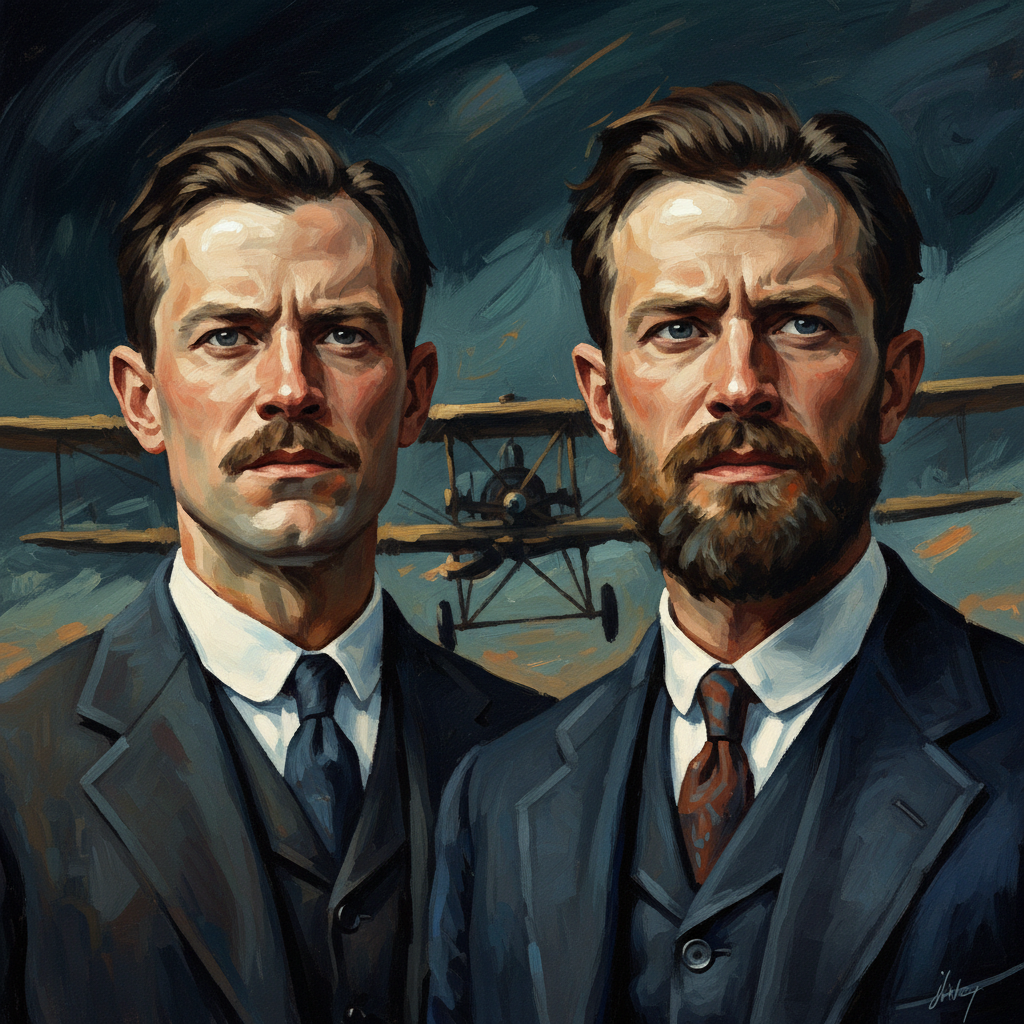
American aviation pioneers who achieved the first sustained powered controlled airplane flight at Kitty Hawk, NC, on December 17, 1903. Closely associated with Octave Chanute (their gliding mentor and aeronautical correspondent). For an intellectual contrast, see Samuel Pierpont Langley, Smithsonian Institution Secretary and government-funded aviation researcher — Langley's Aerodrome crashed twice into the Potomac in October-December 1903 with $50,000 of War Department funding; the Wright Brothers' bicycle-shop empiricism beat Langley's institutional Big Science by 9 days. The most-cited example in engineering history of empirical-tinkerer beating institution-funded credentialism.
Found in 1 providers: grok
1 source checked
Flying itself isn't what kills you — the earth is. The sky poses no inherent threat; altitude loss, engine failure, and loss of control only become fatal when they drive you into the ground. The real hazard is the hard, unforgiving earth waiting below. Stay airborne and in control, and you survive almost anything. Lose that control at low altitude, and the ground ends everything instantly. The air is forgiving; the ground is not.
The Wright Brothers learned this through devastating experience. Orville crashed at Fort Myer in 1908, killing passenger Lt. Thomas Selfridge — aviation's first powered-flight fatality — and seriously injuring himself. They deliberately chose Kitty Hawk's soft sand dunes to cushion ground impact during glider experiments. Their revolutionary three-axis control system existed precisely to prevent uncontrolled descent. Wilbur's meticulous obsession with aircraft stability reflected a core belief: mastering flight meant mastering the machine's relationship with the earth below.
In the early 1900s, aviation was pure improvisation — wood, wire, and canvas, with no instruments, no runways, no safety protocols. Controlled flight into terrain killed most early pioneers. Samuel Langley's government-funded Aerodrome crashed twice into the Potomac just before Kitty Hawk in 1903. Military interest accelerated dangerous experimentation across Europe and America. With no altimeters or radio, pilots judged altitude visually; misjudging that final feet to the ground was consistently the sentence that ended aviators' lives.
AI-generated insights based on extensive research and information for context. Factual errors? Email [email protected].
Your cart is empty