What it means
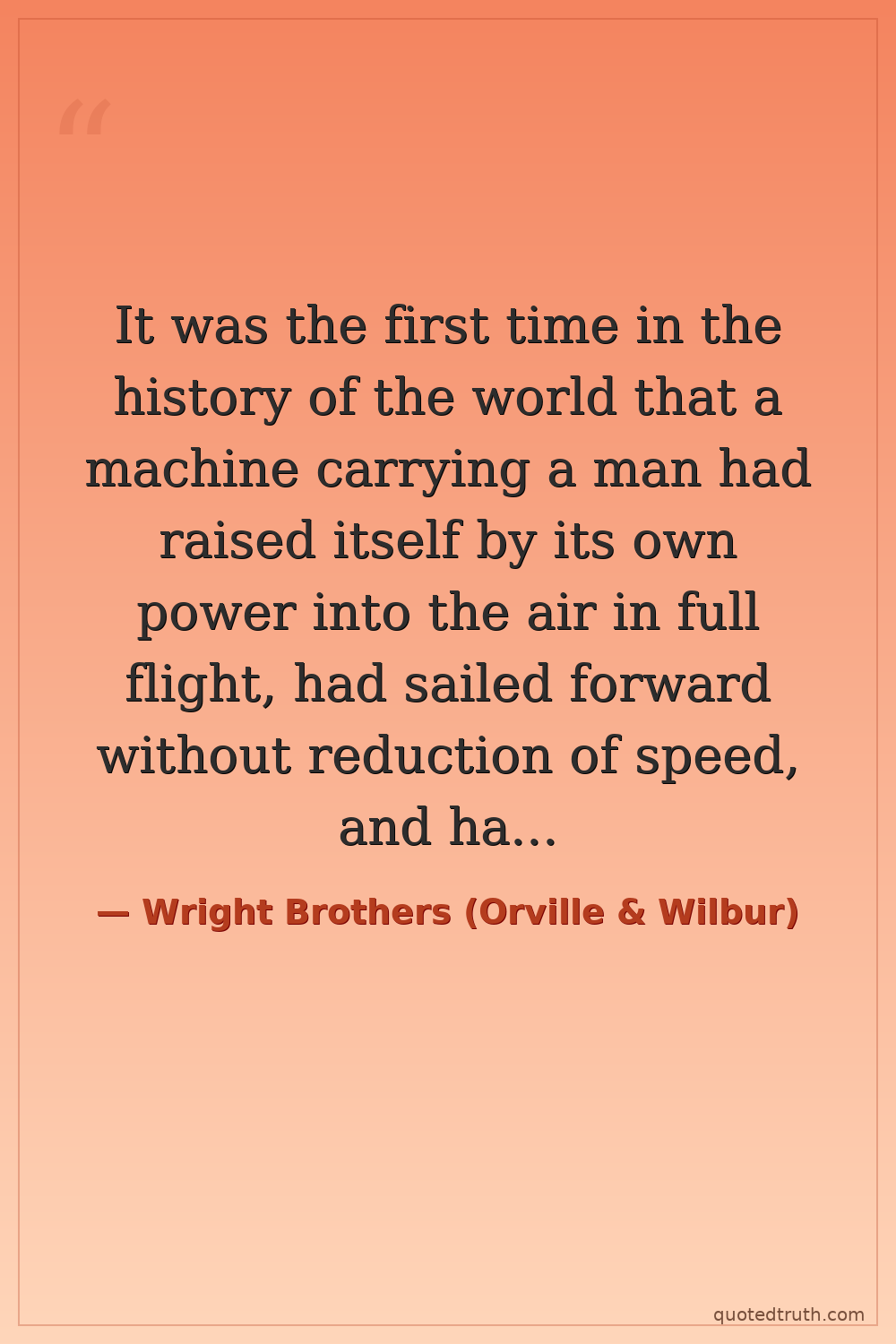
True powered flight requires three simultaneous conditions: the machine lifts itself under its own power rather than from a ramp or catapult, maintains speed without decelerating mid-air, and lands at least as high as it launched. This quote defines the precise technical bar separating genuine controlled flight from a glorified downhill glide or assisted jump — every word is a criterion, not poetry.
Relevance to Wright Brothers (Orville & Wilbur)
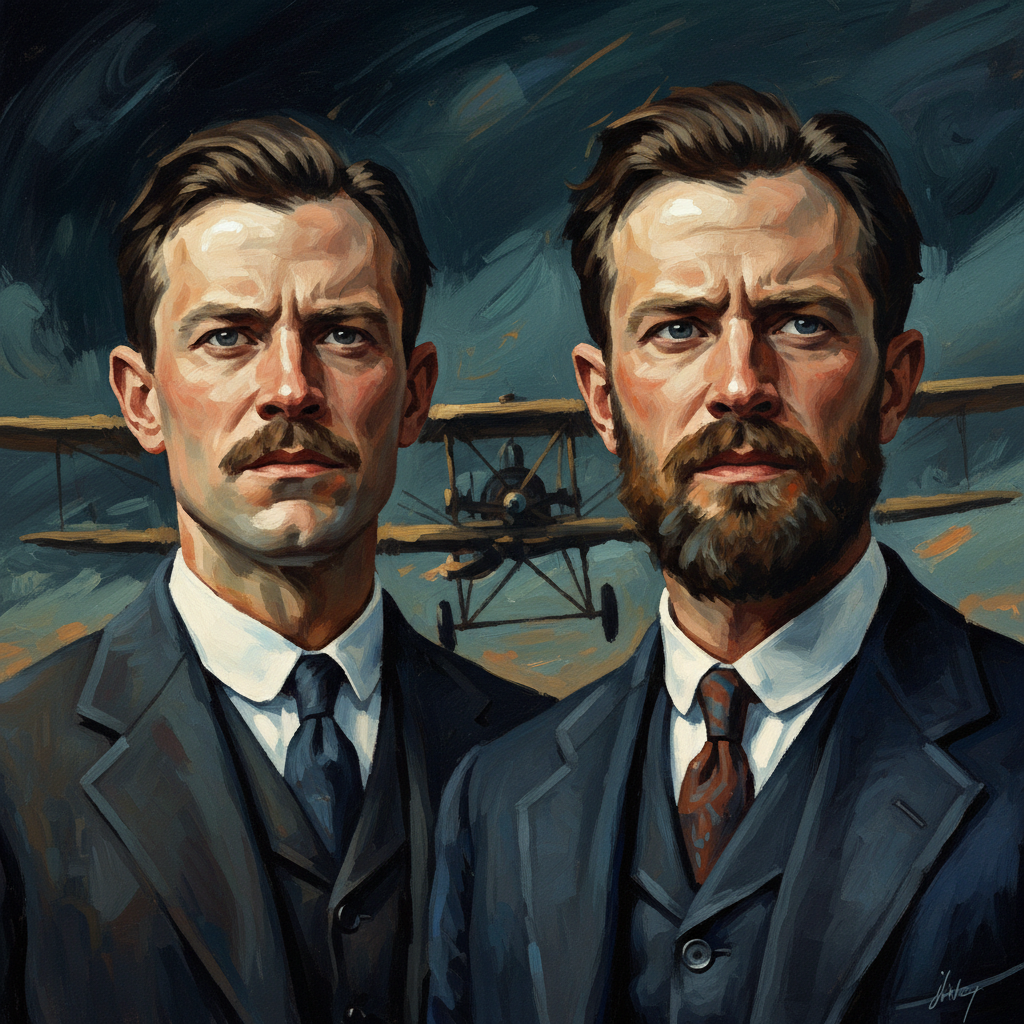
Orville and Wilbur were bicycle mechanics who solved flight through obsessive empiricism — wind tunnels, glider tests, hundreds of notebook entries. This clinical, criteria-driven phrasing mirrors exactly how they worked: defining the problem precisely before solving it. They knew competitors like Langley had failed on these very points. The brothers demanded the record be accurate, refusing credit for anything short of full self-powered controlled flight — a reflection of their engineering rigor and quiet competitive pride.
The era
In December 1903, the race for powered flight was at fever pitch. Samuel Langley, backed by the Smithsonian and $50,000 in War Department funds, had crashed spectacularly just nine days earlier. Steam and gasoline engines were reshaping industry; conquering the air felt like the era's next frontier. Militaries worldwide were watching. Most experts believed sustained flight was still decades away, making the Wright Brothers' precise firstness claim not mere record-keeping but a direct, documented rebuttal to institutional skeptics.
AI-generated insights based on extensive research and information for context. Factual errors? Email [email protected].