Mahavira — "The universe is beginningless and endless."
The universe is beginningless and endless.
The universe is beginningless and endless.
Click any product to generate a realistic preview. Up to 3 at a time.
* Initial load can take up to 90 seconds — revising the preview in another color is nearly instant.
"The highest form of worship is to serve humanity."
"Do not be proud of wealth, people, relations, or youth; time takes all away in a moment."
"The greatest penance is to bear all hardships with equanimity."
"Renunciation is the key to eternal happiness."
"A man is born alone and dies alone; and he experiences the good and bad consequences of his karma alone; and he goes alone to hell or the supreme abode."
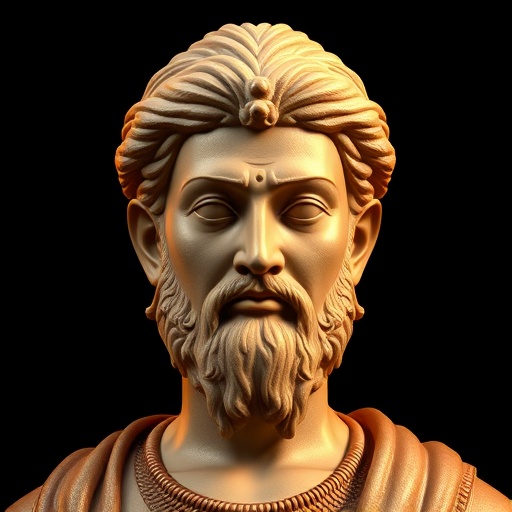
24th and last Tirthankara of Jainism, whose teachings of strict ahimsa (non-violence), aparigraha (non-attachment), and karma reshaped ancient Indian religion. Closely associated with The Buddha (near-contemporary moral revolutionary, also reacting against Vedic ritualism). For an intellectual contrast, see Vedic Brahmanical ritual sacrifice, the animal-sacrifice-centered Vedic religion of his era — Mahavira's ahimsa demanded total non-violence, including not eating root vegetables that kill the plant — a maximum-distance ethical move from the Vedic priestly tradition that ritually sacrificed cattle and horses. The two cleanest poles of ancient Indian religious ethics.
Found in 1 providers: grok
1 source checked
Reality has no origin point and no terminus — the cosmos has always existed and always will. Nothing created it and nothing will destroy it. This challenges the common intuition that everything must have a beginning and an end, and rejects the need for a creator deity. The universe simply is — eternal, self-sustaining, and governed by natural law rather than divine will. Everything within it cycles, but the whole itself persists forever.
Mahavira, the 24th Tirthankara who systematized Jain doctrine in the 6th century BCE, built his entire philosophy around a universe that needs no creator. Jainism explicitly rejects an Ishvara — a supreme god who made the world. For Mahavira, liberation came through self-discipline and conquering karma, not divine grace. An eternal, uncreated universe placed responsibility for souls entirely on themselves, aligning perfectly with his austere, self-reliant path to enlightenment.
Mahavira lived in 6th–5th century BCE India during the Axial Age — a period of intense philosophical revolution alongside the Buddha and Upanishadic thinkers. Vedic Brahmanism dominated religious life, with hymns describing cyclical cosmic creation by divine forces. Competing Shramana movements challenged these narratives. Asserting a universe with no beginning directly attacked Brahmanical authority and the need for priestly ritual, positioning Jainism as a rational, cosmos-as-it-is philosophy in a world saturated with creation mythology.
AI-generated insights based on extensive research and information for context. Factual errors? Email [email protected].
Your cart is empty