Max Planck — "The greatest obstacle to discovery is not ignorance, but the illusion of knowled…"
The greatest obstacle to discovery is not ignorance, but the illusion of knowledge.
The greatest obstacle to discovery is not ignorance, but the illusion of knowledge.
Click any product to generate a realistic preview. Up to 3 at a time.
* Initial load can take up to 90 seconds — revising the preview in another color is nearly instant.
"I learned more from my professors in one year than I have from all the books I've read."
"The highest value of human life lies in its service to humanity."
"The universe is a symphony of interconnectedness."
"An important scientific innovation rarely makes its way by gradually winning over and converting its opponents: it rarely happens that Saul becomes Paul."
"The pioneer feels nature as an enemy, or as a force to be conquered."
Often attributed, but exact source is elusive. Similar sentiments are expressed in his writings.
Date: Unknown
ShockingFound in 1 providers: grok
1 source checked
Real progress gets blocked more by false confidence than by admitted gaps. When people believe they already understand something, they stop questioning, stop testing, and stop looking for alternatives. Genuine ignorance at least leaves room for curiosity and investigation. But certainty built on assumptions, outdated models, or accepted wisdom closes the mind to new evidence. The hardest barrier to overcome is thinking you already have the answer.
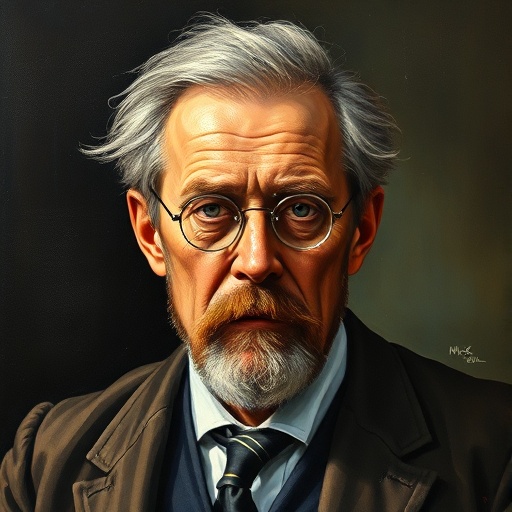
Planck lived this tension directly. Trained in classical physics, he was told as a student that the field was essentially complete with only minor details left. Yet his 1900 blackbody work shattered that certainty and launched quantum theory, overturning assumptions he himself initially resisted. He famously observed that science advances one funeral at a time, as entrenched experts rarely update. This quote reflects his hard-won humility about accepted truths.
Late 19th-century physics was dominated by confidence that Newton, Maxwell, and thermodynamics had essentially finished the job. Lord Kelvin reportedly said only two small clouds remained on the horizon. Those clouds became relativity and quantum mechanics, demolishing deterministic classical physics within decades. Planck worked through this upheaval, witnessing how the scientific establishment's certainty delayed acceptance of quantum ideas, Einstein's relativity, and atomic theory, even as experimental anomalies kept accumulating against the old framework.
AI-generated insights based on extensive research and information for context. Factual errors? Email [email protected].
Your cart is empty