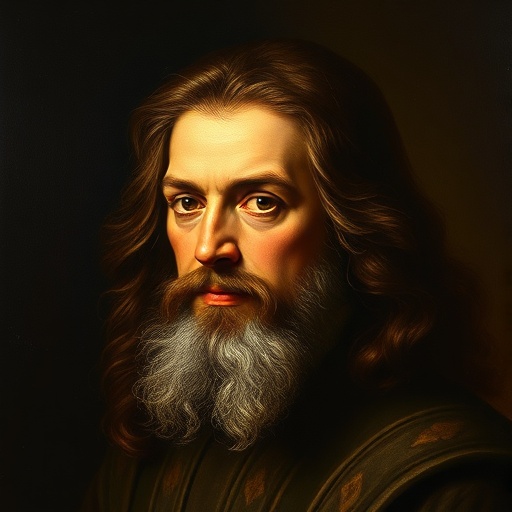
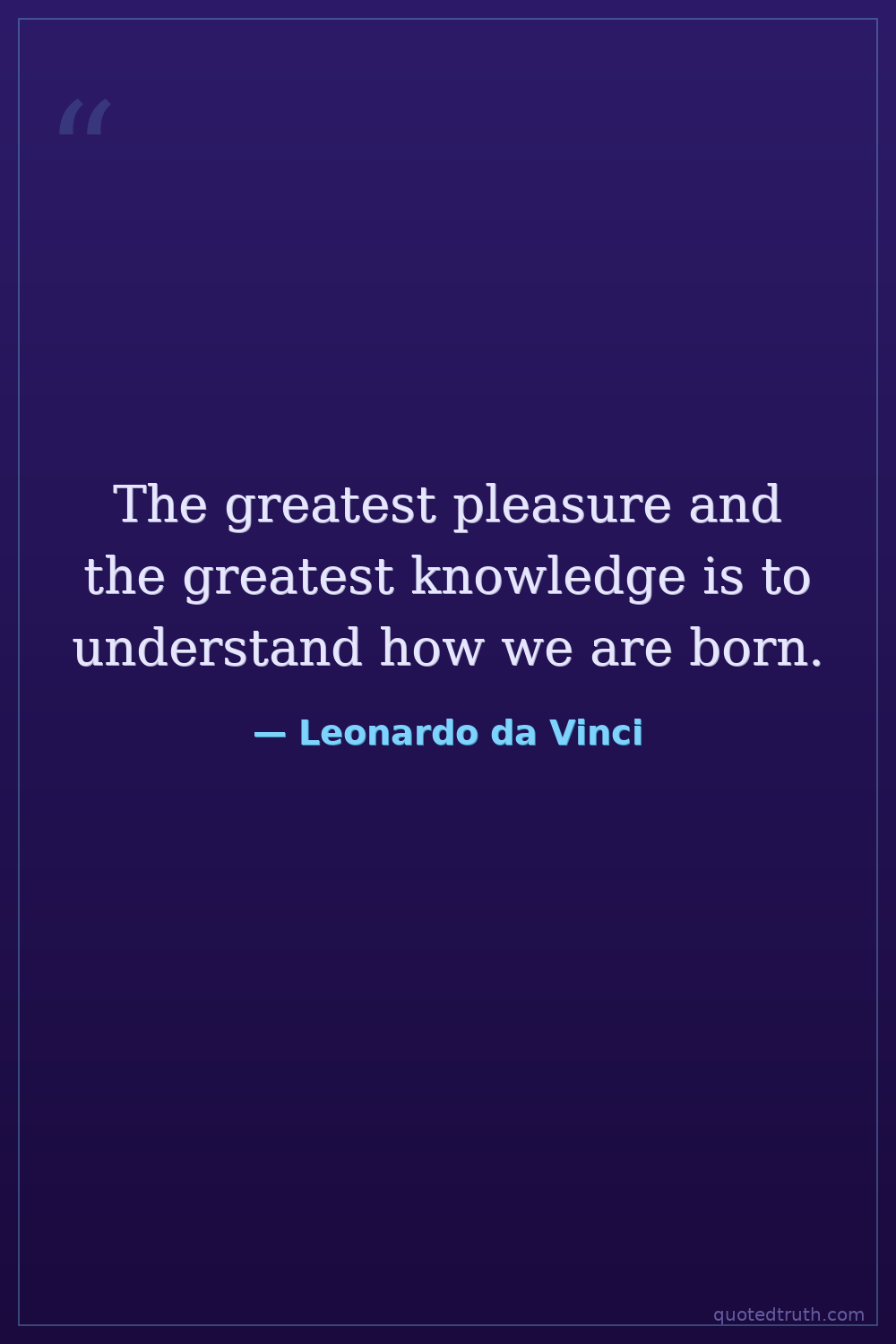
Leonardo da Vinci — "The greatest pleasure and the greatest knowledge is to understand how we are bor…"
The greatest pleasure and the greatest knowledge is to understand how we are born.
The greatest pleasure and the greatest knowledge is to understand how we are born.
Click any product to generate a realistic preview. Up to 3 at a time.
* Initial load can take up to 90 seconds — revising the preview in another color is nearly instant.
"The senses are of the earth, reason is of the soul."
"Just as a well-filled day brings blessed sleep, so a well-employed life brings a blessed death."
"Small rooms or dwellings discipline the mind, large ones enfeeble it."
"Art is never finished, only abandoned."
"The greatest deception men suffer is from their own opinions."
Found in 1 providers: grok
1 source checked
Understanding how humans are conceived and born—the biological and developmental mechanics of life's beginning—represents the highest form of knowledge and the deepest satisfaction a mind can experience. Not abstract philosophy or theology, but direct observation of how flesh and form come into being. It positions empirical inquiry into human origins as both the most pleasurable and most intellectually rewarding pursuit available to a thinking person.
Da Vinci dissected over 30 human corpses, including pregnant women and fetuses, producing anatomically precise drawings of embryonic development in the womb. His notebooks document fetal positioning, umbilical structures, and developmental stages with remarkable accuracy. He pursued human anatomy not as a painter's tool but as genuine scientific inquiry. This quote reflects his belief—lived through thousands of dissection hours—that the body's origins were the ultimate intellectual territory to conquer.
Da Vinci worked in 15th–16th century Italy, where Church authority defined human origins as divine creation and human dissection was legally restricted and morally condemned. Renaissance humanism was beginning to challenge this, encouraging empirical observation of nature. Understanding birth through anatomy rather than scripture was a radical act. Da Vinci's pursuit placed him at the fault line between medieval theological explanation and the emerging scientific revolution that would reshape European thought over the next century.
AI-generated insights based on extensive research and information for context. Factual errors? Email [email protected].
Your cart is empty