Laozi — "The highest good is like water. It nourishes all things without trying to."
The highest good is like water. It nourishes all things without trying to.
The highest good is like water. It nourishes all things without trying to.
Click any product to generate a realistic preview. Up to 3 at a time.
* Initial load can take up to 90 seconds — revising the preview in another color is nearly instant.
"Governing a large country is like cooking a small fish. You spoil it with too much poking."
"Simplicity has no name is free of desires. Being free of desires it is tranquil. And the world will be at peace of it's own accord."
"To know yet to think that one does not know is the highest [attainment]. Not to know yet to think that one knows is a disease."
"The more prohibitions there are, the poorer the people will be. The more sharp weapons the people have, the more troubled the state will be. The more cunning and skill man possesses, the more peculiar…"
"If you realize that all things change, there is nothing you will try to hold on to. If you are not afraid of dying, there is nothing you cannot achieve."
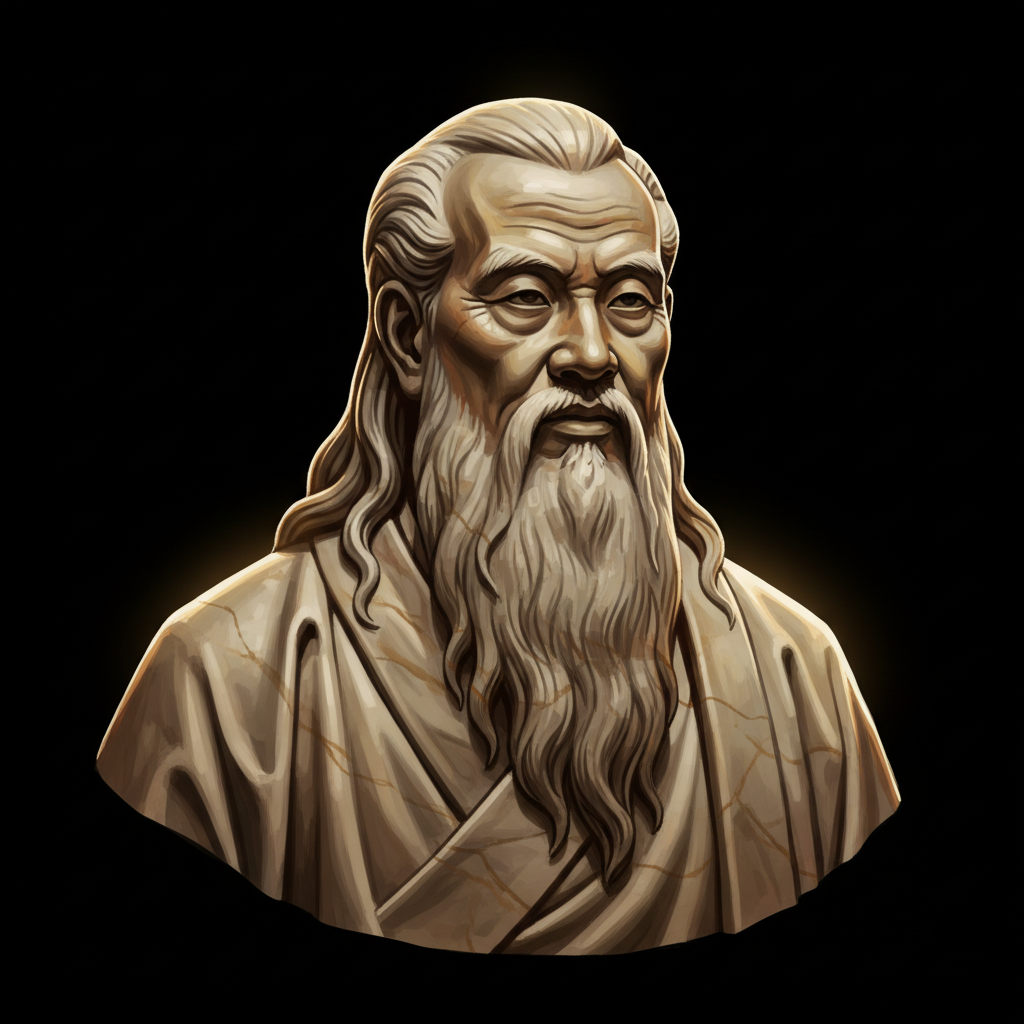
Reputed founder of Taoism and author of the Tao Te Ching, whose wu wei (effortless action) shaped East Asian philosophy. Closely associated with Zhuangzi (later Taoist who extended Laozi's framework). For an intellectual contrast, see Confucius, near-contemporary Chinese sage of social ritual and duty — Confucius systematized social order through ritual and hierarchy; Laozi argued that all such systems were the disease, not the cure — the two founding poles of Chinese moral philosophy.
Found in 1 providers: grok
1 source checked
Real virtue works like water: it sustains everything around it quietly, without forcing, competing, or demanding credit. The best kind of goodness flows naturally into low places others avoid, benefits whatever it touches, and adapts to circumstances instead of fighting them. Instead of striving loudly to be good, you help, yield, and move with what is, trusting that quiet usefulness outlasts aggressive effort.
Laozi, the legendary founder of Taoism, taught wu wei, or effortless action, and distrusted ambition, rigid rules, and ego-driven striving. Traditionally a reclusive archivist in the Zhou court who withdrew from political life, he prized humility, softness, and yielding over force. Water, which carves stone by persistence and seeks the lowest ground, became his favorite image for the sage who serves quietly and never contends for status.
Laozi is traditionally placed in the late Zhou dynasty, around the sixth to fourth century BCE, as feudal order collapsed into the Warring States period. Rival lords fought endless wars, Confucians pushed strict ritual and hierarchy, and Legalists promoted harsh law. Against this climate of force, striving, and moralistic control, a philosophy praising yielding, humility, and natural flow felt radical, offering rulers and individuals an alternative path rooted in restraint rather than conquest.
AI-generated insights based on extensive research and information for context. Factual errors? Email [email protected].
Your cart is empty