Laozi — "Simplicity has no name is free of desires. Being free of desires it is tranquil.…"
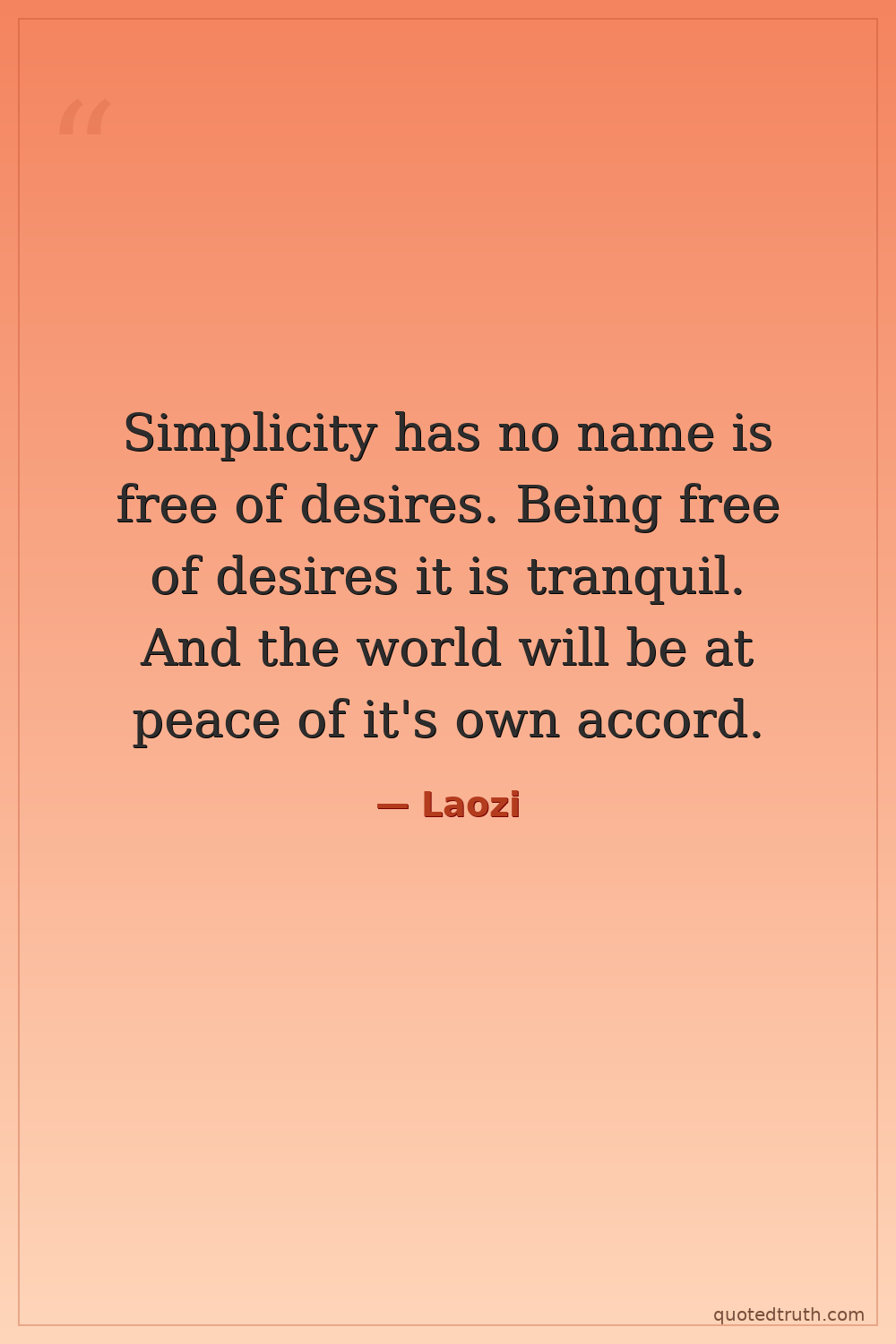
Simplicity has no name is free of desires. Being free of desires it is tranquil. And the world will be at peace of it's own accord.
Simplicity has no name is free of desires. Being free of desires it is tranquil. And the world will be at peace of it's own accord.
Click any product to generate a realistic preview. Up to 3 at a time.
* Initial load can take up to 90 seconds — revising the preview in another color is nearly instant.
"The best of men is like water. Water benefits all things and does not compete with them. It dwells in lowly places that all disdain. This is why it is so near to the Tao."
"Governing a large country is like cooking a small fish. Too much handling will spoil it."
"If you realize that all things change, there is nothing you will try to hold on to."
"The sage is sharp but not cutting, pointed but not piercing, straightforward but not unrestrained, brilliant but not dazzling."
"The Way is ever without action, yet nothing is left undone."
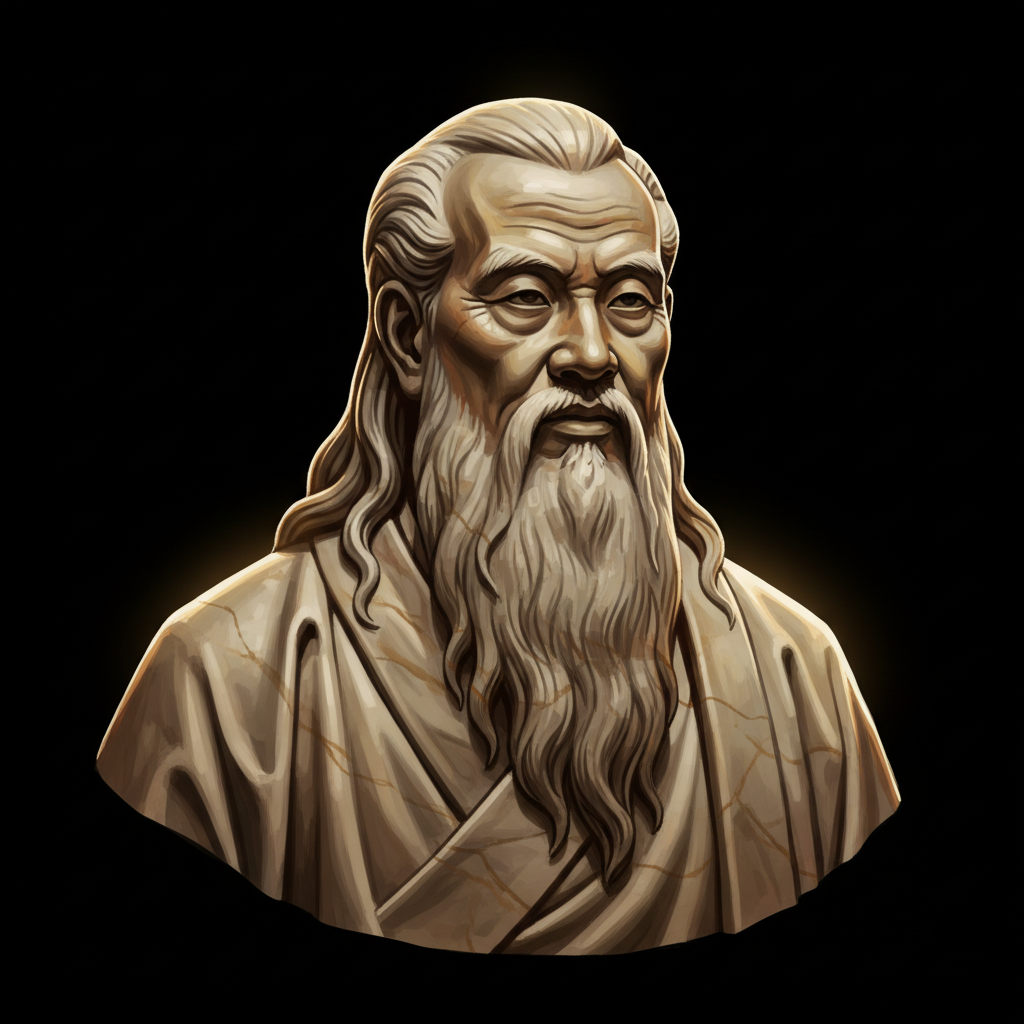
Reputed founder of Taoism and author of the Tao Te Ching, whose wu wei (effortless action) shaped East Asian philosophy. Closely associated with Zhuangzi (later Taoist who extended Laozi's framework). For an intellectual contrast, see Confucius, near-contemporary Chinese sage of social ritual and duty — Confucius systematized social order through ritual and hierarchy; Laozi argued that all such systems were the disease, not the cure — the two founding poles of Chinese moral philosophy.
Found in 1 providers: gemini
1 source checked
When you strip away labels, status, and constant wanting, you settle into a calm state. That calm isn't passive; it radiates outward. If enough people stopped grasping for more and lived simply, society wouldn't need heavy rules or force to stay orderly. Peace becomes a byproduct of contentment rather than something imposed. The less we chase, the less friction we create, and harmony arises naturally without anyone having to engineer it.
Laozi, credited founder of Taoism, is said to have served as an archivist in the Zhou court before abandoning civilization, disillusioned with political decay. Legend says he wrote the Tao Te Ching at a border pass on his way into retreat. This saying distills his core teaching of wu wei, non-forcing action, and pu, the uncarved block of simplicity. His life arc itself modeled walking away from ambition toward quiet anonymity.
Laozi lived during the late Zhou dynasty, around the 6th century BCE, as centralized power crumbled into the Warring States era. Rival lords waged constant war, ministers schemed, and thinkers like Confucius pushed elaborate rituals and hierarchies to restore order. Laozi's counter-move was radical: the more rules, titles, and desires rulers generated, the worse things got. Peace wouldn't come from tighter control but from stepping back, simplifying, and trusting natural order.
AI-generated insights based on extensive research and information for context. Factual errors? Email [email protected].
Your cart is empty