What it means
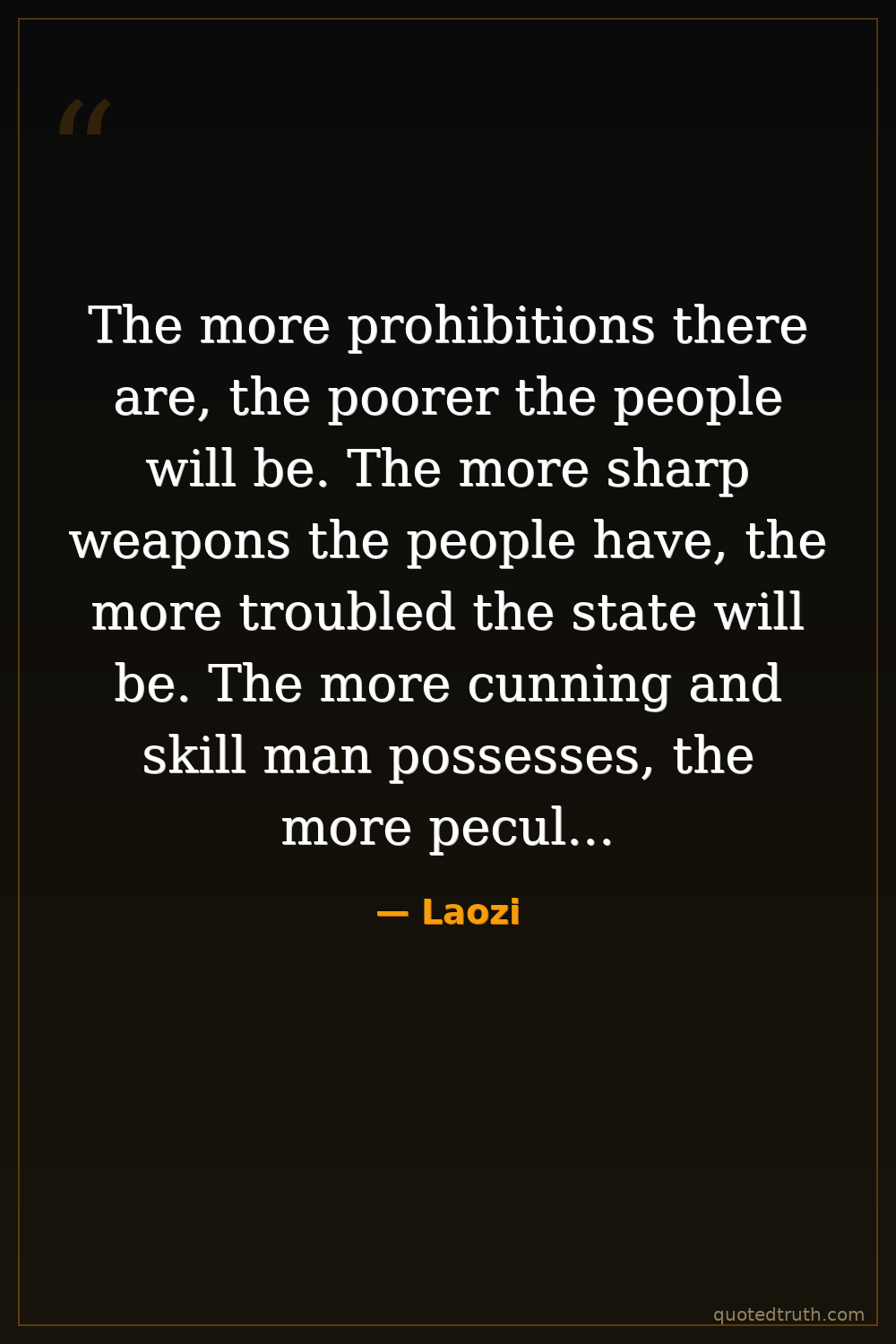
Piling on rules, weapons, clever tricks, and laws backfires. Heavy regulation drains wealth from ordinary people. Arming a population breeds unrest. Relentless cleverness produces bizarre outcomes and new problems. And the more statutes a government writes, the more criminals it manufactures, because behavior that was ordinary yesterday becomes illegal today. Control, pushed too far, generates the exact disorder it was meant to prevent, so restraint from those in power works better than intervention.
Relevance to Laozi
Laozi, the legendary founder of Taoism and reputed keeper of the Zhou royal archives, built his philosophy around wu wei, effortless non-action, and the natural flow of the Dao. Tradition says he grew disgusted with court corruption and rode west into exile, dictating the Dao De Jing at a frontier pass. This verse captures his core conviction: rulers should govern lightly, trust the people, and resist the bureaucratic impulse to legislate every human activity into submission.
The era
Laozi lived during the late Spring and Autumn or Warring States period of ancient China, roughly the 6th to 4th century BCE, when the Zhou dynasty was collapsing into chaos. Rival states multiplied laws, taxes, conscription, and weapons in an arms race that impoverished peasants and filled roads with bandits. Legalist reformers pushed harsher punishments. Against this militarized, over-regulated backdrop, Laozi's warning that prohibition itself breeds crime and poverty was a direct critique of the era's governing class.
AI-generated insights based on extensive research and information for context. Factual errors? Email [email protected].