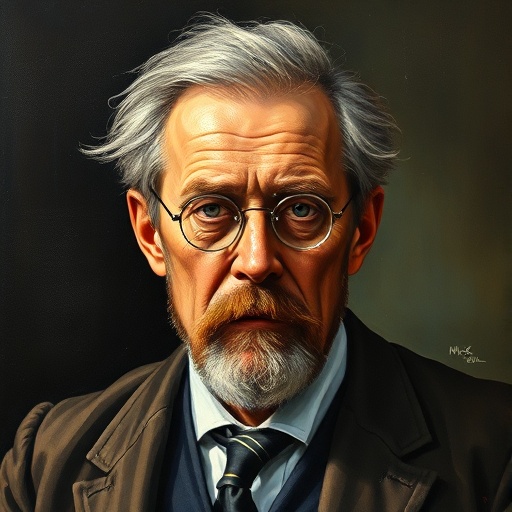
Max Planck — "The highest purpose of a man is to serve humanity."
The highest purpose of a man is to serve humanity.
The highest purpose of a man is to serve humanity.
Click any product to generate a realistic preview. Up to 3 at a time.
* Initial load can take up to 90 seconds — revising the preview in another color is nearly instant.
"The old pioneers of science, such as Galileo, Kepler, Newton, were deeply religious men."
"I had to sacrifice the continuity of energy to save the second law of thermodynamics."
"The quantum theory is a confirmation of the fact that the world is not a collection of things, but a collection of processes."
"The quantum of action, as I called it, was a purely formal assumption and I really did not think much about it."
"There are no contradictions in nature. There are only contradictions in the human mind."
Found in 1 providers: grok
1 source checked
Life's greatest calling is not personal wealth, fame, or pleasure, but contributing something of value to other people. Whatever talents, knowledge, or resources a person has should be directed toward improving the condition of others and advancing the wider community. Individual achievement matters only insofar as it benefits the broader human family, making service the true measure of a meaningful existence rather than self-interest.
Planck lived this principle through devastating loss. He kept teaching and organizing German science after World War I shattered his country, lost his son Erwin to Nazi execution in 1945 for resisting Hitler, and personally appealed to Hitler on behalf of Jewish colleagues. Despite his Nobel Prize for quantum theory, he saw science as a moral duty, helping rebuild German research after 1945 through what became the Max Planck Society.
Planck's era (1858-1947) spanned Bismarck's Germany, two world wars, and the Nazi regime. Intellectuals faced brutal choices between complicity, exile, or resistance. Scientific prestige collided with political catastrophe as Einstein and others fled while Planck stayed, trying to protect German science from ideological corruption. Service to humanity was not abstract philosophy but a daily question: whom do you help, whom do you defy, and at what personal cost?
AI-generated insights based on extensive research and information for context. Factual errors? Email [email protected].
Your cart is empty