What it means
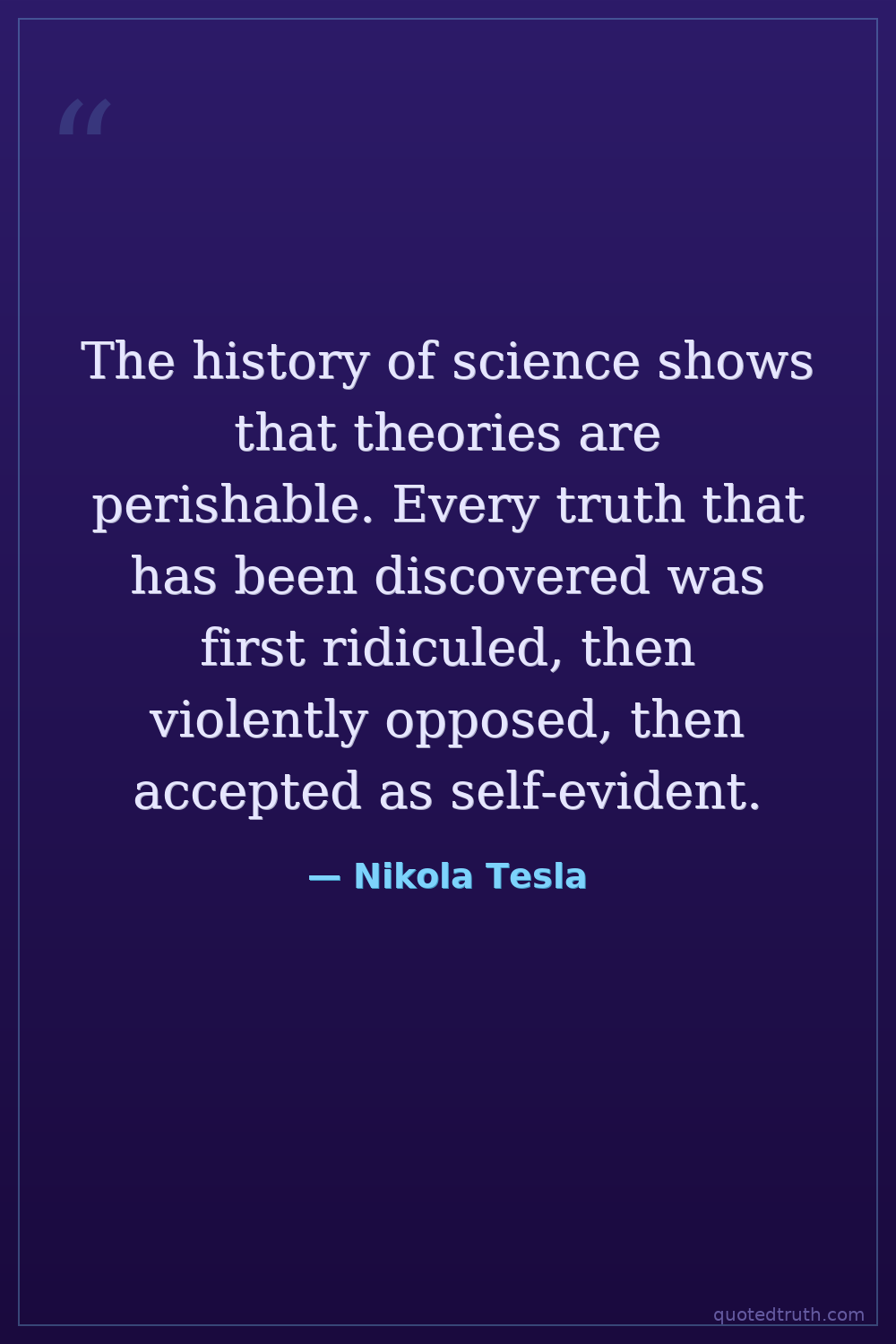
New ideas don't gain acceptance immediately. Instead, they face a predictable three-stage gauntlet: first dismissed as absurd, then fiercely attacked by those with stakes in the status quo, then absorbed into common knowledge so thoroughly that people forget there was ever a debate. It captures how institutions resist paradigm shifts, and implies that perseverance in the face of ridicule is a prerequisite for any genuine intellectual advance.
Relevance to Nikola Tesla
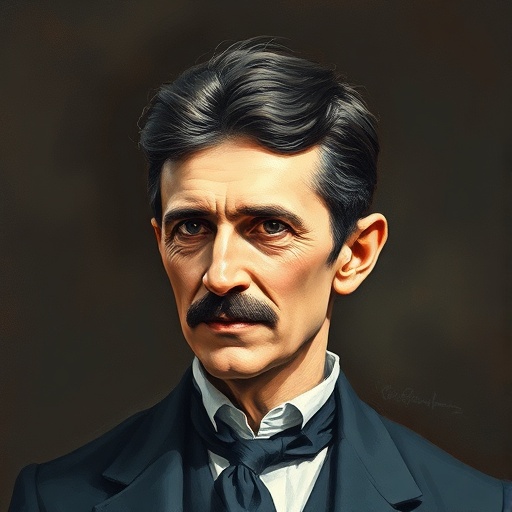
Tesla lived this cycle firsthand. His alternating current system was mocked, then savagely undermined by Thomas Edison during the 1880s–90s War of Currents—including staged public electrocutions of animals to discredit AC. Edison's direct-current empire fought back with money and propaganda. Yet AC became the global standard powering civilization. Tesla also held dozens of patents that were stolen or disputed, reinforcing his conviction that original thinkers are persecuted before being vindicated.
The era
Tesla worked during the Second Industrial Revolution (roughly 1870–1914), when electricity, radio, and the internal combustion engine reshaped society faster than institutions could absorb. Scientific orthodoxy was under siege: Darwin's evolution, Pasteur's germ theory, and Maxwell's electromagnetism had each provoked fierce establishment resistance before acceptance. Corporate monopolies—especially Edison's General Electric—actively suppressed competing technologies to protect investments, making Tesla's observation less philosophical musing than a direct account of lived industrial reality.
AI-generated insights based on extensive research and information for context. Factual errors? Email [email protected].