What it means
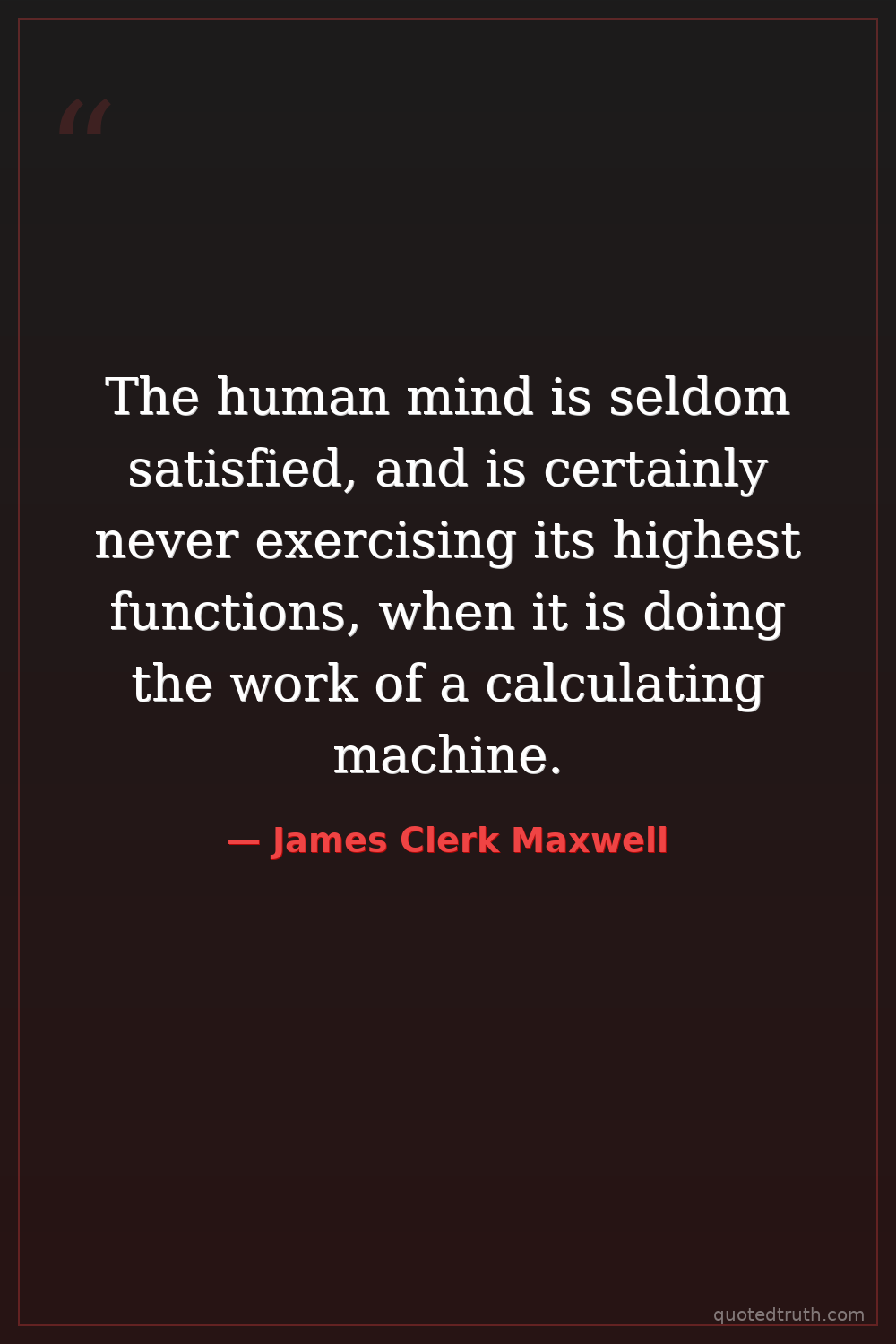
True intellectual fulfillment comes from understanding, insight, and creative reasoning, not from mechanical computation. When a person is merely crunching numbers or performing repetitive calculations, they are neither engaging their deepest capacities nor finding the work meaningful. The mind thrives on discovering patterns, asking questions, and grasping underlying principles. Routine calculation is useful but hollow, and reducing thought to it wastes what makes human cognition genuinely powerful.
Relevance to James Clerk Maxwell
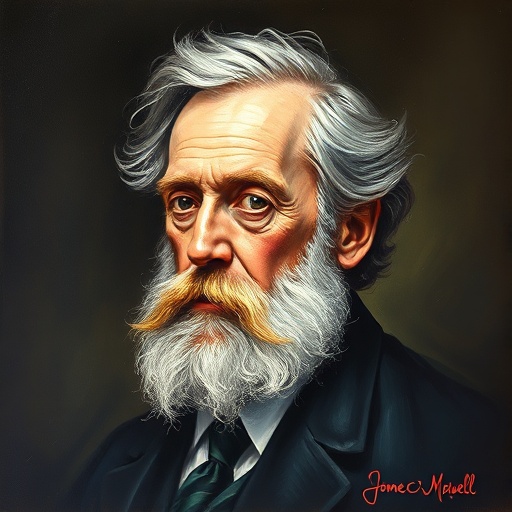
Maxwell revolutionized physics by unifying electricity, magnetism, and light through elegant mathematical insight, not brute computation. He prized physical intuition and geometric reasoning, famously translating Faraday's field ideas into equations while insisting the concepts mattered more than the algebra. A devout, contemplative Scot who wrote poetry and read philosophy, he valued understanding over drudgery. The quote captures his conviction that great science springs from imagination and principle, not mechanical arithmetic.
The era
Maxwell lived 1831-1879, during the Victorian industrial age when Babbage was designing mechanical calculating engines and factories were replacing craft with repetitive labor. Science was professionalizing, and debates raged over whether nature could be reduced to numbers and machines. Amid this mechanization, Maxwell defended the creative, interpretive role of the scientist. His remark reflects a broader Victorian anxiety about humans becoming cogs, and foreshadowed later questions about computation, automation, and the irreducible value of human insight.
AI-generated insights based on extensive research and information for context. Factual errors? Email [email protected].