What it means
Reality at the smallest scale doesn't work like everyday objects. Rocks and trees sit there whether anyone looks or not, but particles don't have fixed properties waiting to be discovered. Until measured, their location, speed, or state isn't simply hidden from us, it genuinely isn't determined. Observation is part of what fixes what exists. So treating atoms as tiny pebbles with definite features is a mental habit that breaks down when physics goes microscopic.
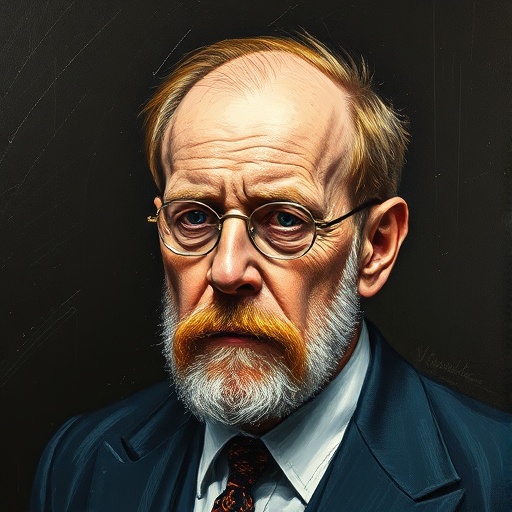
Relevance to Werner Heisenberg
Heisenberg built quantum mechanics and formulated the 1927 uncertainty principle, proving position and momentum cannot both be precisely defined. He co-founded the Copenhagen interpretation with Bohr, which rejected naive realism about subatomic particles. A philosophical physicist trained in Plato and Kant, he spent his career arguing that classical intuitions fail below the atomic scale. This statement distills the worldview that earned him the 1932 Nobel Prize and shaped modern physics.
The era
Written during the early twentieth century physics revolution, when relativity and quantum theory dismantled Newtonian certainty. Between 1925 and 1935, Heisenberg, Bohr, Schrodinger, and Einstein debated whether reality was deterministic or probabilistic. Two world wars shook faith in rational order, while logical positivism and phenomenology questioned objective knowledge itself. Science, philosophy, and art, from Picasso to Joyce, were all fracturing the single stable viewpoint, making Heisenberg's claim a signature of the age.
AI-generated insights based on extensive research and information for context. Factual errors? Email [email protected].