What it means
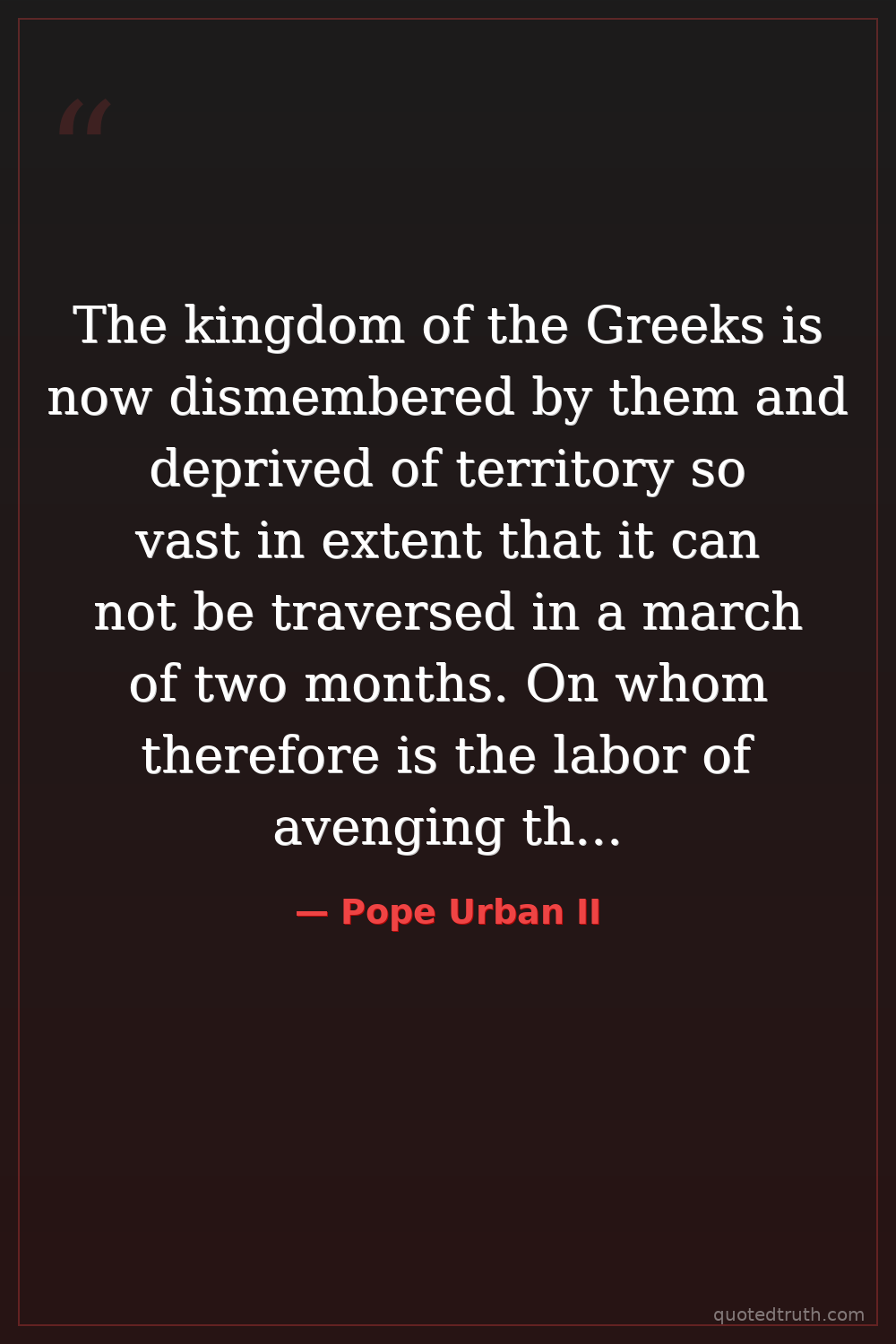
Urban II is directly challenging Western Christian warriors: the Byzantine Empire—fellow Christians in the East—has been stripped of enormous territories by Muslim (Seljuk Turkish) forces, lands so vast they would take two months to cross on horseback. He poses a pointed rhetorical question: if not you, then who bears the duty to recover them? It frames military conquest as Christian moral obligation, transforming vengeance into sacred responsibility aimed squarely at his audience.
Relevance to Pope Urban II
Urban II was a Cluniac monk turned reformist pope who received Emperor Alexios I's desperate plea for aid in 1095. His lifelong mission centered on a unified, papally-led Christendom. This speech at Clermont was his masterstroke—redirecting feudal knightly violence outward under Church authority. His rhetorical genius lay in fusing religious duty with martial identity, reflecting his conviction that the pope held supreme authority to commission Christian warriors and define the boundaries of holy obligation.
The era
The Seljuk Turkish victory at Manzikert in 1071 had devastated Byzantine Anatolia, while Jerusalem remained under Muslim control. Western Europe was experiencing a knightly surplus, land scarcity among younger nobles, and restless military energy. The 1054 Great Schism had split Eastern and Western Christianity, yet Urban invoked pan-Christian solidarity to override it. The Peace of God movement had already primed Western society to channel noble violence into sanctioned causes, making his Clermont appeal land with explosive force.
AI-generated insights based on extensive research and information for context. Factual errors? Email [email protected].