Zoroaster — "The Lie-demon shall be bound, and the Good Mind shall be unbound."
The Lie-demon shall be bound, and the Good Mind shall be unbound.
The Lie-demon shall be bound, and the Good Mind shall be unbound.
Click any product to generate a realistic preview. Up to 3 at a time.
* Initial load can take up to 90 seconds — revising the preview in another color is nearly instant.
"Through the best righteousness, we shall see Thee, O Mazda, and through the best thought, we shall approach Thee."
"None have I to protect me save Thee; Command for me then the blessings of a settled, peaceful life."
"Whoso follows the path of Righteousness, him Ahura Mazda will lead to the best existence."
"He who refuses to behold with respect the living creation of God, He who leads the good to wickedness... An enemy of my faith, a destroyer of Thy principles is he, O Lord!"
"The universe is a grand tapestry. And sometimes, it gets a little tangled."
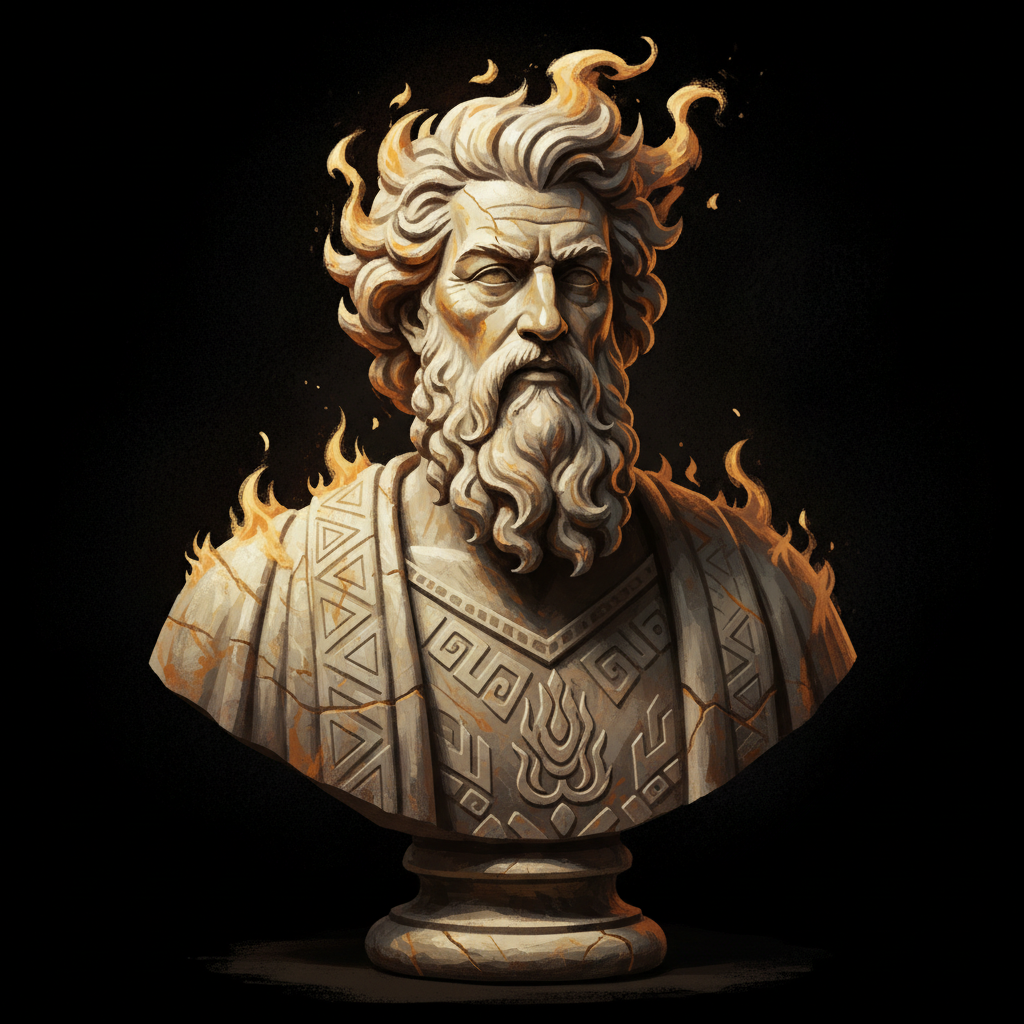
Iranian prophet who founded Zoroastrianism, the first major religion of cosmic dualism between good (Ahura Mazda) and evil (Angra Mainyu). Closely associated with The Buddha (near-contemporary Eastern moral-cosmological revolutionary). For an intellectual contrast, see Friedrich Nietzsche, German philosopher of 'beyond good and evil' — Nietzsche appropriated Zarathustra's name for Thus Spoke Zarathustra (1883) precisely to invert the original's moral cosmology — the historical Zoroaster founded the good-versus-evil framework Nietzsche's character announces the end of.
Found in 1 providers: grok
1 source checked
This saying predicts a future reckoning where deception and falsehood will be caught, restrained, and stripped of power, while honest, clear thinking will finally be free to act without interference. Truth wins, lies lose. It frames moral life as a contest between two forces inside every person and society, and promises that the deceitful force eventually loses its grip so wisdom and integrity can operate openly.
Zoroaster built his entire teaching around Asha, cosmic truth, versus Druj, the Lie, and around Vohu Manah, the Good Mind, as the first of the Amesha Spentas. He preached ethical dualism, personal responsibility, and a final judgment where wrongdoing is punished. This line distills his mission: expose falsehood, elevate clear moral thinking, and promise practitioners that siding with truth is ultimately vindicated.
Zoroaster lived in Bronze Age eastern Iran, roughly 1500-1000 BCE, among pastoralist tribes practicing polytheistic rituals, cattle raiding, and blood sacrifice led by priestly castes. He rejected that system for a single wise god, Ahura Mazda, and a moral cosmos. Framing society's violence and deceit as a Lie-demon needing to be bound was radical, pushing people from ritual appeasement toward ethical accountability and inner discipline.
AI-generated insights based on extensive research and information for context. Factual errors? Email [email protected].
Your cart is empty