What it means
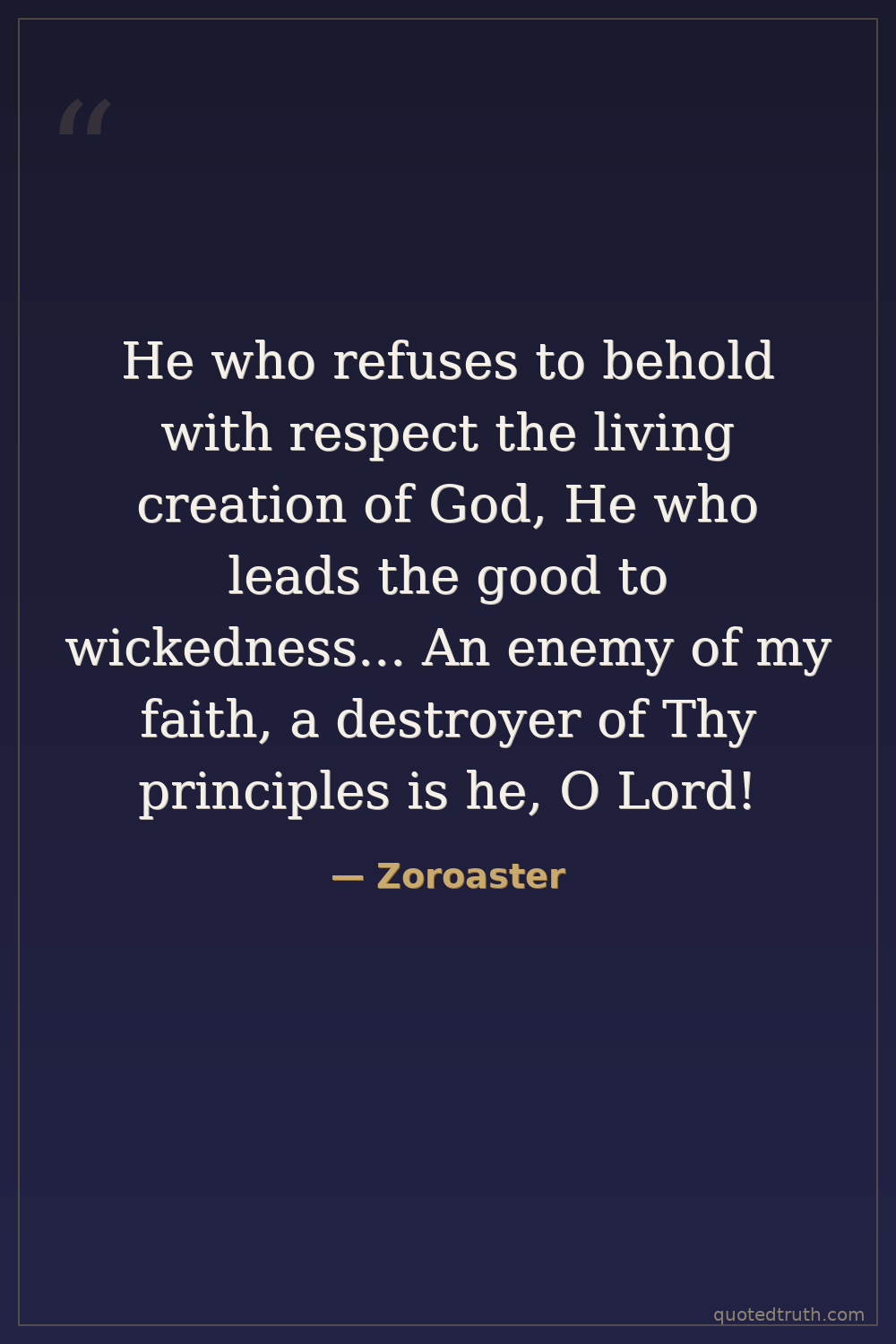
The speaker condemns two kinds of wrongdoing: treating the natural world and its creatures with contempt rather than reverence, and actively corrupting good people by steering them toward evil. Anyone who does these things is not just misguided but openly hostile to divine order itself. Respect for life and protecting moral integrity in others are treated as non-negotiable duties, and violating them makes a person an enemy of both faith and the creator.
Relevance to Zoroaster
Zoroaster built his entire theology around a cosmic contest between truth (asha) and the lie (druj), where every person chooses a side through thought, word, and deed. He taught reverence for the seven creations—sky, water, earth, plants, animals, humans, fire—so harming creation meant siding with Angra Mainyu. His Gathas repeatedly attack those who mislead others, reflecting his own persecution as a reforming priest who broke with the older Iranian polytheistic cult.
The era
Zoroaster preached in Bronze Age eastern Iran, roughly 1500–1000 BCE, among semi-nomadic Indo-Iranian tribes whose priests practiced animal sacrifice, intoxicant rituals, and worship of many daevas. Cattle raiding, tribal violence, and ecological strain on pastoral life were constant. By framing mistreatment of creation and moral corruption as cosmic treason, he was directly challenging the warrior-priest establishment and offering a radically ethical monotheism centered on Ahura Mazda long before comparable movements elsewhere.
AI-generated insights based on extensive research and information for context. Factual errors? Email [email protected].