Guru Nanak — "The lowest among the low castes, lower than the lowliest, Nanak is with them: He…"
The lowest among the low castes, lower than the lowliest, Nanak is with them: He envies not those with worldly greatness.
The lowest among the low castes, lower than the lowliest, Nanak is with them: He envies not those with worldly greatness.
Click any product to generate a realistic preview. Up to 3 at a time.
* Initial load can take up to 90 seconds — revising the preview in another color is nearly instant.
"He who practices truth, contentment, and compassion, he alone is a true Yogi."
"The world is a garden, O Nanak, and the Gardener is God."
"Dwell in peace in the home of your own being, and the Messenger of Death will not be able to touch you."
"There is no Hindu, there is no Muslim."
"He who has no faith in himself can never have faith in God. Or in his ability to assemble IKEA furniture."
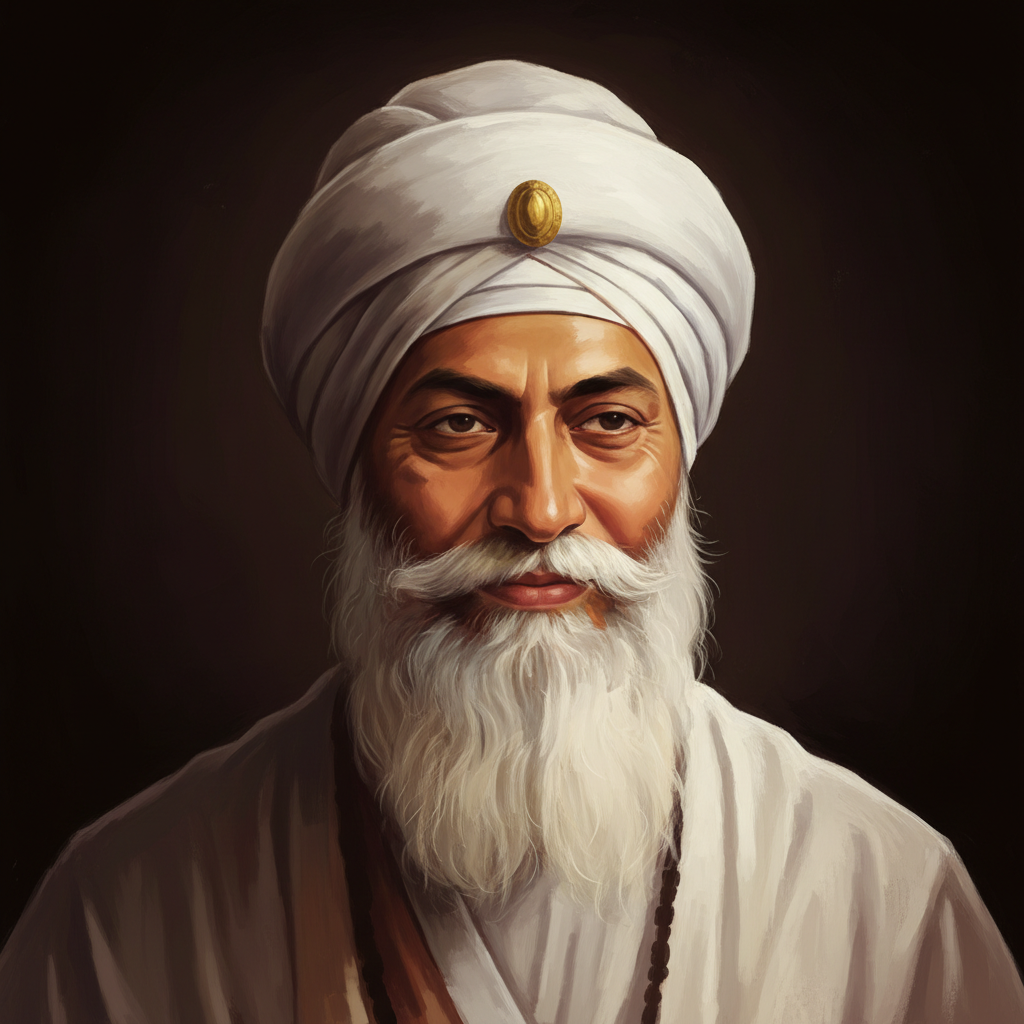
Founder of Sikhism and the first of the Ten Sikh Gurus, whose teachings of one universal God and rejection of caste shaped Punjab. Closely associated with Kabir (mystical poet whose verses appear in the Sikh Guru Granth Sahib). For an intellectual contrast, see Brahmanical orthodoxy, the Hindu caste-and-ritual establishment of his era — Sikhism was founded as a deliberate alternative to both Hindu ritual hierarchy and Islamic exclusivism — Nanak's universalism was a structural rejection of caste and priestly mediation.
Found in 1 providers: gemini
1 source checked
Nanak declares that he stands in solidarity with the poorest and most marginalized people in society, those at the very bottom of the social hierarchy. He rejects any desire to associate with the wealthy, powerful, or socially elite. True spiritual standing, he insists, comes from being among the humble and oppressed, not from proximity to status. Envy of worldly success is meaningless when dignity is found in shared humanity with the downtrodden.
As Sikhism's founder, Guru Nanak built his entire theology around rejecting caste hierarchy, which dominated 15th-16th century Punjab. He established the langar, a free community kitchen where everyone ate together regardless of caste, and traveled extensively with his Muslim companion Mardana, deliberately crossing religious and social lines. This verse distills his lifelong mission: dismantling social ranking and locating the divine among the excluded rather than the privileged.
Guru Nanak lived (1469-1539) under the Delhi Sultanate and early Mughal rule, in a Punjab rigidly stratified by the Hindu caste system and tense Hindu-Muslim divisions. Untouchables faced severe social exclusion, barred from wells, temples, and shared meals. Babur's 1526 invasion brought upheaval Nanak personally witnessed. Against this backdrop of inherited hierarchy and communal strife, his message of one God and human equality was genuinely radical, laying groundwork for a new faith tradition.
AI-generated insights based on extensive research and information for context. Factual errors? Email [email protected].
Your cart is empty