Wright Brothers (Orville & Wilbur) — "The machine was kept in the air for 59 seconds and traveled 852 feet."
The machine was kept in the air for 59 seconds and traveled 852 feet.
The machine was kept in the air for 59 seconds and traveled 852 feet.
Click any product to generate a realistic preview. Up to 3 at a time.
* Initial load can take up to 90 seconds — revising the preview in another color is nearly instant.
"The aeroplane will be a great factor in bringing together the different nations of the earth."
"The machine was not perfect, but it was a beginning."
"For some years I have been afflicted with the belief that flight is possible to man. My disease has progressed to an incurable stage."
"I know of only one bird — the parrot — that talks; and it can't fly very high."
"We did not have a university education, but we had a good deal of common sense."
American aviation pioneers who achieved the first sustained powered controlled airplane flight at Kitty Hawk, NC, on December 17, 1903. Closely associated with Octave Chanute (their gliding mentor and aeronautical correspondent). For an intellectual contrast, see Samuel Pierpont Langley, Smithsonian Institution Secretary and government-funded aviation researcher — Langley's Aerodrome crashed twice into the Potomac in October-December 1903 with $50,000 of War Department funding; the Wright Brothers' bicycle-shop empiricism beat Langley's institutional Big Science by 9 days. The most-cited example in engineering history of empirical-tinkerer beating institution-funded credentialism.
Found in 1 providers: grok
1 source checked
The quote records, with no ornamentation, the bare facts of a historic event: a powered machine stayed airborne under its own control for just under a minute, covering nearly three football fields. It prioritizes measurable data over drama — duration and distance — which is how engineers communicate results. The simplicity carries enormous weight: these two numbers mark the precise moment humanity first achieved sustained, controlled, powered heavier-than-air flight.
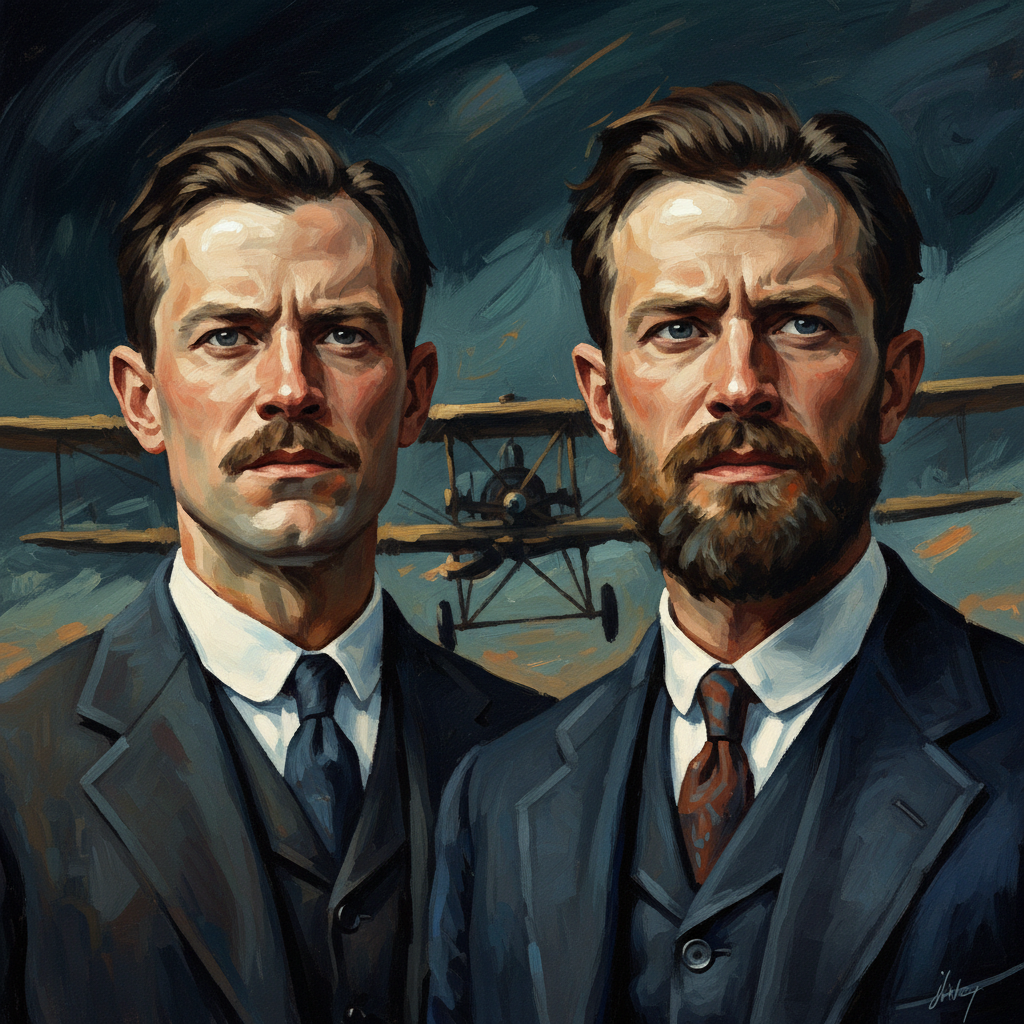
Orville and Wilbur Wright were bicycle mechanics who attacked flight as an engineering problem, not a romantic pursuit. They filled notebooks with precise measurements, wind tunnel data, and test results. This quote mirrors that discipline — no celebration, just recorded data. They had made three shorter flights that same morning; the fourth, captured here, was the longest. Their rigorous documentation distinguished them from contemporaries who theorized about flight rather than methodically tested it.
In 1903, heavier-than-air powered flight was widely considered impossible. Samuel Langley's well-funded Aerodrome had crashed into the Potomac just nine days earlier, humiliating the Smithsonian Institution. Most serious scientists believed only lighter-than-air craft like balloons could work. The Wright Brothers' success at Kitty Hawk on December 17th overturned that consensus instantly. Within a decade, aviation would reshape warfare, commerce, and global geography — but on that morning, 59 seconds was the entire recorded history of powered human flight.
AI-generated insights based on extensive research and information for context. Factual errors? Email [email protected].
Your cart is empty