What it means
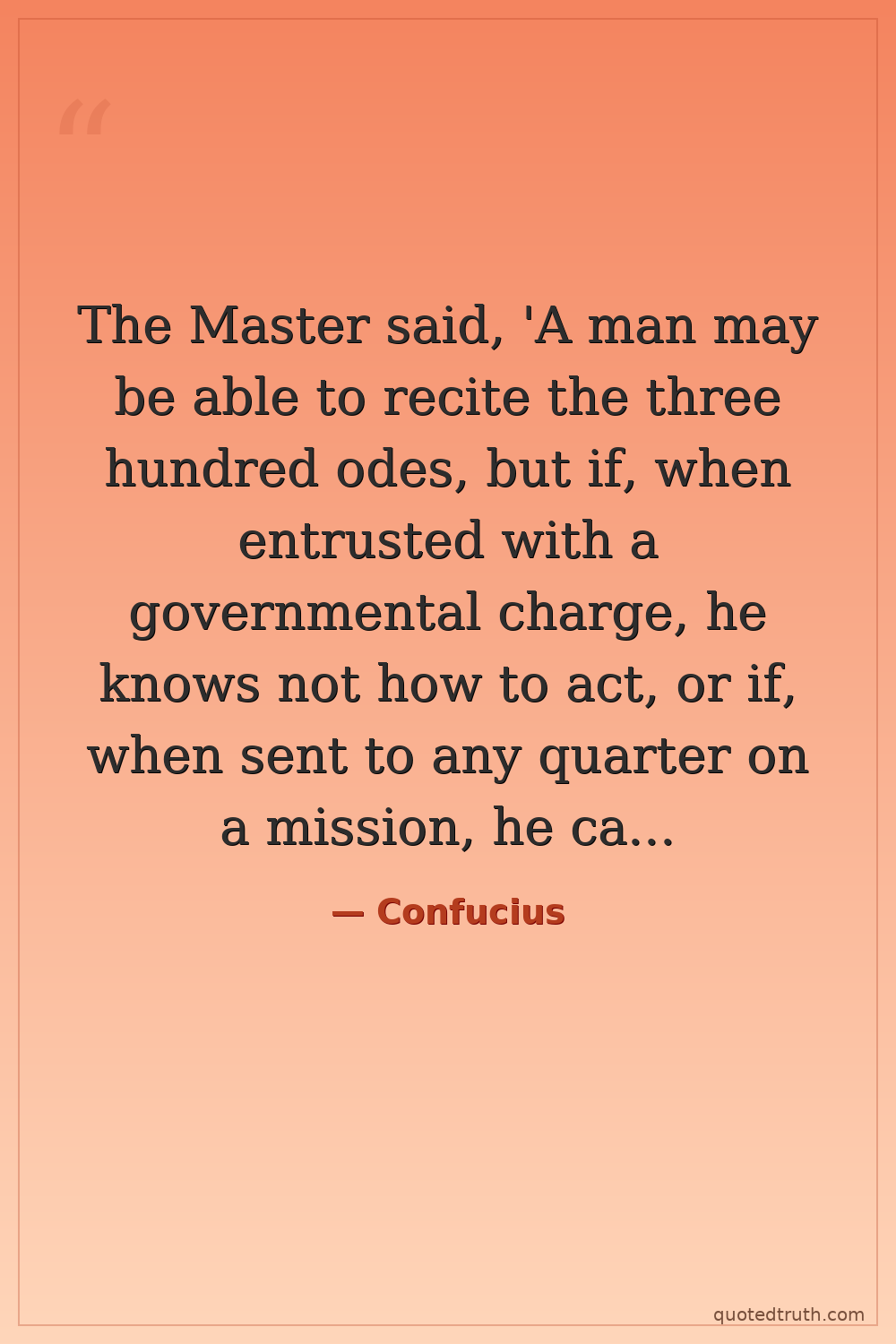
Knowledge only matters if you can apply it. Someone might memorize every classic poem, but if they freeze up when given a real job in government or fumble through a diplomatic meeting needing constant coaching, their education is worthless. Book learning without the ability to act decisively, respond on your feet, and handle responsibility is just trivia. Real competence shows in performance under pressure, not in how much you can recite.
Relevance to Confucius
Confucius spent his life training young men for government service, believing education existed to produce capable officials, not scholars for scholarship's sake. He held minor posts in Lu and traveled between states seeking rulers who would employ his disciples. His frustration here is personal: he had seen learned men fail in office. For him, the Odes were meant to cultivate judgment, rhetoric, and moral reasoning useful in governance, not to be recited as credentials.
The era
During the Spring and Autumn period (roughly 6th-5th century BCE), the Zhou dynasty's authority had collapsed and rival states competed for dominance. Rulers urgently needed capable ministers and envoys who could negotiate treaties, manage revenue, and deliver diplomatic replies without embarrassing their lord. The three hundred Odes were the standard aristocratic curriculum, often quoted in diplomacy. Confucius was pushing back against an emerging class of credentialed but incompetent officials in an era where practical failure could mean invasion or ruin.
AI-generated insights based on extensive research and information for context. Factual errors? Email [email protected].