What it means
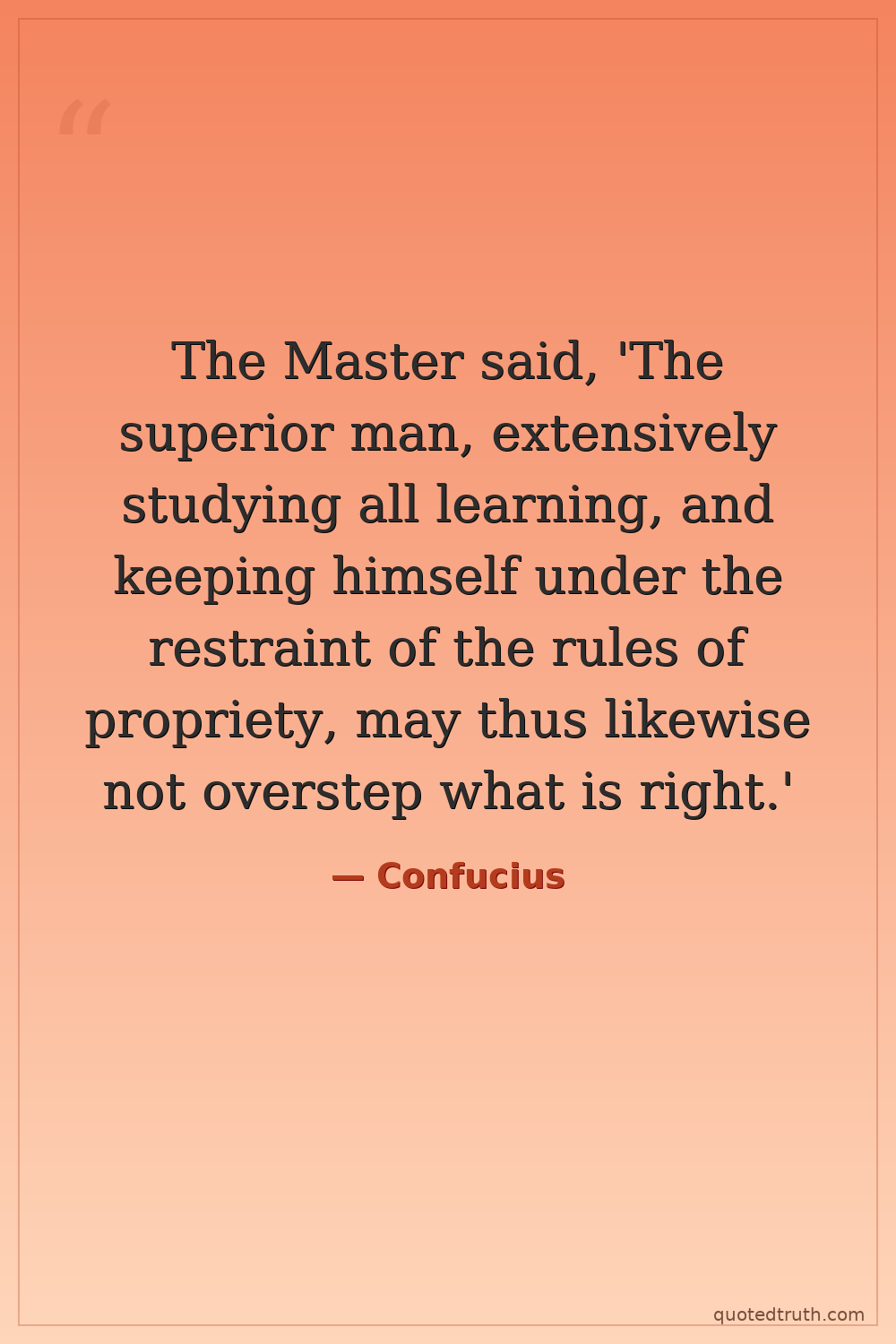
A well-rounded person becomes broadly educated across many subjects and disciplines themselves with established social customs and ethical norms. By combining wide knowledge with self-control guided by proper conduct, they develop reliable judgment. This combination keeps them from straying into wrong behavior or making serious errors. Learning without discipline leads to arrogance or misuse; discipline without learning leads to rigidity. Together, they produce a trustworthy moral life.
Relevance to Confucius
Confucius built his entire teaching around two pillars named here: wen (broad learning in texts, music, ritual, history) and li (the rules of propriety governing conduct). As a scholar-teacher who trained disciples for government service, he insisted neither scholarship nor ritual alone produced the junzi, the superior person. This saying compresses his curriculum into one line, reflecting his lifelong project of shaping character through combined study and disciplined behavior.
The era
Confucius lived during the Spring and Autumn period (551-479 BCE), when Zhou dynasty authority was collapsing and rival states fought constantly. Aristocratic rituals were decaying, and officials gained power through intrigue rather than virtue. Confucius responded by reviving ancient propriety and promoting educated, ethical service as the cure for social breakdown. His emphasis on combining classical learning with ritual restraint was a direct answer to an age he saw as dangerously unmoored from tradition and moral order.
AI-generated insights based on extensive research and information for context. Factual errors? Email [email protected].