What it means
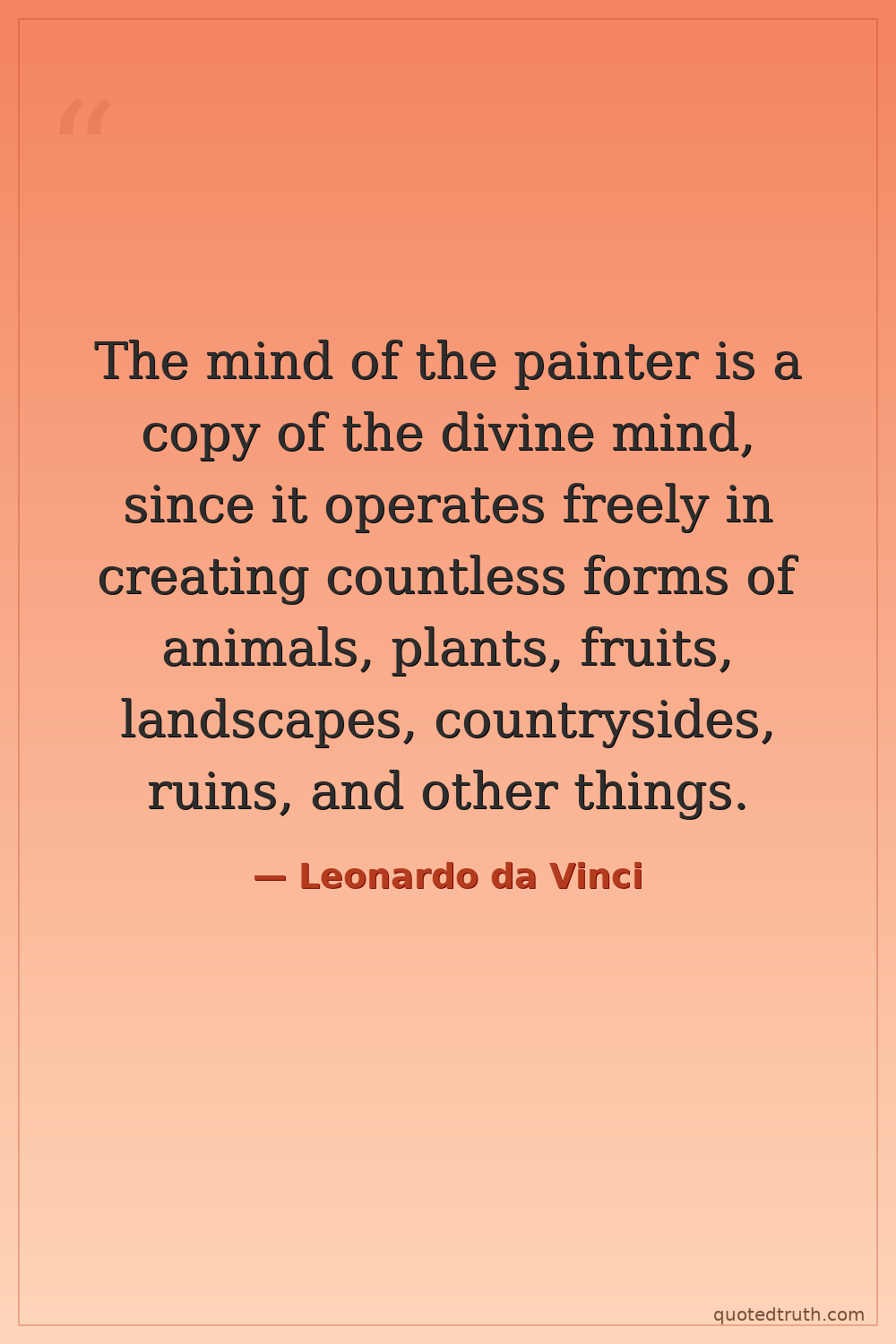
A painter's mind works like God's — both create freely from imagination, generating infinite forms across all of nature. The painter isn't copying reality; he's constructing worlds. This elevates painting from a skilled trade to an act of intellectual sovereignty. To create art is to exercise the same generative freedom as the divine creator, spanning animals, landscapes, decay, and life with equal authority.
Relevance to Leonardo da Vinci
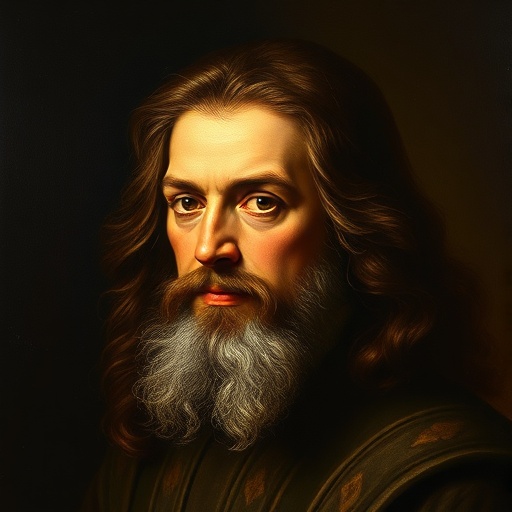
Leonardo's notebooks prove he lived this belief — thousands of pages document animals, plants, geology, anatomy, and ruins with scientific precision. He treated painting as a science requiring total mastery of nature. His Treatise on Painting argued painting surpasses poetry and sculpture. A man who designed war machines, mapped rivers, and dissected corpses to paint muscles more truthfully embodied the claim that artistic creation demands god-like comprehension of all things.
The era
Renaissance Italy was redefining the artist's social status. The paragone debate pitted painting against poetry and sculpture for intellectual prestige. Humanist philosophers like Pico della Mirandola positioned humans as capable of ascending toward the divine through reason and creation. Yet the Church still controlled cosmology. Claiming the painter's mind mirrors God's was audacious — asserting creative intellect as sacred, not merely decorative, at a moment when that claim could reshape an entire profession's standing.
AI-generated insights based on extensive research and information for context. Factual errors? Email [email protected].