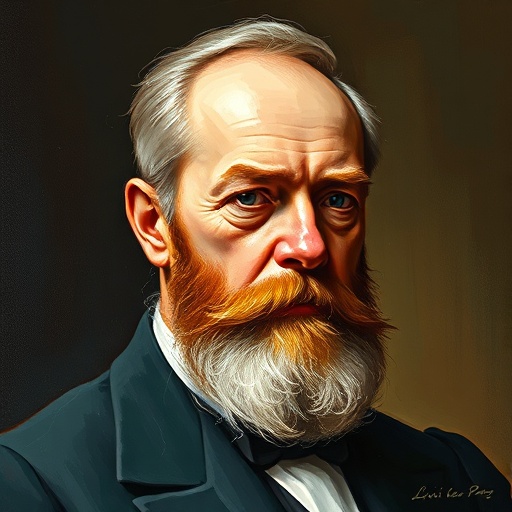
Louis Pasteur — "The more I learn, the more I realize how much I don't know."
The more I learn, the more I realize how much I don't know.
The more I learn, the more I realize how much I don't know.
Click any product to generate a realistic preview. Up to 3 at a time.
* Initial load can take up to 90 seconds — revising the preview in another color is nearly instant.
"The Greeks understood the mysterious power of the hidden side of things."
"The greatest error is to believe that one knows everything."
"I am unable to find any experimental evidence that supports the doctrine of spontaneous generation."
"I am convinced that I have found the cause of fermentation."
"We must not forget that science, like all human activities, has its limits."
Attributed, a common sentiment among great thinkers.
Date: Late 19th Century (approx.)
EducationalFound in 1 providers: grok
1 source checked
The deeper you dig into any subject, the more gaps and unanswered questions you uncover. Real learning expands the edges of your awareness faster than it fills in the middle, so mastery feels less like arrival and more like standing at the rim of a widening canyon. Confidence shrinks as genuine understanding grows, because you finally see the scale of what lies beyond your current grasp.
Pasteur built germ theory, rabies vaccination, and pasteurization by chasing anomalies other chemists dismissed, repeatedly admitting his earlier models were incomplete. He famously said chance favors the prepared mind, treating humility as a working tool. Each breakthrough, from fermentation to anthrax, exposed deeper microbial territory he had not yet mapped, reinforcing his conviction that a scientist's job is to keep questioning, not to declare the case closed.
Nineteenth-century Europe was overturning centuries of inherited certainty: spontaneous generation was collapsing, Darwin had just published, and microscopes were revealing a hidden living world. Disease, fermentation, and decay were being rewritten from superstition into biology in real time. Pasteur worked amid cholera outbreaks, silkworm plagues, and fierce academic disputes, where yesterday's textbooks were tomorrow's embarrassments, and every laboratory result seemed to open three new questions for every one it answered.
AI-generated insights based on extensive research and information for context. Factual errors? Email [email protected].
Your cart is empty