Laozi — "The more taboos and prohibitions there are in the world, the poorer the people w…"
The more taboos and prohibitions there are in the world, the poorer the people will be.
The more taboos and prohibitions there are in the world, the poorer the people will be.
Click any product to generate a realistic preview. Up to 3 at a time.
* Initial load can take up to 90 seconds — revising the preview in another color is nearly instant.
"Without going outside, you may know the whole world."
"The value of teaching without words and accomplishing without action is understood by few in the world."
"He who is without desire sees the mystery. He who is with desire sees only the manifestations."
"To lead people, walk behind them."
"The wise man does not lay up his own treasures. The more he gives to others, the more he has for his own."
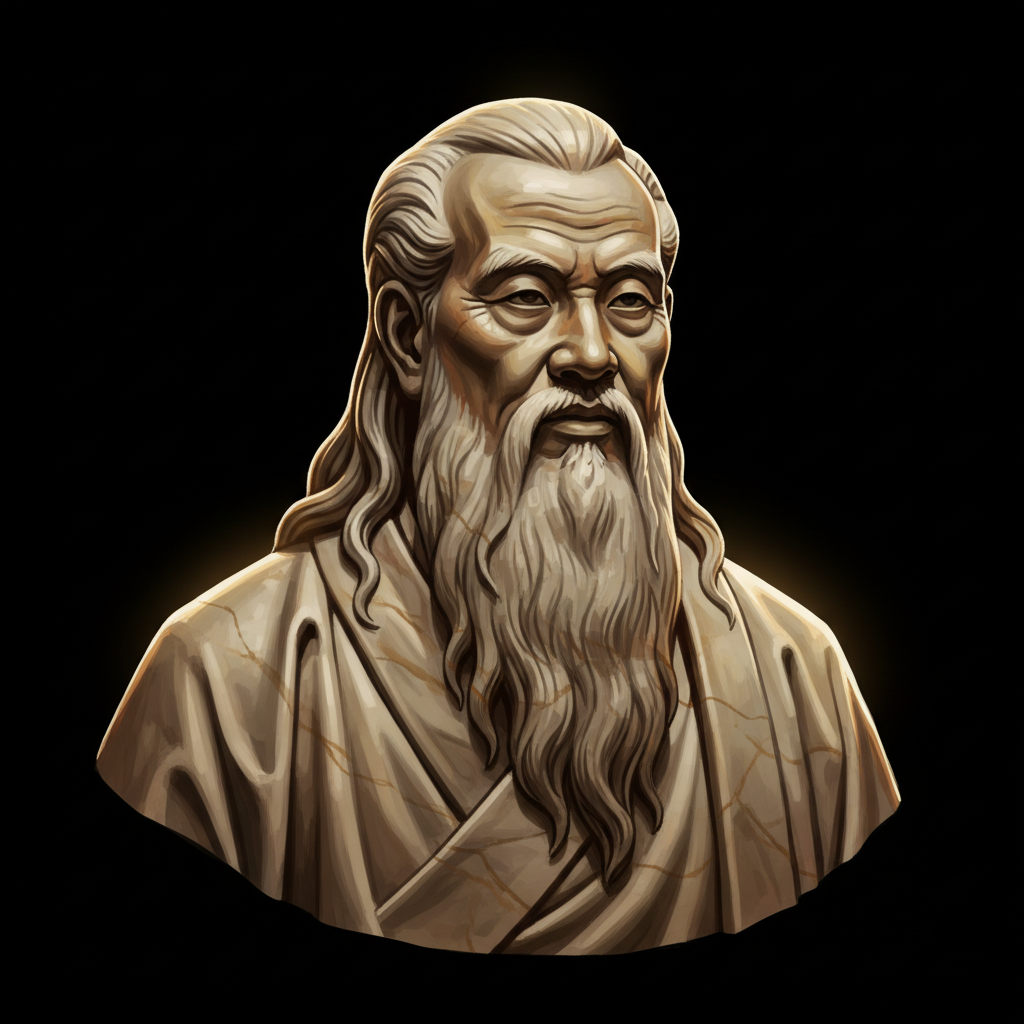
Reputed founder of Taoism and author of the Tao Te Ching, whose wu wei (effortless action) shaped East Asian philosophy. Closely associated with Zhuangzi (later Taoist who extended Laozi's framework). For an intellectual contrast, see Confucius, near-contemporary Chinese sage of social ritual and duty — Confucius systematized social order through ritual and hierarchy; Laozi argued that all such systems were the disease, not the cure — the two founding poles of Chinese moral philosophy.
Found in 3 providers: gemini,deepseek,grok
3 sources checked
Excessive rules, restrictions, and moral codes actually harm ordinary people rather than help them. When governments and societies pile on prohibitions, they strangle the natural economic and social activity that lets people thrive. Every new ban creates criminals out of ordinary behavior, blocks trade, and forces people to navigate bureaucracy instead of producing value. The paradox is that trying to control everything produces scarcity, while loosening the grip allows prosperity to emerge on its own.
Laozi worked as an archivist in the Zhou royal court, where he witnessed firsthand how elaborate ritual codes and legal systems failed to prevent decline. His core principle of wu wei, non-forced action, rejects the Confucian faith in rules and hierarchy. He taught that the sage governs least and trusts the natural order. Legend says he abandoned civilization entirely, riding west into the wilderness, disgusted with bureaucratic society, and only wrote the Tao Te Ching at a border guard's request.
Laozi lived during the late Zhou dynasty, around the 6th century BCE, as centralized royal authority crumbled into the Warring States period. Rival kingdoms multiplied laws, taxes, conscription, and sumptuary codes trying to control restless populations and fund constant warfare. Confucius was simultaneously promoting ritual propriety as the cure. Laozi's counterargument landed in a world exhausted by regulation, where peasants watched harvests seized and movements restricted while elites debated ever-finer rules of conduct.
AI-generated insights based on extensive research and information for context. Factual errors? Email [email protected].
Your cart is empty