What it means
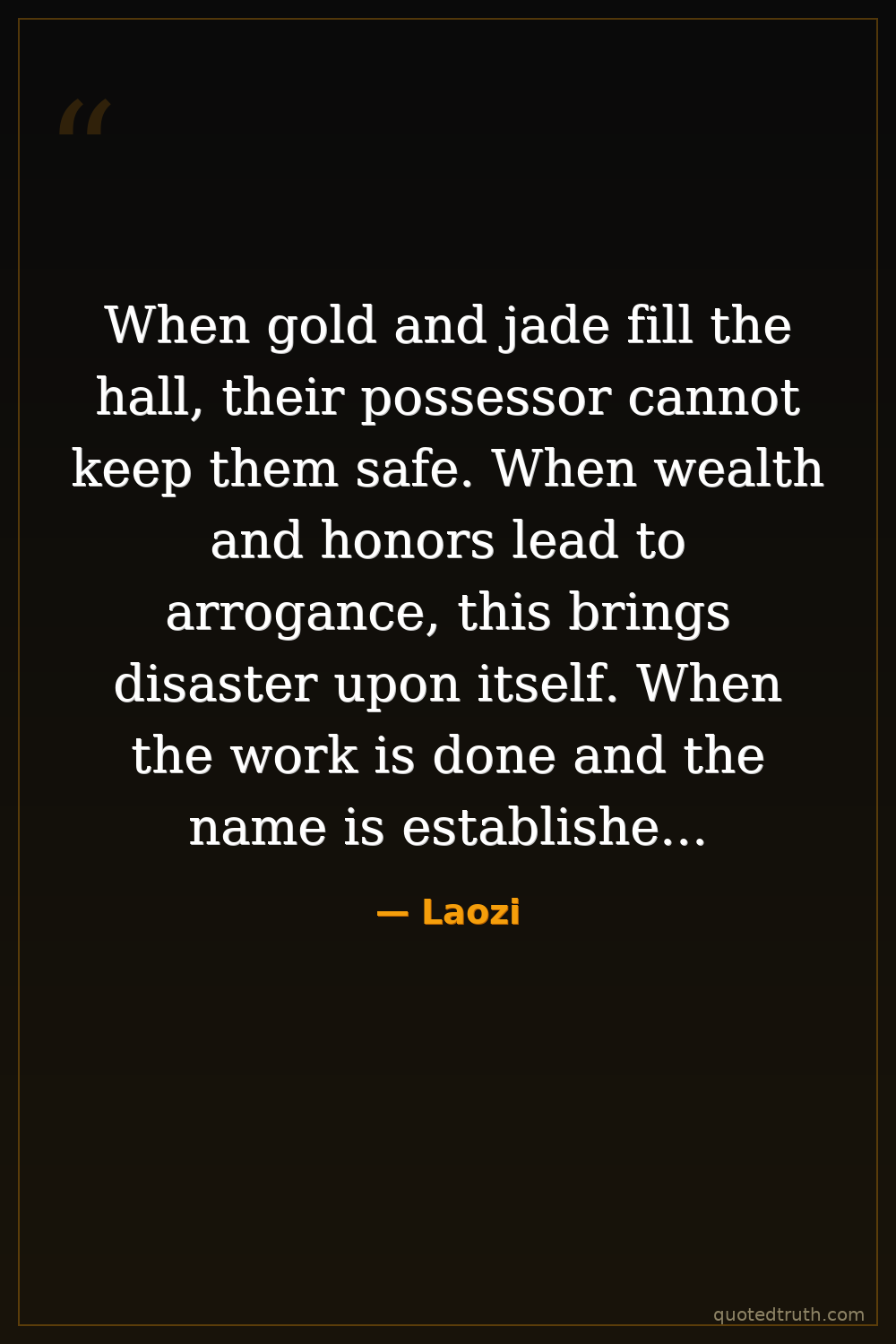
Hoarding riches and status creates vulnerability, not security. The more gold you pile up, the harder it is to protect; the more honors you collect, the more likely you are to grow arrogant and invite ruin. Once you've accomplished what you set out to do and earned recognition, step back instead of clinging on. Knowing when to stop is how the natural order actually works.
Relevance to Laozi
Laozi reportedly served as a keeper of royal archives in the Zhou court, a position with access to power and prestige. Legend says he grew disillusioned with the decaying government and chose to leave, riding west on a water buffalo after composing the Tao Te Ching. This passage mirrors that exit: do your work, then withdraw. It embodies his core teaching of wu wei, effortless action aligned with the Way rather than grasping.
The era
Laozi lived during the late Zhou dynasty, roughly the 6th century BCE, as centralized rule was fracturing into the warring Spring and Autumn period. Nobles accumulated wealth, titles, and territory while plotting against rivals, and sudden falls from favor were routine. Officials who lingered too long often lost their heads. Against this backdrop of court intrigue and collapsing feudal order, advising retirement after success was both spiritual wisdom and practical survival advice.
AI-generated insights based on extensive research and information for context. Factual errors? Email [email protected].