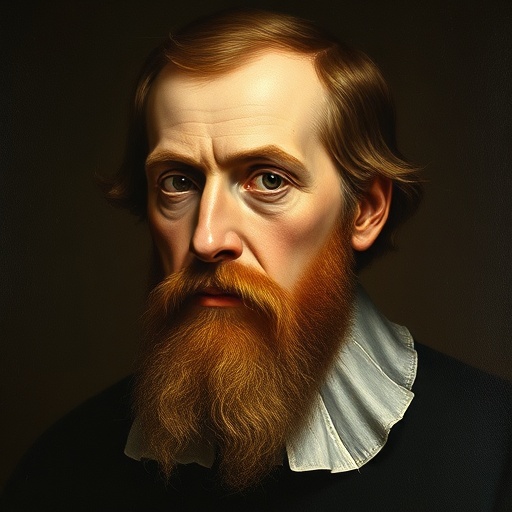
John Calvin — "The more we know God, the more we humble ourselves."
The more we know God, the more we humble ourselves.
The more we know God, the more we humble ourselves.
Click any product to generate a realistic preview. Up to 3 at a time.
* Initial load can take up to 90 seconds — revising the preview in another color is nearly instant.
"The heart of man is a perpetual idol factory."
"The elect alone receive through regeneration [grace]. For I stay not to consider the extravagance of those who say that grace is offered equally and promiscuously to all."
"It would be indeed better to grant license to thieves and sorcerers and adulterers, than to suffer the blasphemies which the ungodly utter against God, to prevail without any punishment and without an…"
"The church is the mother of all the godly."
"The reprobate, though they have the outward call of the Gospel, yet are not inwardly illuminated by the Spirit."
French theologian whose Institutes of the Christian Religion (1536) systematized Protestant Reformed doctrine, including predestination. Closely associated with Martin Luther (Reformation founder, Calvin's predecessor). For an intellectual contrast, see Jacobus Arminius, Dutch Reformed theologian (1560-1609) — Arminius's rejection of strict double-predestination founded Arminianism — the theological tradition modern Methodism, most evangelicalism, and Pentecostalism descend from. The Calvinist-Arminian debate has divided Protestantism for 400 years.
Found in 1 providers: grok
1 source checked
Genuine knowledge of God produces humility rather than pride. The deeper one's understanding of God's infinite holiness and perfection, the more starkly human finitude and moral failure come into focus. True theological insight is not an intellectual achievement that inflates the ego—it deflates it. Recognizing God's absolute sovereignty and righteousness forces an honest reckoning with one's own smallness, sinfulness, and utter dependence.
Calvin's entire theology centered on God's absolute sovereignty and human depravity—twin pillars of Reformed doctrine. His Institutes of the Christian Religion (1536) explicitly paired knowledge of God with knowledge of self, arguing neither can exist without the other. As an exile from France who built Geneva's disciplined Reformed church, Calvin preached constant self-examination. His doctrine of total depravity made humility before God not optional but the logical consequence of genuine faith.
Calvin lived during the Protestant Reformation (early 1500s), when Europe was fracturing from Roman Catholic authority. The Church had long cultivated hierarchical prestige—popes, cardinals, and clergy positioned as mediators between God and laity. Calvin's movement asserted direct scripture access for all believers. The printing press was rapidly democratizing Bible literacy, yet religious wars and Inquisitions raged across Europe. Against this upheaval, his assertion that knowing God breeds humility challenged both Catholic institutional pride and emerging Protestant self-congratulation.
AI-generated insights based on extensive research and information for context. Factual errors? Email [email protected].
Your cart is empty