What it means
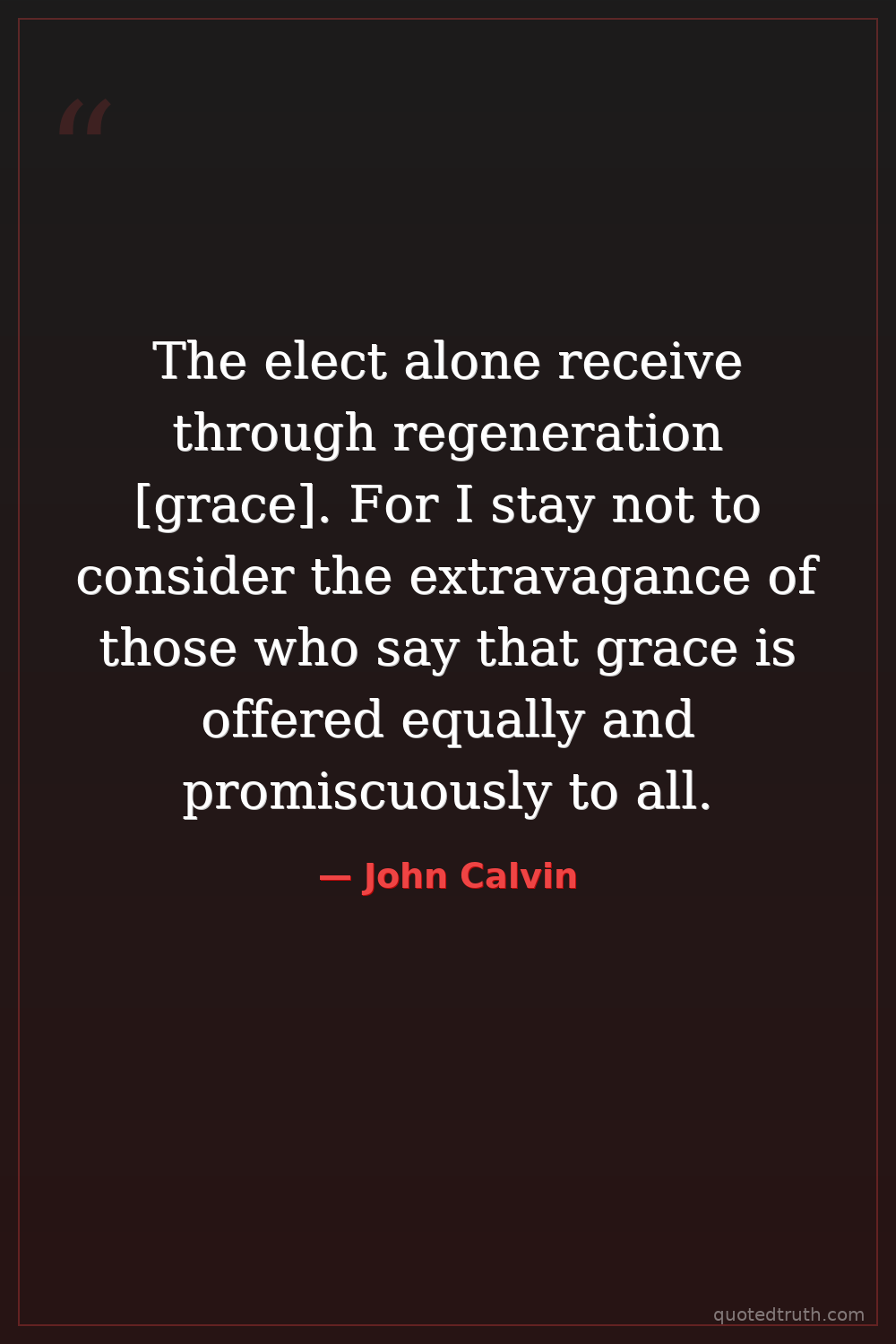
Calvin asserts that saving grace—the divine transformation bringing a person to faith—is not available to everyone equally. Only those God has chosen, the elect, receive it through spiritual rebirth called regeneration. He dismisses as reckless folly the belief that God offers grace indiscriminately to all humanity. Salvation is particular, not universal, flowing entirely from God's sovereign choice rather than from any human openness or merit.
Relevance to John Calvin
Calvin spent decades systematizing Reformed theology in Geneva, where he wielded authority over both church doctrine and civic law. His doctrine of double predestination—God elects some for salvation and passes over others—permeates his Institutes of the Christian Religion. As a legally trained thinker, he argued with surgical precision against opponents who blurred divine sovereignty with human cooperation. This quote directly reflects his lifelong polemic against any theology that diminished God's absolute control over salvation.
The era
Calvin wrote during the 16th-century Reformation, when Protestants and Catholics clashed bitterly over how salvation worked. Catholics taught that grace came through sacraments accessible to all; humanists like Erasmus defended free will. Luther had already ruptured with Rome over grace and merit. Calvin's insistence on sovereign, particular grace sharpened sectarian fractures, fueling wars of religion across France and the Netherlands and becoming the theological fault line separating Reformed Protestantism from both Lutheranism and the Catholic Counter-Reformation.
AI-generated insights based on extensive research and information for context. Factual errors? Email [email protected].